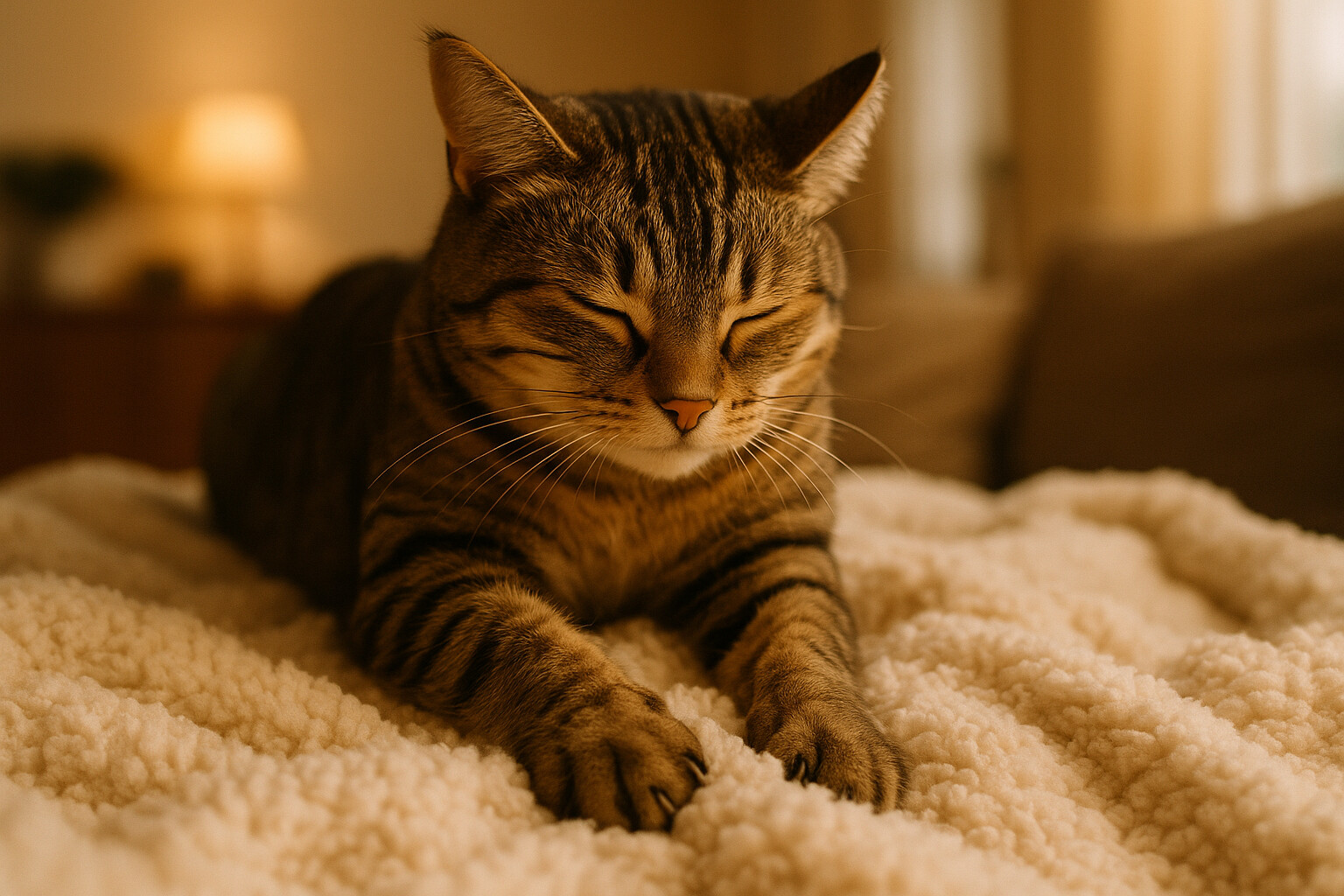
You’re settled in on the couch, your cat hops up, and before you know it — paws in, paws out, paws in, paws out. Sometimes with claws, sometimes purring, occasionally with a distant, almost meditative look in their eyes. Cat kneading is one of those behaviors that cat owners find equally endearing and mystifying. So why do cats do it?
What Is Kneading, Exactly?
Kneading is the rhythmic, alternating push-pull motion cats make with their front paws — pressing down with one paw, then the other, in a steady pattern. It’s sometimes called “making biscuits” or “making bread dough,” for obvious reasons. The behavior can happen on soft surfaces like blankets, pillows, your lap, or even on other cats and dogs. Some cats extend their claws with each push; others keep them retracted.
The Kittenhood Connection
The most widely accepted explanation is rooted in early kittenhood. Newborn kittens knead their mother’s mammary glands while nursing — the motion stimulates milk flow. It’s an instinctive, hardwired behavior that begins in the first hours of life.
As cats grow up and are weaned, the nursing behavior stops — but the kneading often doesn’t. Most behaviorists believe it becomes associated with the comfort, warmth, and security of that early nursing bond. Your adult cat kneading your lap is essentially saying: you make me feel as safe as my mother did.
According to veterinary behaviorists at the American College of Veterinary Behaviorists (ACVB), this carry-over of infant behaviors into adulthood is more common in domesticated cats than in wild felines — likely because humans have, in a sense, kept cats in a prolonged “kitten-like” relationship with us.
Scent Marking — Staking Their Claim
Cats have scent glands in the soft pads of their paws. When they knead, they’re not just physically pressing — they’re also depositing their scent. This is a form of territorial marking, though in a domestic context it’s less about aggression and more about ownership in the warmest sense of the word.
When your cat kneads your blanket or your lap, they’re essentially marking you as theirs. Combined with head-bunting and slow blinks, kneading is part of how cats communicate affiliation and comfort with their trusted humans.
Comfort, Stress Relief, and Self-Soothing
Beyond the kittenhood connection, many cats knead simply because it feels good. The repetitive motion appears to have a calming, self-soothing effect — similar to how humans might fidget, tap, or pace when processing emotions.
Cats often knead when they’re settling in for sleep, highly relaxed, or feeling content. You’ll notice it tends to happen when things are good: they’ve been fed, they’re warm, and they feel safe. It can also occur during stressful transitions (like moving to a new home) as a self-calming mechanism, which is why you might see more of it when your cat is adjusting to change.
Preparing a Nest
In the wild, cats’ ancestors would knead grass and leaves to create a soft, flat sleeping spot — essentially building a nest. This instinct hasn’t fully disappeared in domestic cats. When your cat kneads a blanket or your bed before lying down, they may be acting on this ancient impulse to prepare a comfortable resting place.
Do All Cats Knead?
Not all cats knead, and that’s perfectly normal. The tendency varies by individual. Cats that were weaned too early sometimes knead more — and may also suck on fabric while doing so, a behavior called “wool sucking” that vets consider a mild compulsive behavior linked to early separation from the mother. It’s typically harmless but worth mentioning to your vet if it seems excessive.
Some cats knead only on specific surfaces, others reserve it for specific people. Many male cats knead just as much as females, despite a common belief that it’s more of a “female thing” (it isn’t).
What About Those Claws?
The main downside of kneading: if your cat extends their claws, it can be uncomfortable or even painful. A few practical solutions:
- Keep nails trimmed — Regular nail trims (every 2–3 weeks) are the single most effective way to reduce discomfort. Most U.S. vets or groomers offer this service, and it only takes a few minutes.
- Use a thick blanket as a buffer — Keep a dedicated “kneading blanket” on your lap or couch so your cat has a soft surface and your skin is protected.
- Redirect gently — If kneading becomes uncomfortable, calmly move your cat to a nearby cushion or their own blanket. Don’t scold — it won’t help and may damage the trust that prompted the kneading in the first place.
- Nail caps — Products like Soft Paws (available at most pet retailers and many U.S. vet offices) are small vinyl caps that glue over claws and blunt the tips. They’re safe, temporary, and last 4–6 weeks.
Should You Worry About It?
In almost all cases, no. Kneading is a completely normal cat behavior and a sign that your cat feels safe and comfortable. If your cat has recently started kneading more intensely or in unusual contexts, it could signal stress or anxiety — in which case a check-in with your vet is worth doing, just to rule anything out.
Otherwise, when your cat climbs into your lap and starts making biscuits, take it as the compliment it is. In cat language, that’s about as affectionate as it gets.