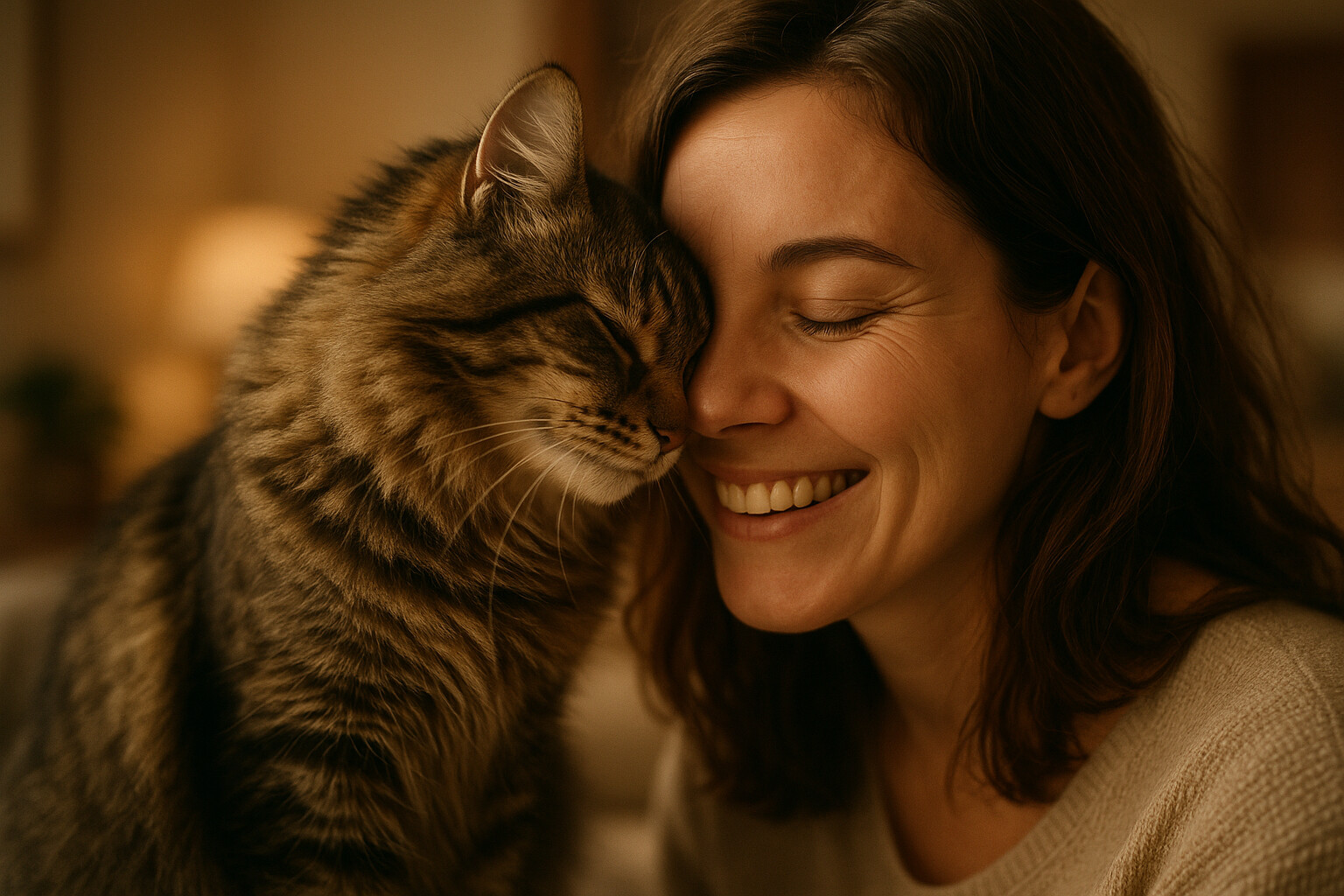
If you’ve ever settled onto the couch only to have your cat walk up and press their forehead firmly into your face, you’ve experienced one of the most endearing behaviors in the feline world. Cat owners often call it a “headbutt,” but animal behaviorists have a more precise term: bunting. Far from random or accidental, bunting is a deliberate, meaningful act rooted in feline biology and social communication.
What Is Bunting, Exactly?
Bunting refers to the act of a cat pressing or rubbing their head — specifically the forehead, cheeks, or chin — against a person, animal, or object. It’s part of a broader category of feline behavior called allorubbing, which involves cats physically contacting others as a form of social bonding.
Cats have scent glands concentrated in several areas of their face, including around the forehead, the corners of the mouth, and under the chin. When your cat headbutts you, they’re depositing their unique pheromone signature onto you. This isn’t just marking — it’s a form of communication that says, “You belong to my social group.”
It’s a Compliment (Really)
In the cat world, bunting is reserved for individuals a cat genuinely trusts and feels safe with. Feral cats use allorubbing primarily to reinforce social bonds within a colony, and domestic cats have carried this behavior into their relationships with humans.
So when your cat headbutts you, they’re essentially saying: You’re mine, and I feel completely comfortable with you. It’s one of the highest compliments a cat can give. Unlike dogs, who will enthusiastically greet almost anyone, cats tend to be more selective — which makes bunting all the more meaningful when it happens.
Bunting vs. Rubbing: What’s the Difference?
While bunting involves the top of the head and forehead making contact, face rubbing (using the cheeks and chin) is similar in purpose but slightly different in execution. Both behaviors deposit scent, but bunting tends to be more of a targeted, affectionate gesture — often directed at a specific person — while cheek rubbing is frequently used on furniture, door frames, and other household objects to establish a familiar-smelling environment.
You might also notice your cat rubbing their face on your phone, laptop, or even your coffee mug. That’s territorial scent-marking — your cat is essentially claiming ownership of anything you regularly touch.
Why Does My Cat Headbutt My Face?
Cats that headbutt directly on the face are typically showing a higher level of trust and intimacy. The face is a vulnerable area for cats, and directing bunting there signals that they feel completely safe with you. This behavior is especially common in cats that were socialized well as kittens and have formed a secure bond with their owner.
If your cat specifically targets your face while you’re sleeping or lying down, it may also be an attention-seeking behavior — their way of waking you up and reminding you that they exist and require your immediate focus.
Should You Headbutt Back?
Believe it or not, yes — gently returning the gesture can strengthen your bond. A slow, gentle head lean or forehead touch communicates reciprocal affection in a language your cat understands. Many cat owners who try this report that their cats respond positively, often continuing the exchange or beginning to purr.
The slow blink is another well-documented trust signal in cats. Next time your cat bunts you, try making eye contact and slowly closing and opening your eyes. Research published in Scientific Reports (2020) found that slow blinks from humans can prompt slow blinks in return from cats, and that cats are more likely to approach a stranger who slow-blinks than one who maintains a neutral expression.
When Bunting Becomes Excessive
Most of the time, bunting is perfectly normal and nothing to worry about. However, if your cat suddenly starts bunting far more than usual or seems frantic or distressed while doing it, it’s worth a check-in with your veterinarian. Sudden behavioral changes can occasionally signal underlying health issues, including neurological conditions or anxiety.
Conversely, if a cat that used to bunt frequently stops doing so, that can also be a signal that something has changed — whether it’s stress in the household, a health issue, or a shift in the relationship dynamic.
The Bottom Line
Your cat’s headbutts are a gift. They’re a deliberate, biologically driven expression of trust, affection, and social belonging. In the sophisticated social world of cats, being bunted puts you squarely in the inner circle.
Next time your cat presses their forehead into yours, lean in. You’ve earned it.