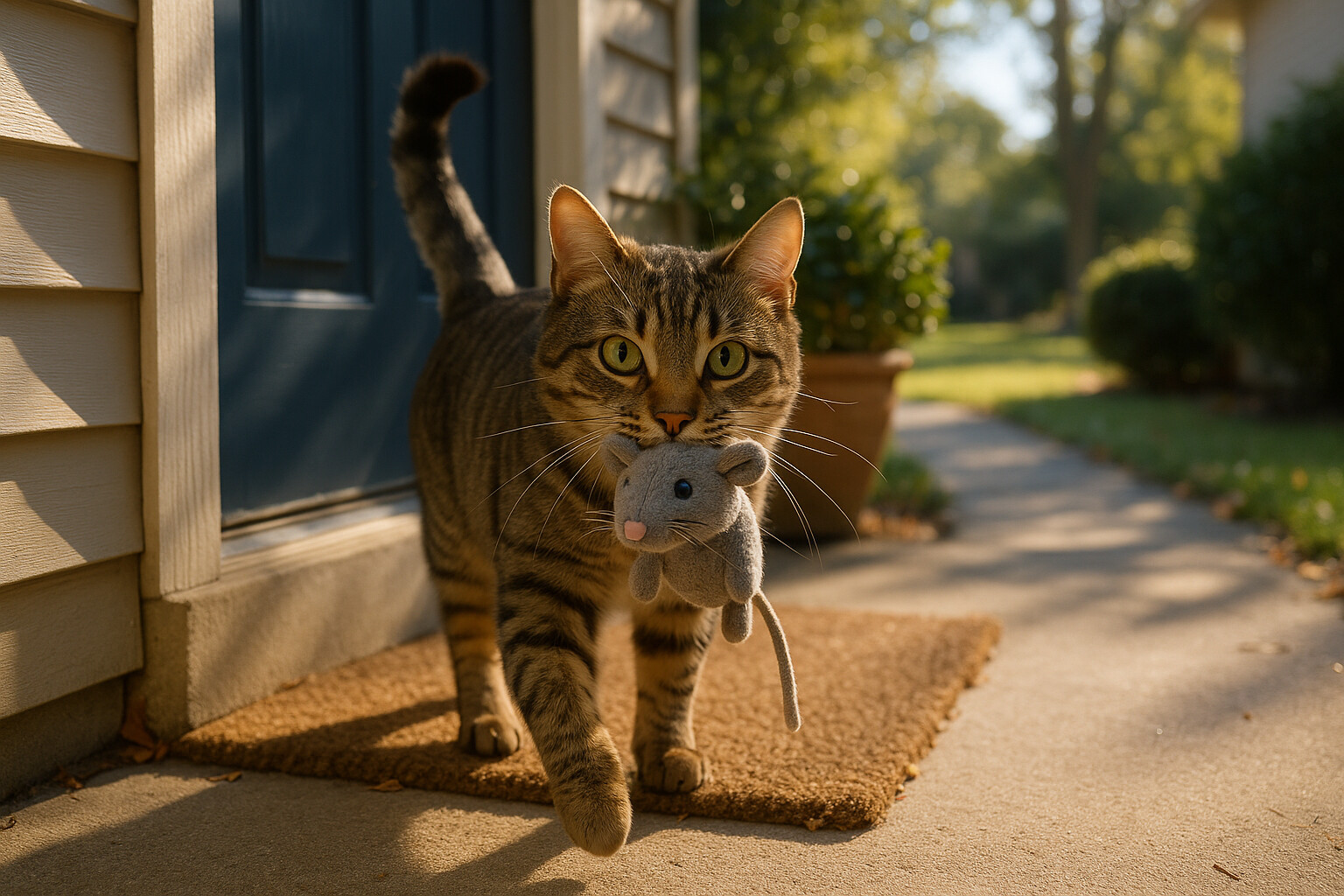
Few things catch a cat owner off guard quite like waking up to find a “gift” on the doorstep - a dead mouse, a bird, the occasional lizard. If your stomach turns every time this happens, you are not alone. But before you scold your cat, it helps to understand why they do it.
It Is Pure Instinct
Domesticated or not, cats are hardwired hunters. This drive does not disappear just because there is a full bowl of kibble waiting at home. Hunting is not just about hunger for cats - it is a deeply ingrained behavior tied to survival, stimulation, and identity.
Even cats that have never had to hunt for a meal in their life will stalk, pounce, and catch things. The instinct is always there.
Why Bring It to You Specifically?
This is where it gets interesting. There are a few theories:
1. You are part of their colony
In the wild, mother cats teach their kittens to hunt by bringing back prey. Some animal behaviorists believe domestic cats see us as part of their social group - and a slightly inept one at that. By bringing you a dead animal, they may literally be trying to feed you or teach you to hunt.
2. They are proud and want to share
Cats are not known for subtlety. When they catch something, they want you to know about it. The “gift” is a display - and they genuinely seem to expect appreciation.
3. The hunt has nowhere else to go
For indoor-outdoor cats, catching prey is a complete circuit: stalk, chase, catch, kill. But then what? Bringing it inside completes the loop.
Should You Be Worried?
Generally, no - this is normal cat behavior. However, there are a couple of things worth keeping an eye on:
- Parasites and disease: Prey animals can carry fleas, ticks, and diseases like toxoplasmosis. Make sure your cat is up to date on parasite prevention and regular vet checkups.
- Local wildlife: If your cat is a prolific hunter, it can have a real impact on local bird and small animal populations. This is worth taking seriously, especially near nature reserves or in areas with endangered species.
How to Reduce Hunting Behavior
You cannot eliminate the instinct, but you can redirect it:
- Play more: Interactive play sessions with wand toys and feather teasers give your cat a legitimate outlet for hunting energy. Aim for at least two 10-15 minute sessions per day.
- Bell collar: A collar with a bell gives prey a fighting chance by reducing the element of surprise. Studies suggest it can reduce bird catches by up to 50%.
- Keep them in at dawn and dusk: These are peak hunting hours for cats. Keeping them inside during these windows significantly reduces catches.
- Puzzle feeders: Make your cat “hunt” for their food. It satisfies the instinct without any wildlife casualties.
The Bottom Line
Your cat is not being morbid or cruel - they are doing exactly what nature built them to do, and they think they are helping. The best response? Thank them calmly (even if your stomach is churning), dispose of the prey carefully, and redirect that energy into play.
They love you. In their own slightly terrifying way.