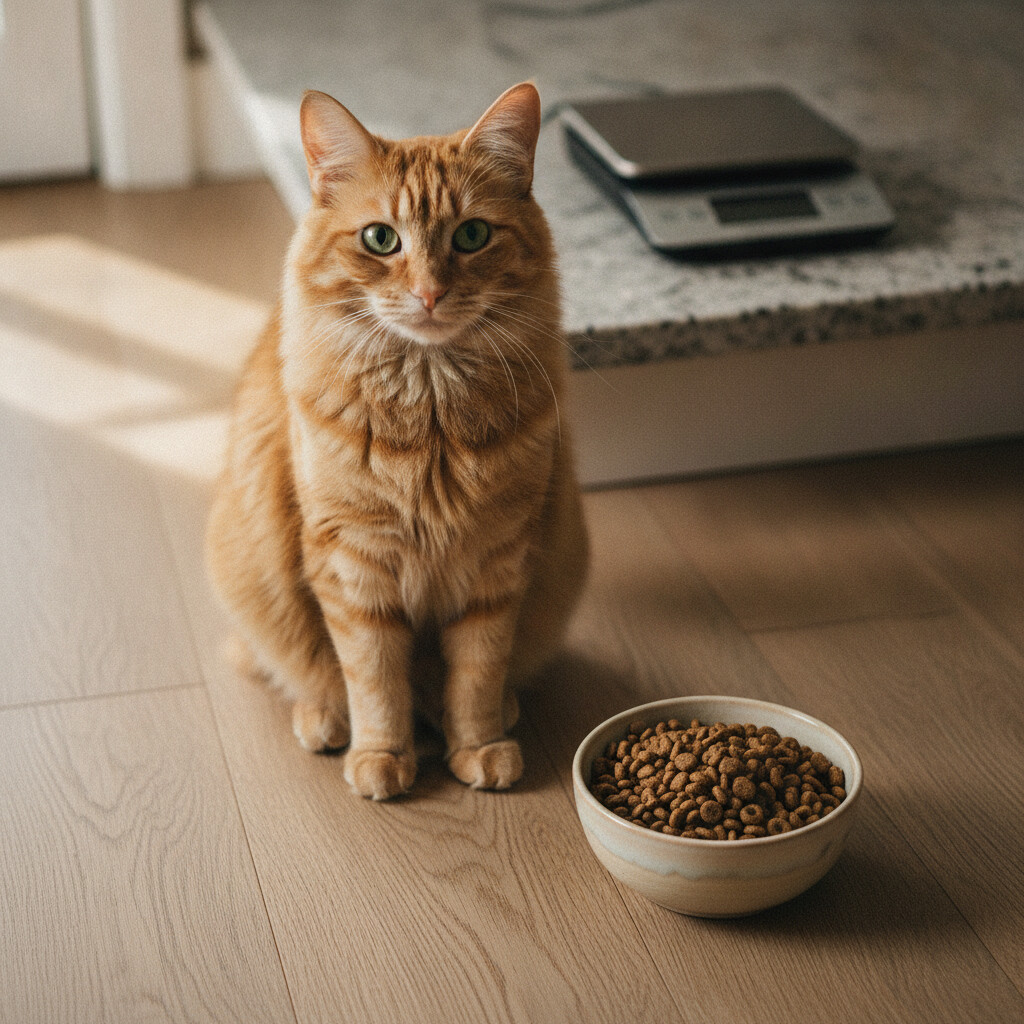
Cats gain weight after spaying or neutering mainly because their appetite goes up while their energy needs go down, so the same bowl of food that was right before surgery becomes too much afterwards. The fix is not to skip the surgery or put your cat on a crash diet; it’s to start measuring food and adjusting portions from the day you bring them home.
Why Do Cats Gain Weight After Neutering?
The weight gain is real and well documented. Research has looked at both sides of the energy equation:
- Appetite rises. A 2003 study in the Journal of Nutrition (Kanchuk, Backus and colleagues) followed male cats before and after castration and found food intake rose quickly after surgery, and that the extra eating, rather than a fall in energy use, explained most of the weight gain in that group.
- Energy needs drop. Other work, including a 1997 study by Fettman and colleagues in Research in Veterinary Science, found neutered cats had lower metabolic rates than intact cats.
The honest summary: researchers still debate exactly how much each factor contributes, but they agree on the result. Neutered cats need fewer calories than intact cats yet tend to want more. Combine that with an indoor life and food that’s always available, and the scales creep up.
The AAHA/AAFP Feline Life Stage Guidelines (2021) list neutering among the risk factors for obesity and recommend nutrition counselling around the time of surgery. That’s not a reason to avoid neutering, which has clear health and welfare benefits (our article on whether to spay or neuter covers the evidence). It’s a reason to change how you feed.
How Much Should I Feed My Cat After Spaying or Neutering?
There’s no single number, because it depends on your cat’s age, size, activity and current body condition. A common starting point many vets use is to reduce daily calories by roughly a quarter compared with what kept your cat at a healthy weight before surgery, then adjust based on how their body condition changes.
In practice:
- Find out how many calories your cat eats now. The calorie content (kcal per cup, can or pouch) is printed on the label. Our cat calorie guide by weight walks through the maths.
- Measure, don’t scoop. A kitchen scale is far more accurate than a measuring cup, especially for dry food, where a “cup” can vary a lot.
- Count treats. Treats should stay under about 10% of daily calories, a rule echoed in the WSAVA Global Nutrition Guidelines.
- Weigh your cat every 2 to 4 weeks for the first few months after surgery, and adjust portions by small amounts.
Your vet can give you a target calorie number on the day of surgery or at the post-op check. It’s a good question to ask while you’re there.
What About Kittens Neutered Young?
Many cats are now neutered at around 4 to 6 months old, while they’re still growing. That creates an apparent conflict: kittens need growth nutrition, but neutering lowers their calorie needs.
The usual answer is to keep feeding a growth (kitten) food but feed less of it, rather than switching to adult food early. Kittens need the extra protein, calcium and other nutrients that growth formulas provide until they’re close to adult size, usually around 10 to 12 months. Watch their body shape rather than the clock: you should be able to feel the ribs easily without seeing them, and see a waist from above. Our guide to kitten nutrition in the first year has more detail.
Do I Need a “Neutered” or “Sterilised” Cat Food?
Not necessarily. Foods marketed for neutered cats are usually lower in calories per cup and often higher in fibre or protein, which can make portion control easier. They’re a reasonable option, but they aren’t magic. Feeding too much of a “light” food still causes weight gain, and a regular complete food fed in the right amount works fine.
What matters more:
- Meal feeding instead of free-feeding. Measured meals let you see exactly how much is eaten. The pros and cons are covered in free-feeding vs. scheduled meals.
- Wet food in the mix. Wet food is usually lower in calories per gram because of its water content, which can help some cats feel full on fewer calories.
- Making food work harder. Puzzle feeders and spreading meals across the day slow eating and add activity.
- Play. Two or three short play sessions a day help burn calories and give a neutered cat an outlet for hunting energy.
Don’t Overcorrect
If your cat has already gained weight, don’t slash their food dramatically. Cats that eat too little, too fast, are at risk of hepatic lipidosis (fatty liver disease), which can be life-threatening; our article on why skipping meals is dangerous for cats explains why. The AAHA Weight Management Guidelines (2014) suggest aiming for slow, steady loss of about 0.5 to 2% of body weight per week, under veterinary supervision. If your cat is already overweight, our guide to safe weight-loss diets for cats is the place to start.
When to See a Vet
Check in with your vet if:
- Your cat hasn’t eaten for 24 hours after surgery, or seems lethargic, vomits repeatedly, or the wound is swollen, red or discharging
- Your cat has gained more than about 10% of their body weight since surgery
- Weight is going up even though you’ve reduced portions
- Your cat seems constantly hungry, is drinking more, or is losing weight unexpectedly, since these can point to medical problems rather than diet
The Takeaway
Neutering doesn’t doom a cat to being overweight, but it does change the maths. Weigh the food, weigh the cat, cut portions modestly from the day of surgery, and keep kittens on growth food in smaller amounts. Small, early adjustments are much easier than a diet later on.
Did you notice a change in your cat’s appetite after they were spayed or neutered?