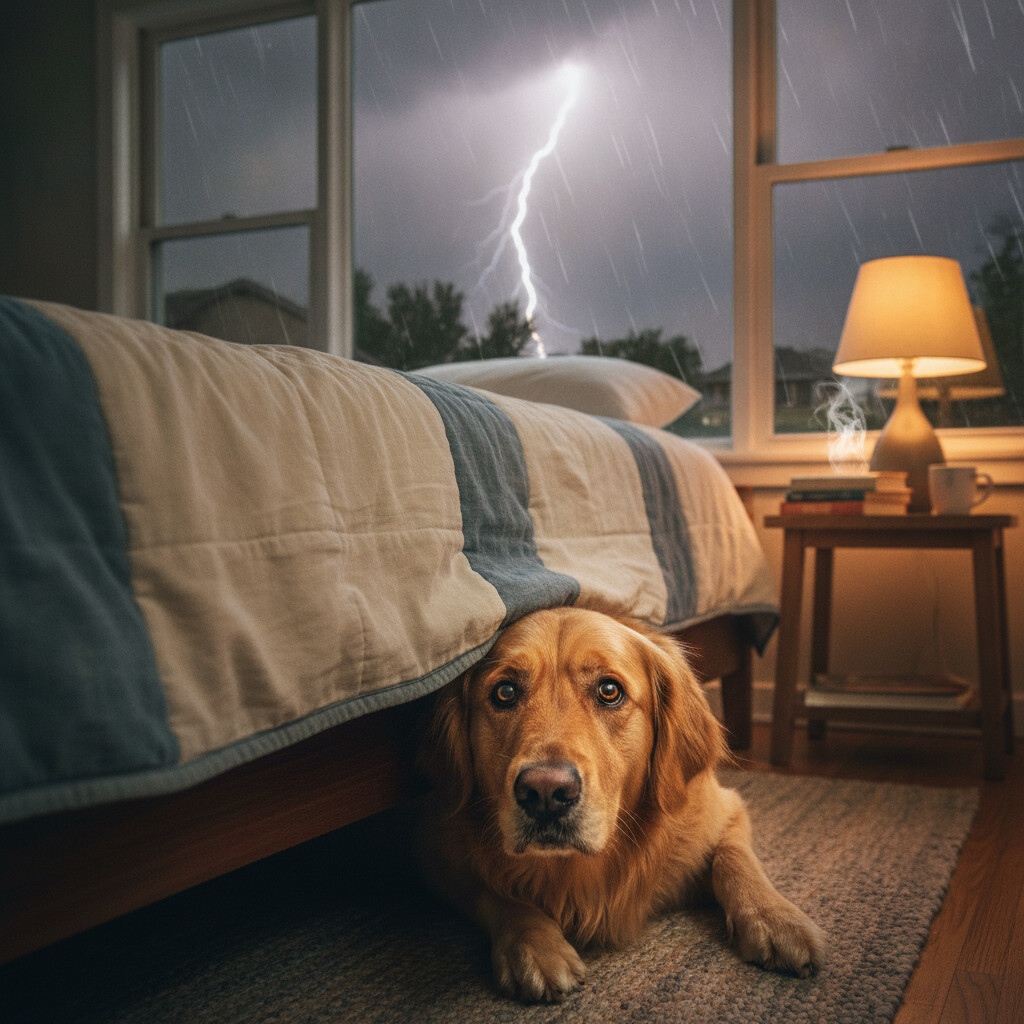
Fireworks and thunderstorms trigger genuine fear in a lot of dogs — not drama, not attention-seeking. Survey-based research on noise aversion puts the number of affected dogs anywhere from about 20% to nearly half, depending on the study and how it defines “affected.” One large firework-specific study found over half of dogs sampled showed at least some fear response. If your dog is shaking, pacing, or trying to squeeze behind the toilet during a storm, they’re not being difficult. Here’s what’s actually happening and what helps.
What’s Actually Happening in Your Dog’s Brain and Body
Dogs hear a much wider frequency range than we do and at far greater sensitivity, so a firework or thunderclap that’s loud to us can be genuinely overwhelming to them. The fear response is a real physiological cascade: adrenaline spikes, heart rate climbs, cortisol rises. This is the same fight-or-flight system that kicks in for any perceived threat — it’s not a behavioral quirk, it’s biology.
Vets and veterinary behaviorists now generally use the term “noise aversion” rather than just “phobia,” because reactions exist on a spectrum. Some dogs pace and pant. Others progress to full panic — trying to bolt, breaking through screen doors, or self-injuring while trying to escape a crate. Noise aversion can also worsen over time if it’s not addressed, so a mild reaction at two years old doesn’t mean it’ll stay mild at six.
Fireworks vs. Thunderstorms: Why Storms Often Hit Harder
Fireworks are loud, but at least they’re just loud. Thunderstorms bring a combination that seems to be harder on dogs: sound, sudden pressure changes, static electricity buildup in fur, darkening skies, and rain — a whole sensory pile-up rather than one variable. Some researchers believe the static charge dogs can feel building up before and during a storm is part of what makes storm phobia particularly severe in affected dogs, which is part of the theory behind snug-fitting anxiety wraps (more on those below).
Fireworks also have a predictable pattern most owners can plan around — the Fourth of July, New Year’s Eve, local celebrations. Thunderstorms don’t send a calendar invite, which makes it harder to prepare a dog in advance and easier for the fear to generalize to other triggers over time.
Signs of Noise Aversion, Mild to Severe
Not every scared dog looks the same. Watch for:
- Mild: lip licking, yawning, panting when it’s not hot, pacing, seeking out their owner
- Moderate: hiding, trembling, refusing food, excessive drooling, trying to burrow under furniture or blankets
- Severe: attempting to escape the house or yard, destructive behavior at doors and windows, self-injury, loss of bladder or bowel control
Severity can also change with age — noise sensitivity commonly increases as dogs get older, and a new or worsening fear response in a senior dog is worth a vet visit to rule out pain or cognitive decline as a contributing factor, not just “she’s always been like this.”
What Actually Helps
Give them a den. A crate, closet, or small covered space away from windows lets a dog retreat somewhere that feels defensible. Never force a fearful dog into a crate if they associate it with the fear — it should already be a positive, familiar space before the scary event happens.
Try a snug wrap. Pressure-based products (the best-known is the Thundershirt) show mixed but generally positive evidence for mild to moderate cases — think of it as a permanent, gentle hug. It’s not a fix for severe cases on its own, but it’s low-risk and worth trying.
Mask the sound. White noise, a fan, or music/TV at a normal volume can blunt the sharpness of booms and cracks so they’re less startling.
Don’t punish the fear, but don’t overdo the coddling either. Comforting a scared dog with a calm voice and physical affection does not “reinforce” fear the way outdated advice used to claim — current veterinary behavior consensus is that comfort is fine. What doesn’t help is frantic, high-pitched reassurance that signals to the dog that something really is wrong.
Desensitization works, but it takes real time. Playing recordings of fireworks or storms at a very low volume, paired with treats and gradually increasing volume over weeks, can reduce reactivity — but it has to start well before the actual event, not the night of. It’s not a same-week fix.
Ask about medication for moderate to severe cases. This is where a lot of owners under-treat. If your dog is at the “trying to escape” or “panicking” level, situational anti-anxiety medication (prescribed by a vet, not over-the-counter) can be genuinely life-changing and isn’t a last resort — it’s appropriate first-line care for a dog whose fear is that intense. Waiting it out with a scared, panicking dog isn’t kinder; it’s just slower.
When to See a Vet
Talk to your vet if your dog’s noise reactions are moderate or severe, are getting worse over time, involve any self-injury or destructive escape attempts, or if a new fear response shows up suddenly in a dog who’s never had one before (which can occasionally signal pain, hearing changes, or a medical issue rather than pure behavioral fear). A vet can rule out physical causes, discuss situational medication options, and refer you to a veterinary behaviorist for cases that need more structured, professional intervention. If your dog’s fear response looks anything like the separation anxiety signs we’ve covered before, it’s worth mentioning both to your vet at the same visit — the two often overlap.
The Bottom Line
A dog cowering through a thunderstorm isn’t overreacting — their hearing and stress physiology make this a bigger deal for them than it is for you. A den space, sound masking, and patience help mild cases. For dogs who panic, medication and a vet’s input aren’t overkill — they’re the responsible next step. And if you want to read your dog’s broader stress signals beyond noise events, our dog body language guide is a good place to start.