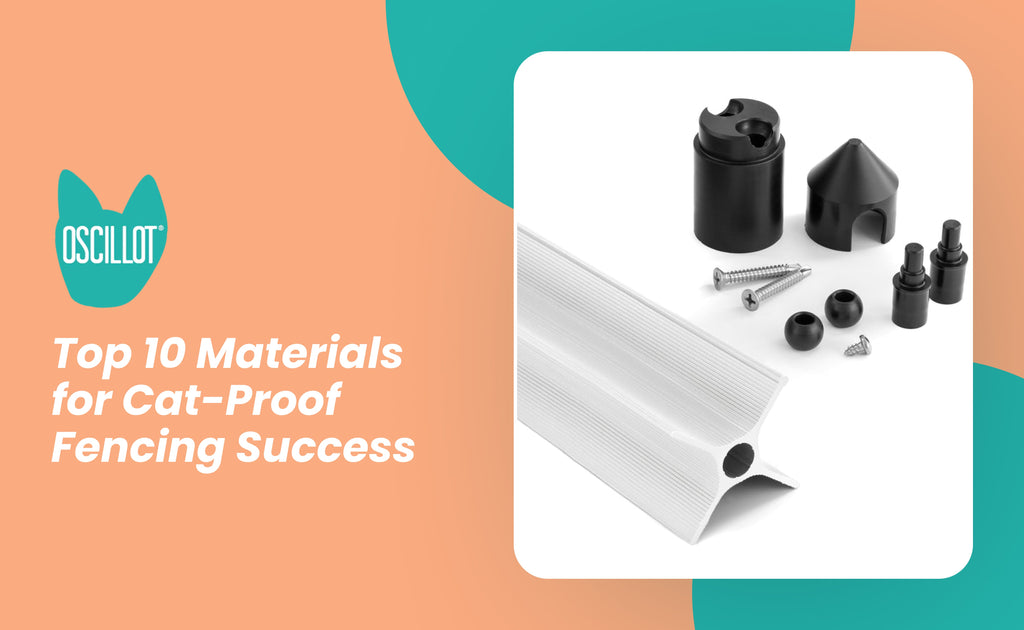
Not all cat-proof fencing materials are created equal — and choosing the right ones for your specific yard, climate, and cat can mean the difference between a containment system that lasts 15 years and one that fails within 18 months. This guide from Oscillot covers the top 10 materials used in effective cat-proof fencing systems, with clear guidance on when and why each one works.
Leading the list is the rotating paddle system — Oscillot’s core innovation. High-impact, UV-stabilized plastic paddles spin freely on aluminum axles, denying cats any grip to climb over. The plastic is weather-resistant in all U.S. climate zones, from Florida humidity to Minnesota winters, and UV-stabilized to prevent brittleness over years of sun exposure.
The article covers all the key materials in a complete cat-proof fence system: high-quality plastic for the paddle components, galvanized or powder-coated steel for posts and brackets (the combination of plastic paddles on steel posts creates maximum durability at minimum weight), aluminum for weight-sensitive applications, stainless steel hardware for coastal environments with salt air corrosion risks, and the base fence materials themselves — timber, vinyl, chain-link, and masonry — each of which has different installation requirements and maintenance considerations.
The guide explains why cheap netting and mesh alternatives fail: UV degradation within 2–3 years, susceptibility to sagging and gap formation, and cat climbing ability that navigates mesh surfaces effectively. The material quality of Oscillot’s system reflects its Australian origins — designed for a climate at least as challenging as any U.S. region.
Read the full article: Top 10 Materials for Cat-Proof Fencing Success