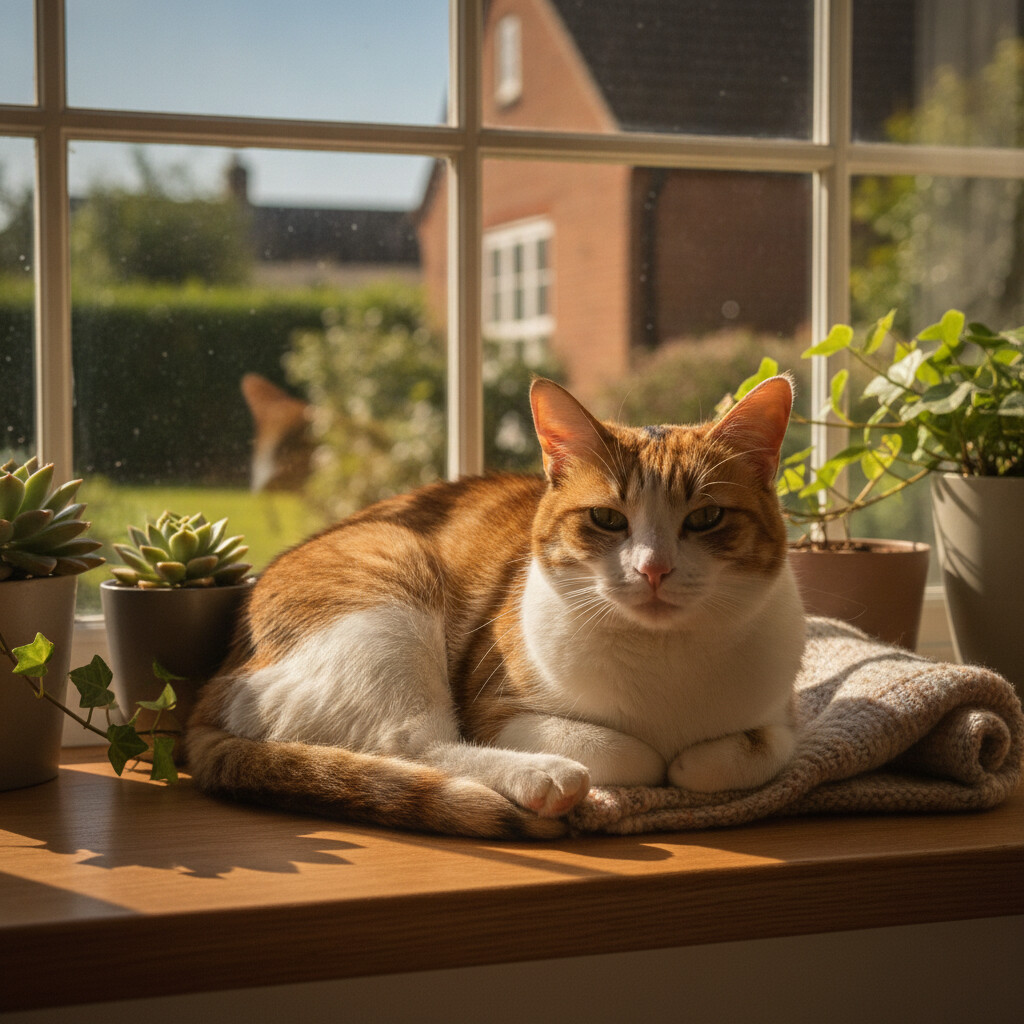
Three weeks after the amputation, our vet warned us not to expect too much. Six weeks after, she was back up on the kitchen counter — the exact spot we’d spent a year training her to stay off of. Cats don’t read the recovery timeline. They just get on with it.
The Accident
Pepper was two years old when she got out during a thunderstorm and didn’t come home for four days. When she finally showed up, dragging her back left leg and refusing to put any weight on it, the emergency vet’s assessment was blunt: the leg was too badly damaged to save, likely from being clipped by a car. Amputation was the only option that didn’t involve a long, painful attempt to save a limb that probably wouldn’t have worked properly again anyway.
We said yes because the alternative was worse, not because we felt ready for it. Nobody feels ready to sign that form.
The cost caught us off guard too, worth mentioning for anyone facing this without warning: emergency surgery plus the multi-day hospital stay ran close to $3,000, and that’s without complications. If your cat isn’t insured and you don’t have savings set aside for exactly this kind of emergency, ask the vet about payment plans or CareCredit before the bill arrives — most emergency clinics have options, but they don’t always volunteer that information unless you ask.
The First Two Weeks Were the Hard Part — For Us
The surgery itself is more routine than most owners expect. Feline limb amputation has a well-established track record, and a 2018 quality-of-life study published in the Journal of Feline Medicine and Surgery found that owners of cats who’d had a limb amputated rated their cats’ quality of life comparably to cats with all four limbs intact within a few months of recovery. Cats compensate for a missing leg remarkably well — better, on average, than dogs do, likely because a smaller portion of their body weight rests on any single limb.
Knowing that statistic and watching your cat relearn how to walk are two different experiences. The first week, Pepper mostly slept, disoriented and clearly uncomfortable despite the pain medication. She fell trying to jump onto her usual perch and didn’t try again for days. We caught ourselves hovering, rearranging furniture, blocking off stairs — most of which turned out to be unnecessary once she found her balance.
What Actually Changed (Less Than We Expected)
By week four, Pepper was jumping onto the couch. By week six, the counter. The things that stayed hard were the highest jumps and anything requiring a fast pivot — chasing a toy that changed direction sharply would sometimes end in a tumble, though she’d shake it off and try again immediately, visibly more bothered by our reaction than by the fall itself.
We made a few permanent changes rather than temporary accommodations:
- Lower, wider steps to her favorite window perch instead of one big jump, giving her a gradual route up
- Non-slip mats on the hardwood near her jumping spots, since a missing leg means less to catch a slide
- A wall-mounted shelf route to the top of the bookcase, so she could climb in stages instead of leaping — something similar to the ideas in our DIY cat shelf guide worked well for her specifically
None of it was complicated or expensive. Most tripod cats need geography adjustments, not a redesigned house.
What We’d Tell Someone Facing the Same Decision
If your cat is facing amputation, the hardest part is usually the decision itself, not the outcome. Vets who perform the surgery regularly will tell you the same thing ours did: cats missing a leg are not, in any meaningful sense, disabled cats. They’re cats who’ve adapted, usually within a couple of months, to getting around a slightly different way.
Watch for these signs during recovery that mean it’s time to call your vet rather than wait it out: persistent limping favoring the surgical side well past the expected healing window, swelling or discharge at the incision site, a sudden refusal to bear any weight after weeks of normal use, or a noticeable personality change like hiding and not eating. Normal recovery looks like gradual, steady improvement — any sharp reversal is worth a call, not a wait-and-see.
Three Years Later
Pepper is seven now. She still can’t quite manage the very top of the bookcase in one jump, and she’s developed an odd habit of sitting with her remaining back leg tucked so far forward it looks like she’s folded in half. Everything else — the counter surfing, the 3 a.m. zoomies, the way she headbutts the bathroom door when we take too long — is exactly what it would have been if the accident had never happened. If you’re staring down this decision for your own cat, that’s the part worth holding onto: the leg is the hard part. The cat figures out the rest.