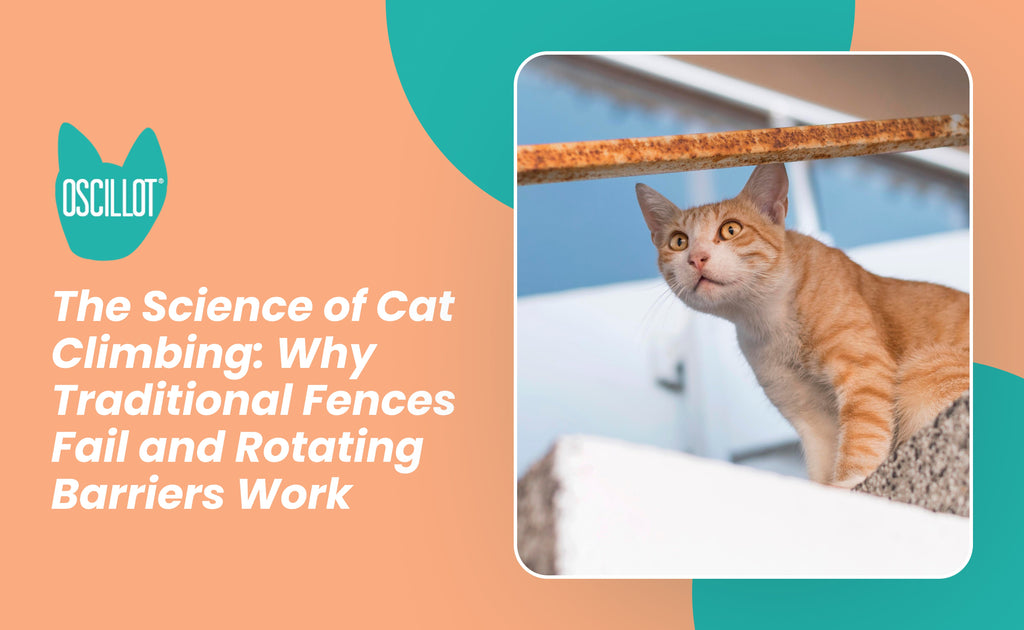
Why can cats defeat a 6-foot wooden fence so easily? The answer lies in their extraordinary biomechanical adaptations — retractable claws that stay razor-sharp throughout their lives, flexible spines allowing near-instantaneous direction changes, and leg muscles that generate jump forces 5–6 times their body weight. Understanding the science of how cats climb is the key to understanding why most containment solutions fail and why rotating paddle technology succeeds.
This fascinating deep-dive from Oscillot covers three interconnected domains: the biomechanics of feline climbing (retractable claw mechanics, muscle architecture, and proprioceptive adaptations), the physics of why traditional barriers fail (grip friction, leverage mechanics, and how cats use vertical surfaces), and the engineering principles that make rotating systems effective (eliminating the friction grip that cats depend on for climbing).
The core insight: cats don’t jump straight over fences — they grip and climb. Traditional solid fence materials (wood, vinyl, masonry) all provide adequate grip texture for cat claws. A spinning paddle system eliminates grip entirely: when a cat’s paw touches a rotating paddle, the surface spins away rather than providing the friction needed to pull upward. No grip = no climb.
The article also debunks common myths about fence height solving the problem alone, and explains why electric shock, tilted extensions, and netting systems all have fundamental failure modes that rotating paddles avoid.
Read the full article: The Science of Cat Climbing: Why Traditional Fences Fail and Rotating Barriers Work