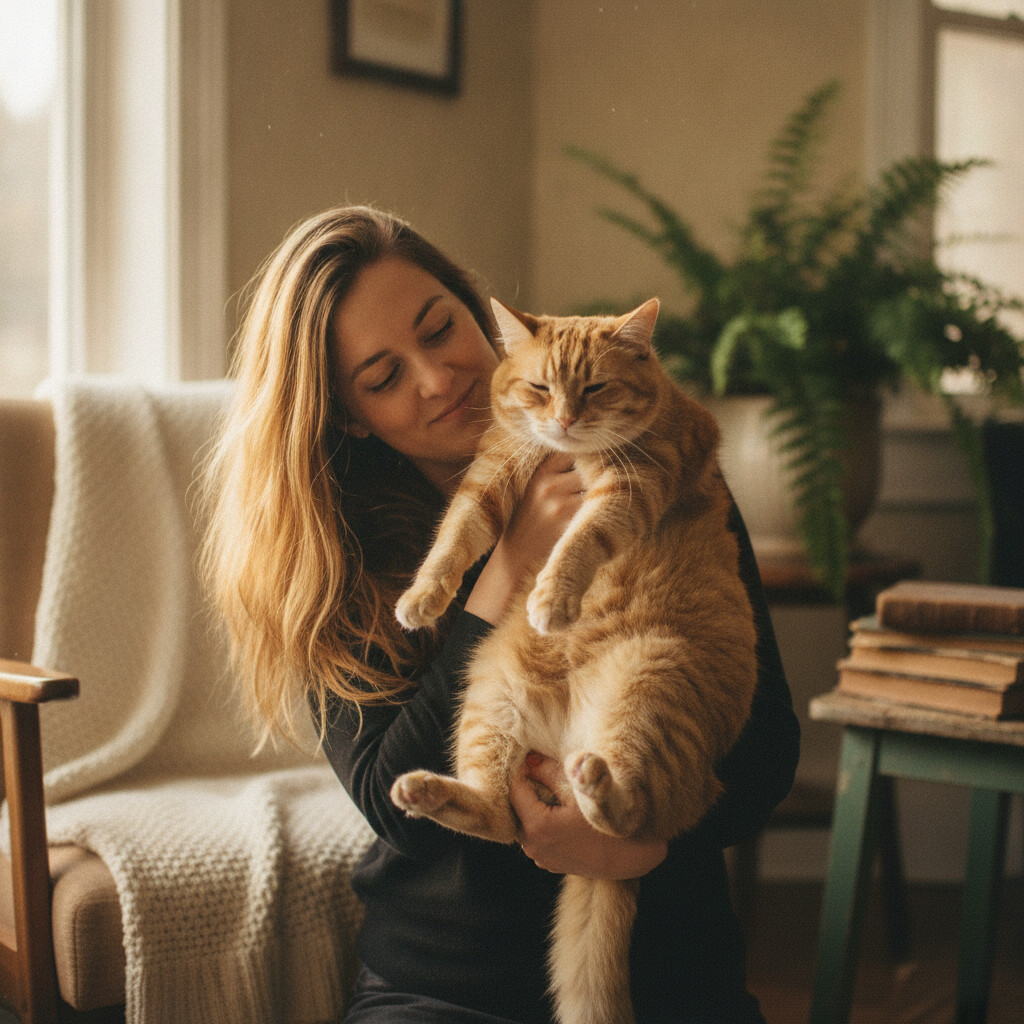
Most cats who “hate” being picked up don’t hate being held — they hate being held wrong. A cat lifted without support under the back half of their body will squirm, claw, and bolt the second you loosen your grip, and that’s not bad temperament, it’s a reasonable response to feeling unsafe in mid-air.
Why Cats Struggle With Being Picked Up
Cats aren’t built the way dogs are for being scooped up. They have a floating collarbone and a spine that’s built for arching, twisting, and landing on their feet — not for being carried like a sack of flour. When a cat is grabbed under the front legs with their hind end dangling, their whole body has to work to compensate, and the instinctive response is to scramble for something solid. That scramble is what gets read as “aggression,” when it’s really just a cat trying to stop falling.
Fear Free certified veterinary handling guidelines (the standard many US vet clinics now train to) are built around exactly this insight: a cat that feels supported struggles less, and a cat that struggles less is less likely to get hurt — or to hurt you.
The Actual Technique
- Approach at cat level, not from above. Crouch or lower your hand to their height first. A hand descending from above the head reads as a threat to a lot of cats, especially ones who aren’t confident with handling.
- Let them make first contact. A brief chin scratch or letting them sniff your hand before you touch their body tells them what’s about to happen.
- Scoop with two hands, not one. One hand under the chest, just behind the front legs. The other hand under the back legs and rear, supporting the full weight of the hindquarters. Nothing should dangle.
- Bring them into your body immediately. Don’t hold a cat out at arm’s length — tuck them against your chest or side so their back legs have something to brace against. This single adjustment eliminates most of the “flailing” people associate with picking up cats.
- Support, don’t squeeze. A cat that feels braced doesn’t need to be gripped tightly. A death-grip usually makes a calm cat start struggling, because pressure without support reads as restraint, not safety.
What Not to Do
- Never pick a cat up by the scruff alone, especially an adult cat. Mother cats carry kittens this way because kittens go limp reflexively — that reflex fades with age, and scruffing an adult cat is more likely to cause stress or injury than to calm them.
- Don’t pick a cat up under the front legs only, arms akimbo like a toddler being lifted. This is the single most common mistake, and it’s the one that produces the most squirming.
- Don’t force a hold if the cat is already tense. Flattened ears, a swishing tail, or a low crouch before you’ve touched them means this isn’t the moment. Wait, or let the interaction happen on the ground instead.
Reading the Room Before You Lift
Not every cat wants to be picked up, and that’s worth respecting rather than overriding. Cats who tolerate being held will usually give you a relaxed body, slow blinks, or a raised tail approaching you — the same signals covered in our guide to cat body language. If a cat is already avoidant or gives a warning nip when handled, that’s communication, not defiance; see our piece on why cats bite when being petted for what those signals usually mean.
Special Cases: Kittens, Seniors, and Vet Visits
Kittens have less muscle control and startle easily, so the two-hand, fully-supported method matters even more — a kitten that free-falls even a few inches can be seriously hurt.
Senior cats may have arthritis or fragile joints, and a grip that was fine at age three can cause real pain at thirteen. Support the whole body, lift slowly, and watch for a flinch, hiss, or sudden stiffness — these are pain signals, not bad behavior.
At the vet or during travel, cats are already stressed by the environment, which makes good handling even more important. If you’re introducing a cat to a household for the first time, our guide on introducing two cats covers how first physical contact between cats (and between cats and new people) sets the tone for everything after.
When to Be Careful — or Call the Vet
If a cat cries out, goes rigid, or tries to bite the moment you touch a specific area (especially the lower back, hips, or abdomen), stop. That’s not a handling problem — that’s a pain signal, and it’s worth a vet visit to rule out arthritis, an injury, or an internal issue before assuming it’s just a handling preference.
The Takeaway
Support the back half of the body, keep the cat close to yours, and let them see it coming. That’s really the whole technique — most of what looks like a cat who “hates being held” is a cat who’s never been held with proper support. Get the mechanics right and a surprising number of reluctant cats turn out to tolerate, and sometimes even enjoy, being picked up.