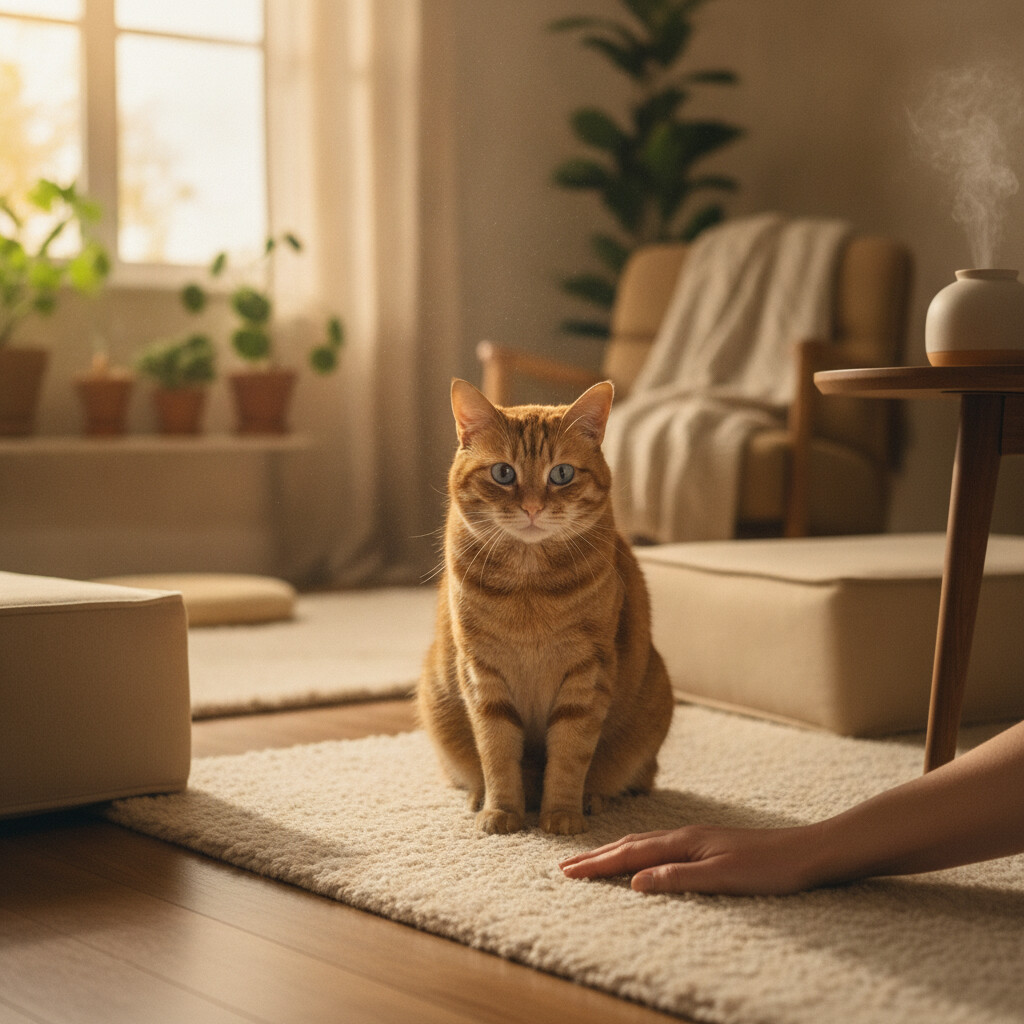
Our cat Pepper went blind overnight, and for the first few days I was more scared than she was. She was twelve, healthy as far as we knew, and one evening she was chasing a moth across the living room. The next morning she walked straight into the leg of the coffee table she’d navigated around for a decade. That’s when I knew something was seriously wrong — and it wasn’t something we could wait out.
The Morning Everything Changed
Cats compensate so well for vision loss that it’s genuinely possible to miss it happening gradually. Pepper’s case wasn’t gradual, though. She went from fully sighted to walking into furniture in under twelve hours, and once I started paying attention, the signs were impossible to unsee: dilated pupils that didn’t react to light, a hesitance to jump onto the couch she used every day, bumping the door frame on her way out of the room.
We got her to the emergency vet that morning. Sudden, acute blindness in an older cat is one of those situations where “let’s see how she does over the weekend” is the wrong call — it can be the first visible sign of dangerously high blood pressure, and the retina doesn’t always recover once it’s detached.
What the Vet Found
The diagnosis was systemic hypertension causing bilateral retinal detachment — high blood pressure had literally pushed the retinas away from the back of her eyes. It’s a recognized complication in older cats, most often tied to underlying kidney disease or hyperthyroidism, and it’s one of the more common causes of sudden blindness in senior cats according to feline medicine specialists. The infuriating part is that cats rarely show obvious symptoms of high blood pressure before it does damage to the eyes, kidneys, heart, or brain — vision loss is often the first sign an owner actually notices.
Pepper started on blood pressure medication that day. Reattachment is possible in some cats if blood pressure comes down quickly enough, but the vet was honest with us that it’s not guaranteed, and in Pepper’s case, it didn’t happen. We were sent home with a bottle of pills and a permanently blind cat, and no real playbook for what came next.
Cat-Proofing a Home for a Cat Who Can’t See It
The single best piece of advice we got: don’t rearrange the furniture. A blind cat builds an internal map of a space using scent, whiskers, and memory — the layout she’d learned over years became her most useful tool, and disturbing it would have set her back further than the blindness itself.
What we did change:
- Blocked open stairs and the pool step with baby gates until she’d relearned the house.
- Added texture cues — a different rug texture at the top of the stairs, so her paws would tell her something before she got there.
- Kept food, water, and litter box locations fixed — no “just moving it to a more convenient spot,” ever.
- Talked to her before touching her — a light-sleeping blind cat startles more easily than a sighted one, and a startled cat can lash out defensively without meaning to.
- Left a little more space between furniture rather than removing furniture altogether, since removing landmarks disoriented her more than a slightly wider path did.
Within about three weeks, Pepper was moving through the house at close to her old speed. She still misjudges distance on new surfaces occasionally, and she’s more startled by sudden sounds than she used to be, but she plays, she jumps (onto things she already knows), and she still ambushes the dog from behind the same armchair she always has.
What I’d Tell Someone Going Through This Now
The blindness itself turned out to be the least disruptive part. What actually mattered was catching the underlying cause — the hypertension — before it did more damage elsewhere. We now check her blood pressure and kidney values regularly, something we’d never done before this happened.
If your cat’s vision changes suddenly — not “seems a little clumsy lately” but an actual, fast shift — treat it as an emergency, not a wait-and-see. The eyes may not be recoverable, but the underlying cause almost always is, and catching it protects everything else the high blood pressure would otherwise damage. Our other article, Caring for a Blind or Deaf Cat: What Actually Changes, covers the practical day-to-day adjustments in more depth, and Senior Cat Going Blind or Deaf: What to Expect and How to Help walks through the more gradual version of this same situation, which is far more common than what Pepper went through.
A year later, most visitors don’t notice she’s blind until she misjudges a jump. She noticed less than we did, honestly. Cats are better at this than we give them credit for — our job was just to stop rearranging the furniture and get out of her way.