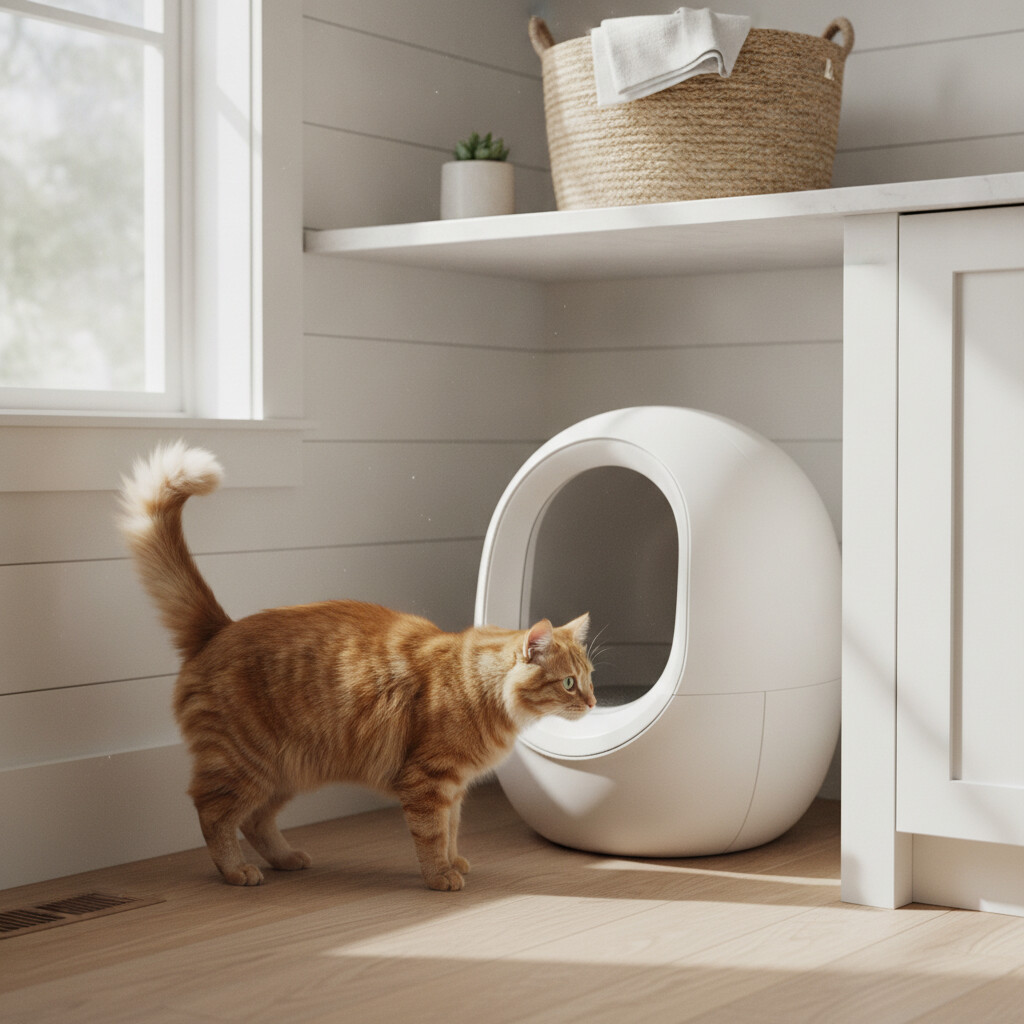
Smart litter boxes that track weight, visit frequency, and time spent in the box can genuinely catch early warning signs of illness — but they’re a monitoring tool, not a diagnostic one, and they don’t replace the actual cleaning function most owners think they’re paying for. Here’s what the health-tracking features really do, what they can’t do, and who they’re worth the money for.
What “Health Monitoring” Actually Means
Health-monitoring litter boxes (think Litter-Robot 4’s Whisker Health reports, PrettyLitter’s color-change system, or similar competitors) typically track some combination of:
- Weight — most use the cat’s own body weight, measured each time they step on or off the platform, to flag gradual gain or loss
- Visit frequency and duration — how many times a day a cat uses the box and how long each visit takes
- Urine and stool changes — some crystal-litter systems (like PrettyLitter) use color-changing granules to flag pH shifts associated with urinary or kidney issues; sensor-based boxes instead infer changes from visit patterns
None of this requires the cat to do anything differently — the box collects data passively every time it’s used, then surfaces trends through an app.
What the Data Can Actually Catch (and What It Can’t)
This is where the technology has real, evidence-backed value: increased urination frequency, straining, or house-soiling are recognized early clinical signs of several common feline conditions, including feline lower urinary tract disease (FLUTD), diabetes, and chronic kidney disease, according to veterinary consensus resources like the AAFP’s guidelines on lower urinary tract health. A litter box that quietly logs “this cat has gone from 4 visits a day to 9” over two weeks can catch a pattern an owner would otherwise only notice once symptoms are obvious — see our guide on urinary tract infections in cats for how easy early UTI and FLUTD signs are to miss.
What it can’t do is tell you why. A weight trend or visit-frequency spike is a prompt to call your vet, not a diagnosis. Sensor-based systems can also be thrown off by simple things — a new cat in a multi-cat household using the same box, litter type changes, or the box being moved — so a flagged change should be a starting point for questions, not a verdict.
Automatic Cleaning vs. Health Monitoring: Not the Same Feature
It’s worth separating these because they get marketed together but solve different problems. Self-cleaning litter boxes exist primarily to reduce scooping and odor — we cover the best ones for that purpose in our guide to automatic litter boxes. Health monitoring is a separate layer that happens to be bundled into some of the same premium models. You can buy a self-cleaning box with zero health tracking, or in a few cases, a health-tracking system that isn’t self-cleaning at all. If health monitoring is your main reason for buying, check that feature specifically rather than assuming every automatic box has it.
Who Should Actually Consider One
The clearest case for a health-monitoring litter box is a household where subtle changes are genuinely hard to catch by eye:
- Multi-cat homes, where it’s easy to lose track of which cat is using the box how often, and a decline in one cat can go unnoticed for weeks
- Senior cats, who are at higher baseline risk for kidney disease, diabetes, and arthritis-related litter box changes, and where early detection meaningfully changes treatment outcomes
- Cats with an existing chronic condition like CKD, where an owner is already tracking trends and wants a passive way to catch flare-ups between vet visits
A single healthy cat in a single-cat household gets much less practical value from the health-tracking layer — you’re already the one who’d notice if your only cat’s litter box habits changed.
What to Watch Out For
Health-monitoring litter boxes run considerably more than standard ones — often several hundred dollars for the hardware alone, sometimes with a subscription for full app features or litter refills. Weight readings can be inaccurate if a cat perches at the edge of the platform instead of standing fully inside it, and frequency counts can misattribute visits in multi-cat homes unless the system has per-cat identification (usually via a collar tag or microchip sensor, which is itself an added cost). None of this makes the technology useless, but it does mean the “set it and forget it” promise needs a asterisk: you still need to check the app periodically and still need the right number of boxes for your household regardless of how smart any single one is.
The Takeaway
A health-monitoring litter box is a genuinely useful early-warning layer for households where subtle changes are easy to miss — multi-cat homes, senior cats, or cats already managing a chronic condition. It’s not a diagnostic device and it’s not a substitute for regular vet visits, but as a prompt to say “something’s changed, let’s check it out” a few weeks before symptoms would otherwise become obvious, the data can be worth the added cost. For a single young, healthy cat, a standard litter box and your own attention will catch just as much.