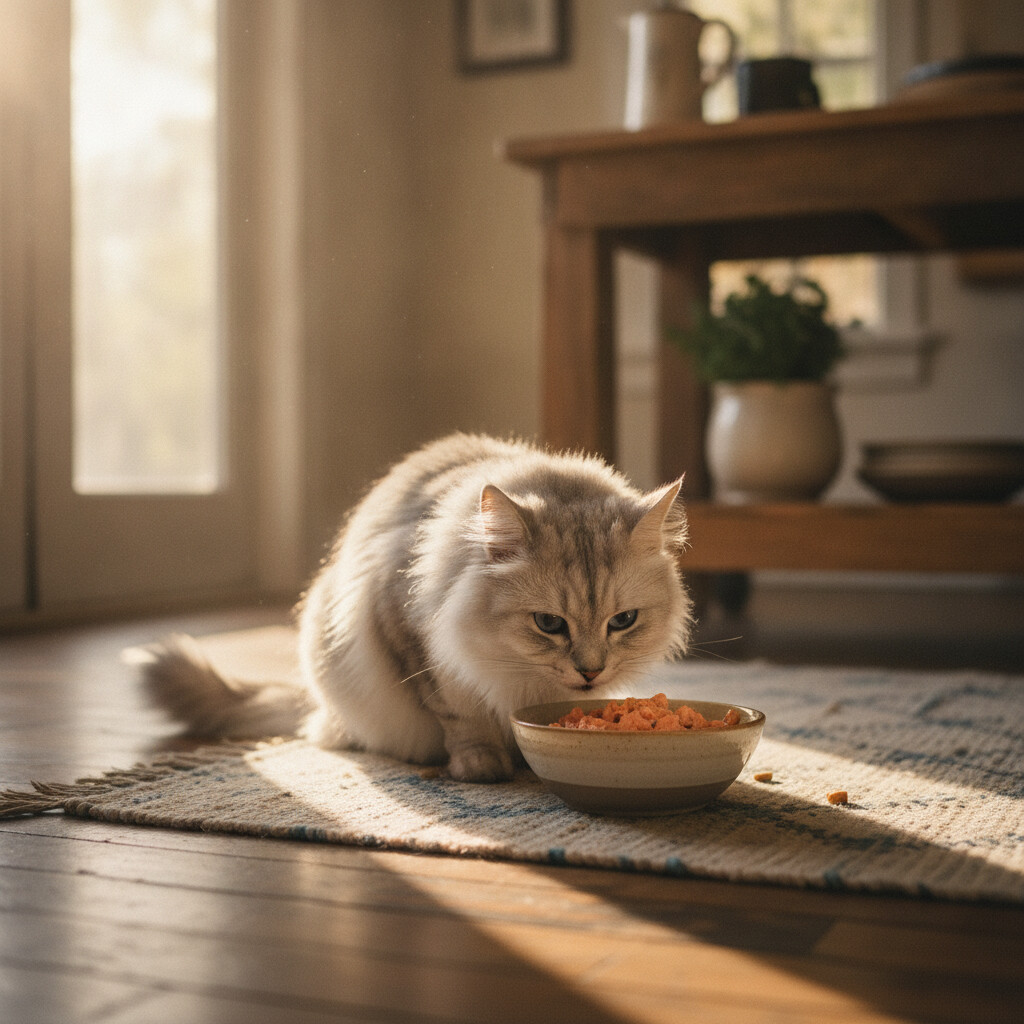
Older cats often eat a little less, but a real drop in appetite is rarely “just age.” In senior cats it’s most often linked to something treatable: dental pain, kidney disease, nausea, or a medical issue like hyperthyroidism. The earlier you catch it, the more options you have.
Here’s how to tell normal slowing down from a problem, what commonly causes it, and what you can do at home while you sort it out.
Is it normal for senior cats to eat less?
Some change is normal. Energy needs shift with age, and activity usually drops. But two things aren’t normal: a clear, sustained drop in how much your cat eats, or any cat skipping meals entirely. A cat that goes a day or more without eating needs a vet, because cats are prone to hepatic lipidosis (fatty liver disease) when they stop eating. Weight loss is also a signal in its own right: see our guide on weight loss in senior cats for what counts as a red flag.
A practical test: weigh your cat monthly (a bathroom scale works: weigh yourself, then yourself holding the cat) and note how much they eat. A slow, steady decline is easy to miss without numbers.
Common reasons older cats stop eating
Dental disease. Painful teeth and gums are very common in older cats. Signs include dropping food, chewing on one side, drooling, bad breath, or approaching the bowl and then walking away. Our piece on dental care for senior cats explains what a vet will look for.
Chronic kidney disease. CKD is among the most common conditions in older cats, and nausea, poor appetite and weight loss are typical features (International Renal Interest Society guidance). Increased thirst and urination often come with it.
Hyperthyroidism. This one is a twist: many hyperthyroid cats have a big appetite, but some, especially later in the disease, lose it. Our guide to hyperthyroidism in cats lists the signs.
Nausea and GI problems. Pancreatitis, inflammatory bowel disease and constipation can all take the edge off hunger. Constipation in particular is easy to overlook; see senior cat constipation.
Pain. Arthritis can make it uncomfortable to crouch at a low bowl. Cats rarely show pain obviously, so look at our signs of pain in older cats.
Reduced smell. Cats rely heavily on smell to decide whether food is appealing. Upper respiratory conditions or age-related changes can blunt it.
Cognitive changes. Some cats with feline cognitive dysfunction forget meals or seem confused at the bowl.
Stress or routine changes. A new pet, a move, or even a bowl in a new spot can matter more to a senior cat than you’d expect.
What you can try at home
These help with the symptom. They don’t replace finding the cause.
- Warm the food slightly. Heating wet food for a few seconds (stir and test it so there are no hot spots) boosts the aroma.
- Offer small, frequent meals. Four to six small portions can work better than two large ones.
- Raise or lower the bowl. A shallow, wide dish avoids whisker discomfort, and raising it a little can help stiff cats.
- Try a different texture or flavour. Pâté, minced, or shredded. Switch gradually where you can.
- Quiet, familiar feeding spot. Away from other pets, noise and the litter box.
- Hand-feeding a few bites can restart interest in some cats.
One caution: don’t switch foods constantly in a panic, and don’t force-feed. Forcing food can create aversion. Appetite stimulants and anti-nausea medication exist, and your vet can prescribe them if appropriate. Please don’t give human medications.
When to see a vet
Call your vet:
- Same day if your cat hasn’t eaten for 24 hours or more
- If you see vomiting, diarrhea, drooling, hiding, yellowing of the gums or eyes, or labored breathing
- If your cat has lost weight over a few weeks, even if they’re still eating
- If appetite is falling alongside increased thirst, urination, or litter box changes
- If your cat eats less and seems to be in pain, or has trouble chewing
Expect your vet to do a physical and dental exam, check weight, and likely run bloodwork and a urinalysis. Many causes in older cats are very manageable once identified. For routine checks, our guide to senior cat wellness exams lays out what should be included.
The practical takeaway
Track weight and portions, treat any sustained drop as a reason to book a check-up, and treat a skipped day as urgent. Appetite is one of the best early-warning signs your senior cat gives you, and it’s one of the easiest to measure.
Sources: AAFP/AAHA Feline Life Stage Guidelines (2021); AAFP and ISFM guidelines on feline senior care; International Renal Interest Society (IRIS) CKD staging guidelines; Cornell Feline Health Center on hepatic lipidosis and hyperthyroidism.