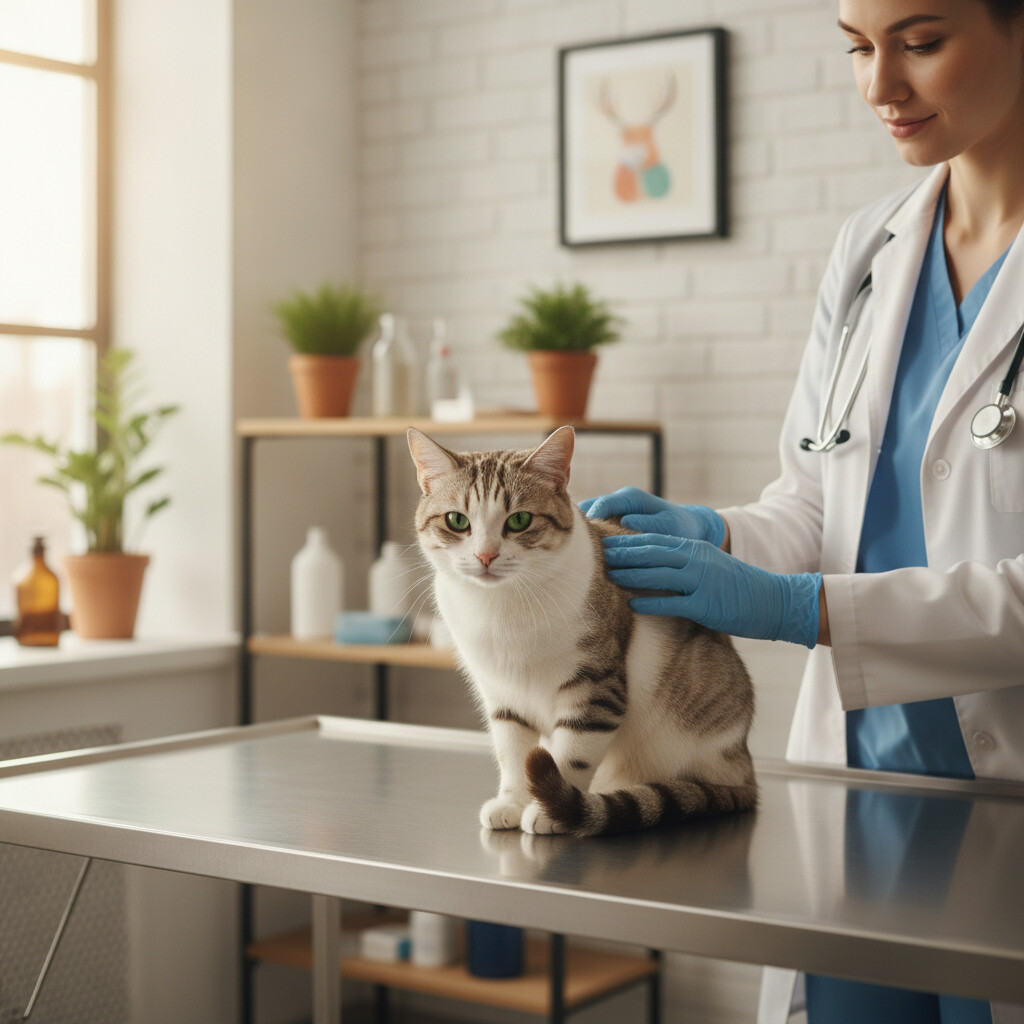
Ringworm sounds worse than it is. It’s not a worm — it’s a fungal infection that’s very treatable, and most healthy adult cats recover fully. What it is, though, is contagious. It spreads easily to other cats, dogs, and people, which means once you suspect it, you need to move quickly.
What Ringworm Actually Is
Ringworm — formally dermatophytosis — is caused by a group of fungi called dermatophytes. In cats, the culprit is almost always Microsporum canis. These fungi infect the outer layers of skin, hair, and nails, feeding on keratin (the structural protein found in all three). The misleading name comes from the ring-shaped lesions it tends to cause in humans. In cats, the presentation is usually messier.
Microsporum canis spores are tougher than you’d expect. They can survive on bedding, carpet, furniture, and grooming tools for up to 18 months — which is why thorough environmental decontamination is as important as treating the cat.
What Ringworm Looks Like in Cats
The typical signs are:
- Circular patches of hair loss, usually starting on the face, ears, or front legs
- Crusty, scaly skin at the edges of lesions
- Broken, stubbly hairs around affected patches
- Mild redness or inflammation underneath
Itching is variable — some cats scratch constantly, others show no irritation at all. And some cats are asymptomatic carriers: they harbour and shed the fungus without developing lesions themselves. This is particularly common in Persians and other longhaired breeds.
If you’ve noticed your cat losing patches of fur, our guide to hair loss in cats covers the full differential — ringworm is one of several possible causes.
How Ringworm Is Diagnosed
A vet diagnosis is important here — several skin conditions look identical, including flea allergy dermatitis and bacterial folliculitis. Guessing gets expensive and delays effective treatment.
Your vet has three tools:
Wood’s lamp examination: A UV light that makes about 50% of M. canis strains fluoresce green-yellow. Fast, but a negative result doesn’t rule out ringworm.
Fungal culture: The definitive test. Hair and skin samples are grown on culture medium for 2–4 weeks. Slower, but confirms the species and guides treatment decisions.
Microscopy: Examination of hair samples under a microscope for fungal spores. Faster than culture but less reliable.
How Ringworm Is Treated
Most cases need topical and oral treatment combined — especially in multi-pet households.
Topical antifungals applied to lesions two to three times a week:
- Miconazole shampoo or spray, often combined with chlorhexidine
- Lime sulfur dips — highly effective but strongly sulphurous; they can stain fabric and surfaces
- Clotrimazole creams for spot treatment
Twice-weekly whole-body antifungal baths are standard when there are multiple cats or lesions are widespread.
Oral antifungals for moderate to severe cases:
- Itraconazole — the most commonly prescribed; typically given daily for three weeks, then on alternate days
- Terbinafine — used when itraconazole isn’t well tolerated
Clipping the coat: In longhaired cats, vets sometimes recommend clipping around lesions to improve topical penetration and significantly reduce the number of spores shed into the environment.
Timeline: Most cats show visible improvement within two to four weeks. Full clearance — confirmed by two negative fungal cultures three weeks apart — typically takes six to twelve weeks. Don’t stop treatment when the cat looks better; the fungus can still be present without visible lesions.
Ringworm in a Multi-Pet or Family Household
This is where ringworm demands urgent attention. It’s zoonotic: it infects humans, dogs, and other cats through direct contact and contaminated surfaces. Children, elderly people, and immunocompromised individuals are particularly vulnerable.
Practical containment measures:
- Isolate the infected cat from other pets and limit human contact until treatment is established and lesions are improving
- Wash bedding and soft furnishings weekly in hot water, using diluted bleach or an antifungal cleaning product where fabric permits
- Vacuum floors daily and discard the bag immediately after each use
- Disinfect hard surfaces with a 1:10 bleach-to-water solution, or an accelerated hydrogen peroxide cleaner
- Wash hands and change clothes after handling the infected cat
If another pet or person develops skin lesions during treatment, that’s a vet or doctor appointment — not a wait-and-see.
When to See a Vet
See a vet promptly if you notice unexplained hair loss or crusty skin patches on your cat, especially when:
- Lesions are spreading quickly or appearing in new locations
- Another pet or person in the household is also developing skin lesions
- Your cat is a kitten, elderly, or on immunosuppressive medication
- Over-the-counter antifungal treatments haven’t made a difference after two weeks
Don’t use human antifungal creams without veterinary guidance — some formulations contain ingredients toxic to cats if they lick the treated area.
What Happens If You Wait
Healthy adult cats can eventually clear ringworm without treatment, but it can take three to five months — and throughout that time, the cat is continuously shedding spores into your home. The longer the infection runs untreated, the bigger the environmental decontamination job.
For kittens and immunocompromised cats, untreated ringworm can spread significantly and become harder to control. If you’re also seeing other changes in your cat, our guide to cat stress signs is worth reading — chronic stress can slow immune response and make infections harder to clear.
Treatment is almost always the faster, cheaper, and kinder option.