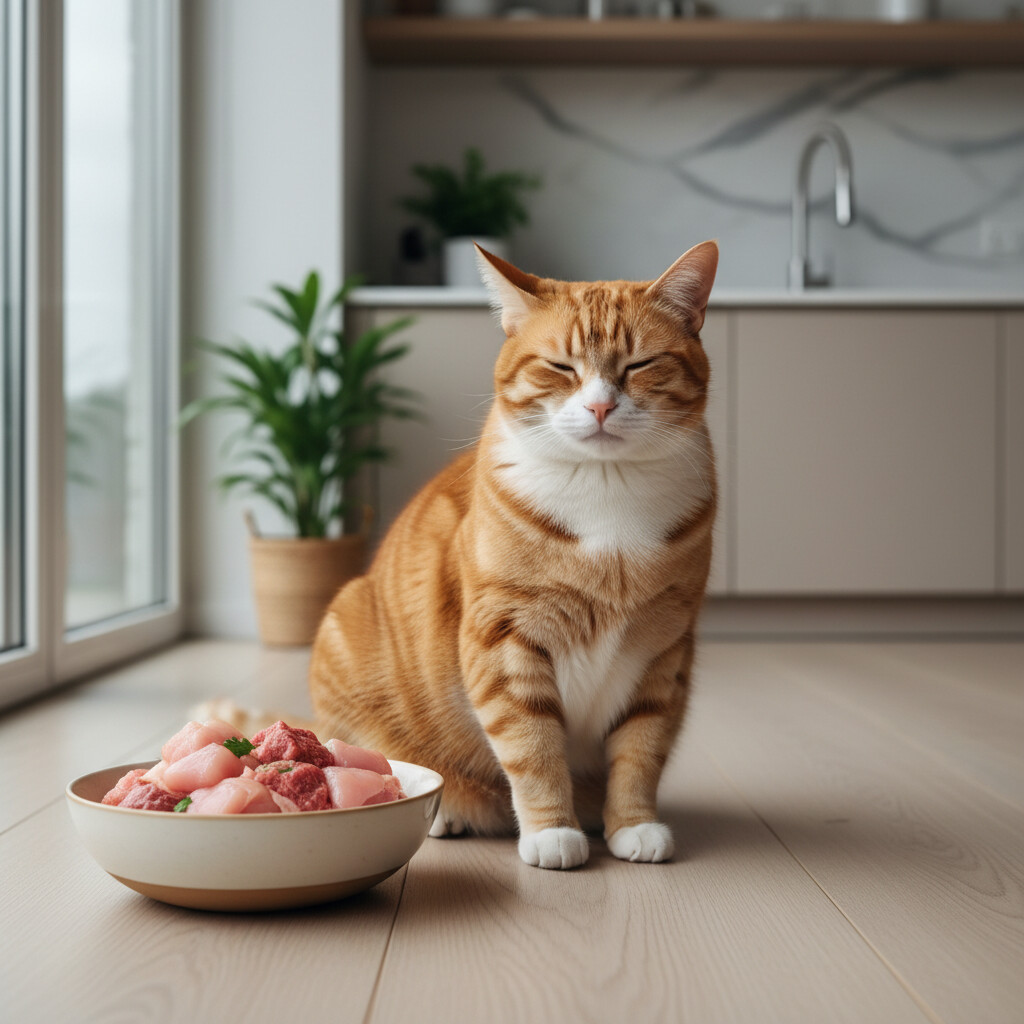
Raw feeding for cats is one of the most debated topics in feline nutrition — and the internet doesn’t help. Advocates swear it transformed their cat’s coat, energy, and digestion. Veterinary organisations flag real safety concerns. The truth sits somewhere more nuanced than either camp admits.
Here’s what the evidence actually says.
What Is Raw Cat Food?
Raw cat food — sometimes called BARF (Biologically Appropriate Raw Food) — typically contains uncooked muscle meat, raw meaty bones, organ meat, and sometimes eggs, fish, or supplements. The core idea is to mimic what a cat would eat as prey in the wild.
That argument has some scientific merit. Cats are obligate carnivores that lack salivary amylase, have substantially higher protein requirements than most mammals, and evolved eating whole prey. A well-formulated raw diet can align with those biological realities. The key phrase there is well-formulated.
The Case for Raw: What Supporters Point To
Better coat and skin. Cats on high-quality raw diets often show improvements in coat texture and shine — likely from higher levels of bioavailable fatty acids and reduced processing of ingredients. The research is limited to owner-reported data rather than controlled trials, so treat this as anecdote supported by biological plausibility.
Improved hydration. Raw meat has a natural moisture content of roughly 60–70%, compared to dry kibble at around 10%. Since cats have a low thirst drive and evolved in arid environments, moisture-dense food can meaningfully support kidney and urinary health — a genuine concern for cats prone to urinary tract disease.
Smaller, firmer stools. Cats on raw diets often produce smaller, less odorous stools. This reflects more complete digestion and less fermentable material reaching the colon.
Dental benefits (with caveats). Raw meaty bones can help mechanically clean teeth and may reduce tartar. This benefit applies specifically to appropriate raw bones, not ground raw food from a packet.
The Risks: Where Vets Draw the Line
Bacterial contamination. This is the major concern. Studies in Veterinary Record and PLOS ONE have found Salmonella, Listeria, Campylobacter, and E. coli in commercially available raw cat food at levels warranting concern. Healthy adult cats have relatively robust GI tracts, but immunocompromised cats — those on chemotherapy, with FIV/FeLV, or senior cats with declining immunity — are at meaningful risk. The contamination risk also extends to humans handling the food, particularly children and elderly people in the household.
Nutritional imbalance. Homemade raw diets are notoriously hard to balance correctly. A 2019 study in the Journal of Nutritional Science found that the majority of homemade raw diets submitted for analysis were deficient in at least one essential nutrient — most commonly calcium, vitamin E, potassium, and zinc. Cats fed nutritionally incomplete diets over months can develop dilated cardiomyopathy (if taurine is deficient), bone disorders from calcium-phosphorus imbalance, and immune dysfunction. This risk is significantly lower with commercially prepared raw diets formulated by veterinary nutritionists and tested for nutritional adequacy.
Whole bone risks. Raw bones can fracture teeth, cause intestinal obstruction, and in rare cases perforate the GI tract. The type and size of bone matters enormously — chicken wing tips appropriate for a 10-pound cat are very different from a weight-bearing beef bone.
Parasites. Wild game and pork can carry Toxoplasma gondii and Trichinella. Commercially sourced, human-grade meats present much lower risk, but it’s not zero.
What Veterinary Organisations Actually Say
The American Veterinary Medical Association (AVMA) and American Animal Hospital Association (AAHA) have both issued guidance advising against raw protein diets, primarily due to contamination risks. However, these positions reflect population-level safety guidance, not a judgment that raw feeding is harmful for every cat in every situation. Many individual vets take a more context-dependent stance — some will support a well-formulated commercial raw diet for healthy adult cats while advising against it for kittens, seniors, or immunocompromised animals.
Commercially Prepared vs. Homemade Raw: A Critical Distinction
Commercial raw diets (freeze-dried, frozen, or fresh) from reputable manufacturers that comply with AAFCO nutritional guidelines present a fundamentally different risk profile than homemade recipes. The better ones use high-pressure processing (HPP) to reduce bacterial load while preserving nutritional profiles. They’ve been formulated to meet requirements — not guessed at.
Homemade raw diets require working with a board-certified veterinary nutritionist to create a balanced recipe. Getting this wrong has real consequences that take months to manifest and are often serious by the time they’re caught.
If you’re comparing raw food options against conventional wet food, our wet vs. dry cat food comparison covers the nutritional trade-offs in detail.
How to Make a Sensible Decision
- Talk to your vet first. Your cat’s health status matters. Kittens, immunocompromised cats, and households with vulnerable humans are legitimate reasons to reconsider.
- If you proceed, choose commercial over homemade. Look for products that meet AAFCO nutritional profiles, ideally confirmed by feeding trials. HPP-processed options reduce bacterial risk.
- Handle raw food as you would raw meat for human consumption. Wash hands thoroughly, sanitise surfaces and bowls, and store correctly.
- If you want homemade raw, hire a nutritionist. The American College of Veterinary Nutrition (ACVN) maintains a directory of board-certified specialists who can create a balanced recipe for your specific cat.
- Monitor weight carefully. Cats switching diets can lose or gain weight unexpectedly. If you’re already managing your cat’s weight, check our guide on recognising and managing feline obesity.
When to See a Vet
Any cat transitioning to a new diet should be monitored for GI upset — loose stools, vomiting, or lethargy lasting more than 48 hours warrants a call to your vet. If your cat is on a raw diet and you notice gradual weight loss, poor coat condition, weakness, or changes in mobility over weeks, a full nutritional panel and exam is warranted. These can be signs of slow-developing nutritional deficiency.
If you’re considering raw feeding because your cat is a picky eater or has been refusing food, there are other approaches worth trying first — that’s a different problem with different solutions.