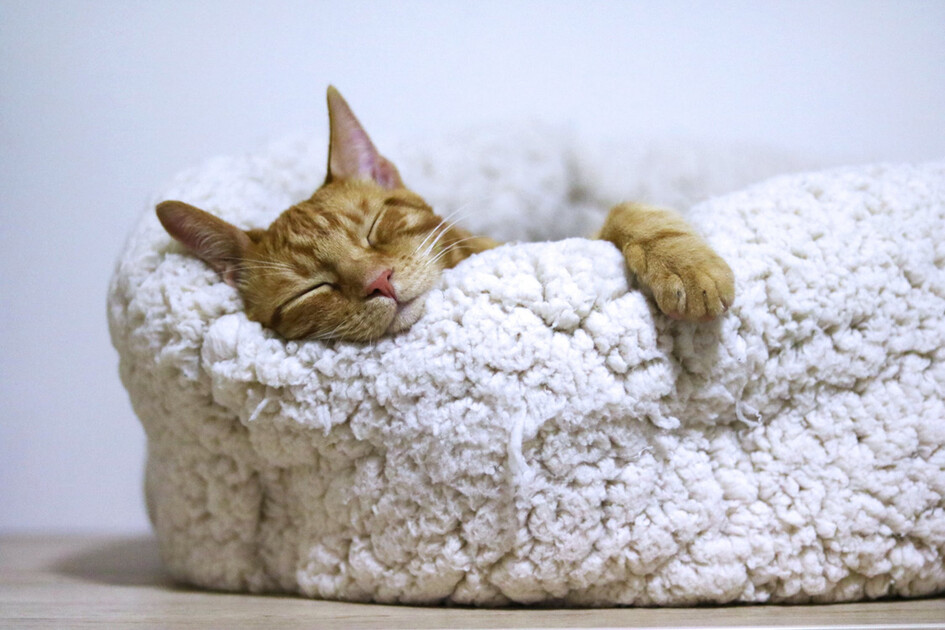
Watching your cat sleep for what seems like 20 hours straight and wondering if something’s wrong? Relax — you’re probably fine. Cats are champion sleepers by nature, and this reassuring guide from Oscillot explains exactly why, and when to actually be concerned.
The baseline: healthy adult cats sleep 12–16 hours per day on average. Some sleep up to 20 hours. This isn’t laziness — it’s biology. Cats are crepuscular predators (most active at dawn and dusk) who evolved to conserve energy between short, intense hunting bursts. Even your couch-dwelling house cat is running on ancestral software that says “rest deeply, then explode into action.”
Cat sleep differs significantly from human sleep. Cats cycle through approximately 5 minutes of deep sleep followed by longer periods of light “cat nap” sleep, during which they remain alert enough to respond instantly to stimuli. Age affects sleep patterns: kittens sleep the most (needed for growth and brain development), adolescent cats have irregular patterns, adult cats settle into consistent routines, and senior cats often sleep more again.
When to actually worry: sudden changes in sleep patterns are more significant than absolute hours. A normally active cat who becomes unusually lethargic, sleeps in unusual positions (indicating possible pain), stops engaging with food or play, or shows other behavior changes alongside increased sleep deserves a vet check. The article also covers how safe outdoor enrichment time can healthily regulate sleep-wake cycles.
Read the full article: Is My Cat Sleeping Too Much?