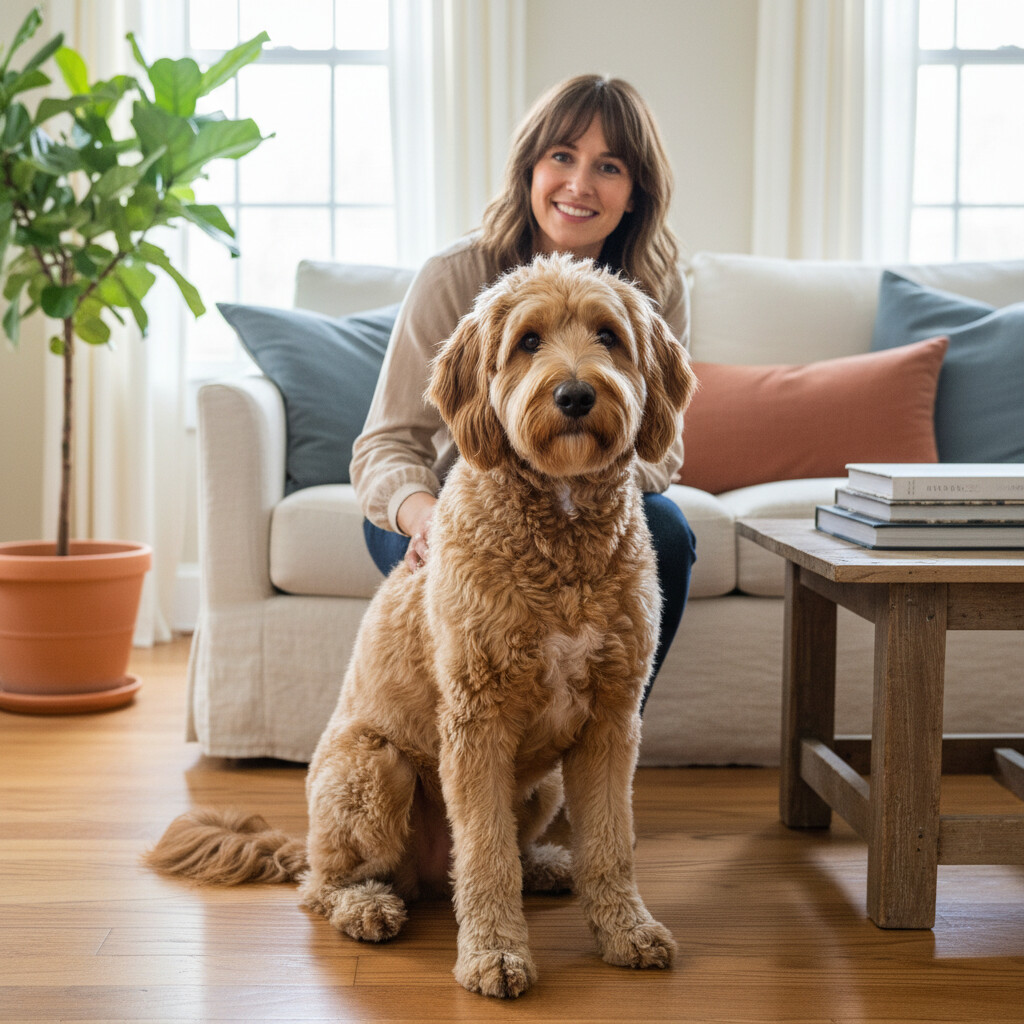
Dogs jump on people because it works — it gets them attention, even when that attention is being pushed away or scolded. Fixing the problem means making jumping reliably unrewarding while giving your dog a better option that pays off. Most dogs improve significantly within a few weeks of consistent work.
Here’s what professional trainers and the evidence actually recommend.
Why Dogs Jump Up
Jumping is a natural greeting behavior. Puppies jump toward their mother’s face; adult dogs do the same when greeting other dogs, since sniffing faces is central to canine communication. When a puppy jumps on a human and gets any response — even a push, a “no,” or eye contact — that’s social interaction. It reinforces the behavior.
The core problem: every person who lets your dog jump, even occasionally, resets your training. Consistency isn’t just helpful — it’s the difference between resolving the problem in weeks and dragging it out indefinitely.
What Doesn’t Work
Kneeing the dog in the chest. This is outdated advice that can cause injury and introduces pain and confusion without teaching an alternative. Dogs don’t interpret a knee in the chest as “that was your fault” — they experience it as unpredictable physical discomfort from someone they like.
Stepping on back feet. Same issue. Aversive corrections only work when timing is perfect and the dog clearly connects the consequence to the behavior. In the middle of an excited greeting, that precision is rarely achievable.
Shouting “No” or “Down.” A jumping dog in full greeting mode is not in a headspace to process verbal instruction. You’re talking to the excitement, not the dog.
What Actually Works: The Core Approach
Extinction Plus an Alternative Behavior
This is the approach recommended by most certified professional dog trainers (CPDT-KA credential holders) and backed by behavioral research. It has two parts working simultaneously.
Remove the reward. The moment your dog jumps, turn away completely. Fold your arms, look at the ceiling, give zero acknowledgment — no eye contact, no voice, no touch. You’re eliminating the entire social reward that jumping has been earning.
Reward the alternative immediately. The moment all four paws touch the floor, mark it (“yes!”) and reward. You’re not waiting for anything fancy — four paws on the floor is the criterion. Be quick; timing matters.
Over repetitions, the dog learns: jumping gets nothing, paws on the floor gets good things.
What makes this hard: the extinction burst. When a previously-rewarded behavior stops working, dogs typically try harder before they give up. Expect jumping to briefly intensify before it decreases. If you cave during an extinction burst — giving any attention because the jumping got too persistent — you’ve just taught your dog that jumping harder eventually works. This is the most common reason the technique fails.
Adding a Cue (Sit or Four-on-Floor)
Once your dog reliably sits on cue in calm situations, you can ask for a sit before greetings happen. A sit is physically incompatible with jumping — your dog literally cannot do both at once. You’re replacing the unwanted behavior with something you can reward.
Build this in low-distraction contexts first: have someone approach, cue a sit, reward the sit, allow calm greeting. Gradually increase the distraction level — a familiar person walking toward you normally, then a stranger, then an excited visitor.
Don’t try to use a sit cue in high-arousal greeting situations before the sit is already solid in calmer contexts. Trying to teach and use a skill simultaneously under maximum excitement is too much to ask of any dog.
Managing the Environment During Training
Training takes time. If jumping is being rehearsed hundreds of times per week meanwhile, you’re working against yourself. Environmental management prevents rehearsal while the training builds.
Practical options during the training period:
- Keep the dog on a leash for greetings so you can prevent the jump before it happens
- Ask guests to stop approaching and reset when the dog jumps
- Tether the dog briefly before guests enter, let excitement settle, then allow calm greeting
Management isn’t the solution — it just stops the problem getting worse while your training catches up.
Handling Specific Scenarios
Guests at the door. This is the highest-arousal scenario and the hardest to train through. Keep a leash near the door. Leash the dog before opening. Ask for a sit or four-on-floor before any greeting proceeds. Brief, calm greetings at first; build duration as the behavior improves.
Children and elderly people. This is a safety issue, not just a manners issue. Use leash or gate management actively while training is in progress — don’t rely on training-in-progress to protect vulnerable people from being knocked over.
Strangers on walks. Use leash positioning. Ask for a sit before allowing someone to approach for a pat. If a stranger rushes in before you can intervene, position your body between the dog and the approaching person and intercept briefly.
How Long Does This Take?
Realistic timeframe for an established jumping habit: noticeable improvement within 2–4 weeks of consistent training. Full reliability in high-excitement situations can take 8–12 weeks and requires practice with diverse people and settings.
The single biggest variable is household consistency. One family member who lets the dog jump on them significantly lengthens the process. Everyone in the household needs to apply the same response, every time.
When to See a Professional
If your dog’s jumping is accompanied by mouthiness, herding behavior, or hard body contact that feels threatening rather than excited, that warrants an assessment by a certified professional dog trainer (CPDT-KA) or veterinary behaviorist. What looks like exuberant jumping can sometimes involve underlying anxiety or impulse control issues that need a different approach.
For broader context on reading what your dog is communicating, our dog body language guide is worth reviewing alongside this — understanding the signals helps you respond at the right moment. If you’re working on impulse control more broadly, the fundamentals of crate training address similar behavioral groundwork.