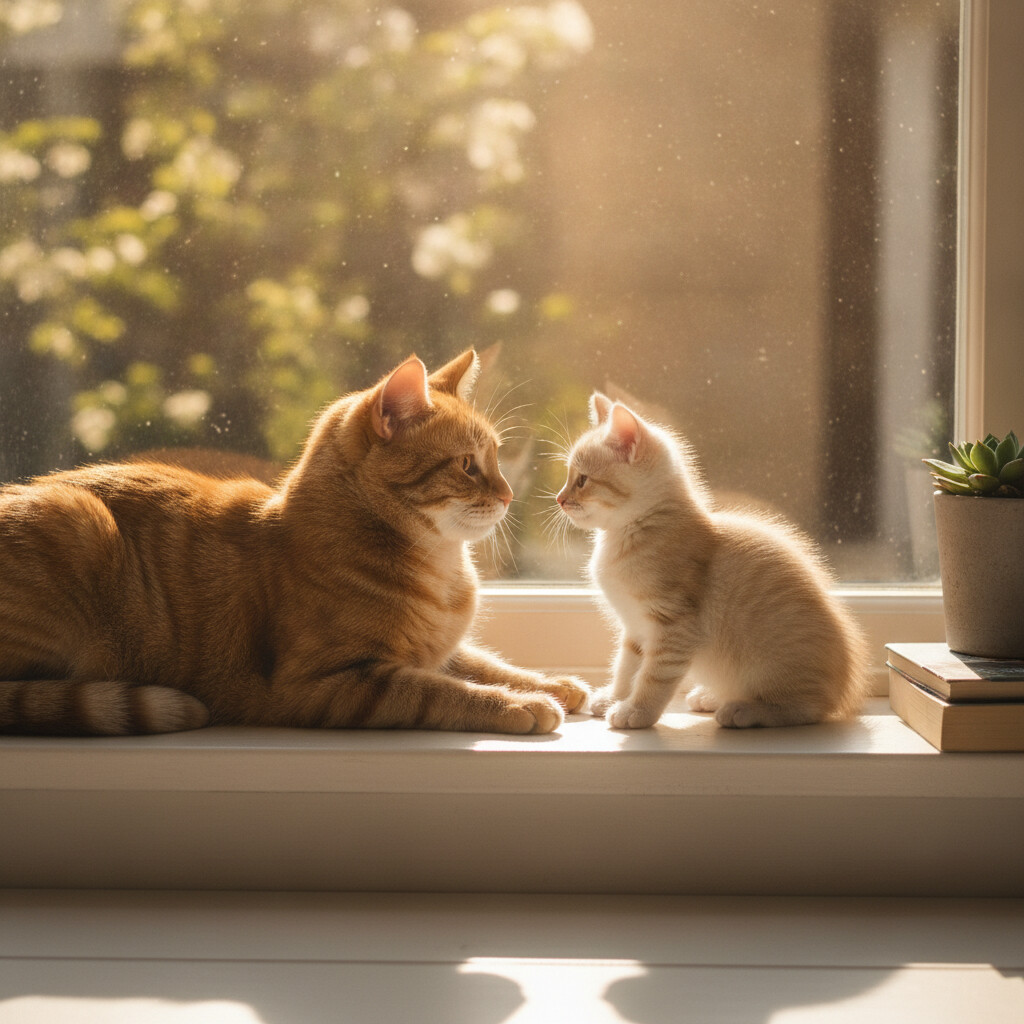
Breed and coat color don’t predict whether two cats will get along — energy level, age, and how you introduce them do. If you’re choosing a second cat and want good odds of a peaceful household, the short answer is: look for a cat with a similar activity level to your current one, lean toward the opposite end of the age spectrum only if your resident cat is genuinely playful, and don’t assume sex is the deciding factor it’s often made out to be.
Age and Energy Level Matter More Than Breed
Cat compatibility research and behaviorist consensus both point the same direction: activity level is the strongest predictor of how two cats will get along day to day, more than breed, coat, or appearance. A high-energy young cat paired with a sedate 12-year-old is a common source of household tension — not because either cat is “wrong,” but because one wants to chase and wrestle and the other wants to be left alone on the windowsill.
That doesn’t mean you need an exact age match. A moderately playful adult can often tolerate — and sometimes enjoy — a kitten’s energy in small, supervised doses, especially once the kitten is past the most frantic 8-16 week zoomies stage. But if your current cat is older, was never especially playful even as a young cat, or has arthritis or another condition that makes roughhousing uncomfortable, a similarly low-key adult or senior cat is a safer match than a kitten.
If you already have a young, high-energy cat who seems bored or is acting out (excess scratching, knocking things over, pouncing on your ankles), a second cat close to their age and energy level can genuinely help — but only if introduced properly. A second cat is not a fix for an under-stimulated one on its own; it can just as easily become two under-stimulated cats.
Does Sex Matter? What the Research Actually Says
The idea that you should always pair a male with a female, or that same-sex pairs fight more, is one of the most repeated pieces of cat advice — and it’s weaker than most people think. Spaying and neutering removes most of the sex-driven behavior (territorial marking, mating-related aggression) that made sex matter historically. Once both cats are fixed, individual personality and early socialization explain far more about compatibility than whether they’re both male, both female, or mixed.
Where sex can matter slightly: two intact males, or an intact cat of either sex introduced to a resident cat, are more likely to show tension — which is one more reason spaying/neutering before introductions matters, beyond the obvious population-control argument. But among altered cats, don’t let sex be the deciding factor over the things that actually predict compatibility: energy match, age, and how the introduction is handled.
Personality Signals to Look For Before You Commit
If you’re meeting a potential second cat at a shelter or foster home, a few in-person signals are more useful than anything on the intake sheet:
- How they react to being approached by a stranger (you). A cat that’s curious and approaches, even cautiously, tends to adjust to new environments and new animals faster than one that’s frozen or hiding after 20+ minutes in the room.
- Body language around other cats, if the shelter has communal cat rooms. A cat who’s relaxed near other cats — not hissing, not obsessively watching one specific cat — has a track record you can actually observe rather than guess at.
- Play style, if you can see it. Cats that play in short, redirectable bursts and disengage when a toy is removed tend to be easier to introduce than cats that play in a fixated, high-intensity way that doesn’t de-escalate.
- History with your resident cat’s specific triggers. If your cat hates being chased, ask the shelter or previous owner whether the candidate cat is a chaser. Shelters and rescues often know more about an individual cat’s habits than a five-minute meet-and-greet will tell you.
None of these guarantee a smooth match — cat personalities aren’t fully knowable from a single visit — but they shift the odds meaningfully in your favor.
Setting Realistic Expectations for the First Few Weeks
Even a well-matched pair usually doesn’t become best friends on day one, and treating tolerance as a failure is one of the most common mistakes new multi-cat owners make. A gradual, scent-first introduction — separate rooms initially, swapped bedding, then supervised visual contact before anything face-to-face — matters more to long-term success than almost any personality trait you picked for. For the full step-by-step process, our guide on introducing two cats for the first time covers the timeline in detail.
Expect a realistic range of outcomes: some cats become genuinely bonded companions within a few weeks; many settle into peaceful coexistence — sharing space, not actively avoiding each other, occasionally sitting near each other — without ever grooming each other or sleeping curled up together, and that’s a perfectly successful outcome. A smaller number never fully warm to each other and need permanent separate resources (litter boxes, feeding stations, resting spots) to coexist without conflict. Good compatibility screening reduces the odds of that last outcome, but it doesn’t eliminate it, which is worth knowing going in.
If you’re weighing whether to skip the “one at a time” approach entirely and adopt two cats together instead, our piece on adopting two kittens instead of one walks through when that route makes more sense than adding a second cat later.
The Practical Takeaway
When you’re choosing a second cat, spend less time on breed and coloring and more time on three things: matching energy level to your resident cat’s actual personality (not the personality you wish they had), treating sex as a minor factor rather than a rule, and reading in-person behavior signals over paperwork. Then plan for a slow, scent-based introduction regardless of how compatible the match looks on paper — it’s the single biggest lever you control, and it matters more than almost any trait you picked the new cat for. For setting up the physical space so two cats have enough separate resources to avoid unnecessary competition, our multi-cat household setup guide is worth reading before the new cat comes home.