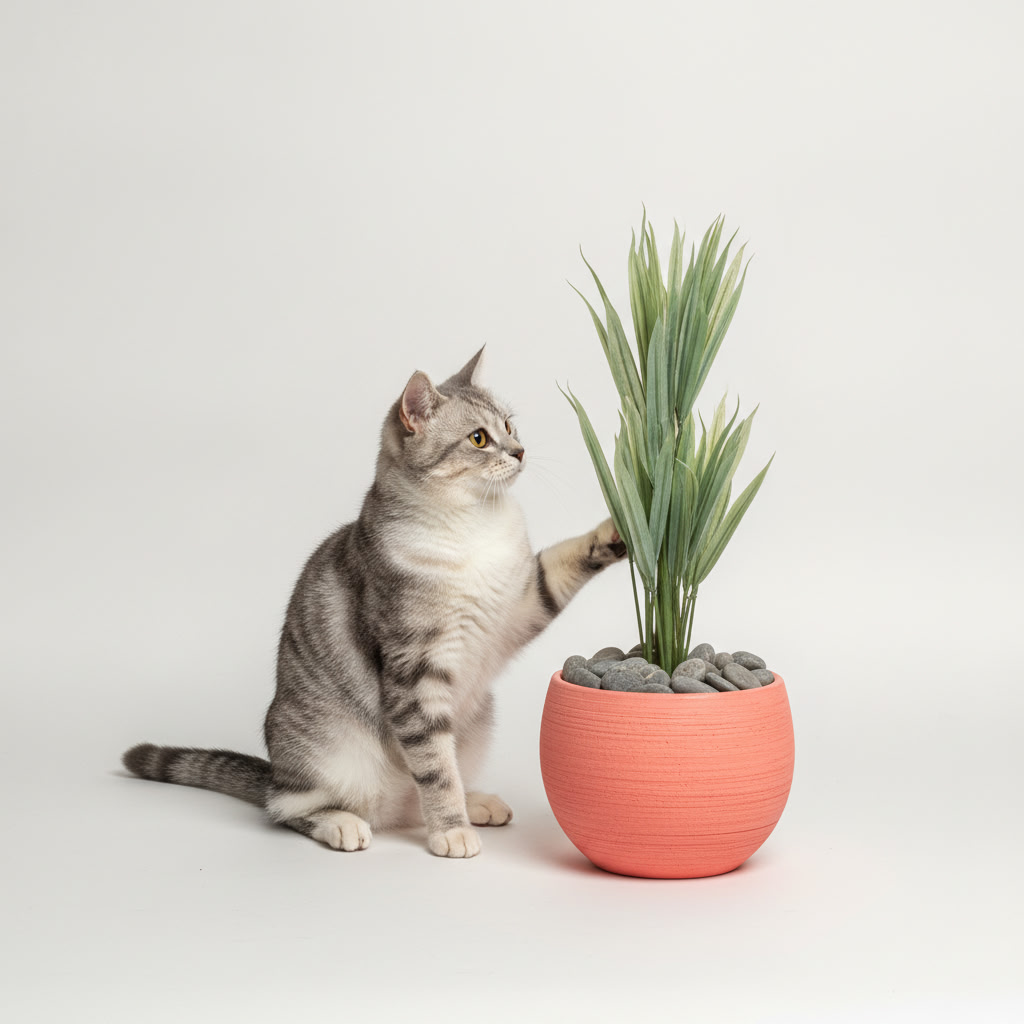
The fix that works best is to make the plant less interesting than something else, then make the soil impossible to dig. Cover the soil with something your cat can’t paw through. Move or protect the plants you care about, and put out a pot of cat grass they are allowed to chew. And if a plant is toxic, no deterrent is good enough: it has to go.
Here’s how to do each part, and why cats go for your plants in the first place.
Why Cats Chew Houseplants and Dig in the Soil
Chewing greenery is normal cat behaviour, not a sign that something is missing from their diet. Researchers at the UC Davis School of Veterinary Medicine, led by veterinary behaviourist Benjamin Hart, surveyed more than a thousand cat owners. They found plant-eating was common and that most cats did not seem unwell before or after it. Their suggestion is that it’s an inherited behaviour from wild ancestors, not a cry for help. Young cats did it more than older ones.
Other reasons a particular plant gets targeted:
- Movement. Dangly leaves, spider plant runners and palm fronds that sway are basically wand toys.
- Texture. Long, grassy leaves are the most tempting to chew.
- Boredom. An indoor cat with little else going on will find the most interesting thing in the room. Often that’s your fiddle-leaf fig.
Digging is a different thing. Loose, fine potting soil is very close to what cats want in a litter box. A big pot on the floor can look like a second toilet, and some cats will use it as one. That’s often a sign the actual litter box isn’t quite right (location, cleanliness, number of boxes, or litter type), so it’s worth checking that too.
First: Remove the Toxic Plants
Before any training, check every plant you own against the ASPCA’s toxic and non-toxic plant list. A deterrent that works nine days out of ten isn’t good enough for a plant that can kill your cat on the tenth.
Lilies are the big one. True lilies (Lilium) and daylilies (Hemerocallis) can cause kidney failure in cats. The ASPCA and the FDA both warn that even the pollen or the water in the vase can be enough. If you have cats, don’t keep them in the house at all. One family’s experience with a bouquet that nearly killed their cat shows how fast it happens.
Our guide to common houseplants that are toxic to cats, and safe alternatives covers the usual suspects and what to grow instead.
How to Stop Your Cat Digging in Plant Pots
This is the easiest part to fix, because you’re changing the surface, not the cat.
- Cover the soil with large stones or river rocks, packed close together and too big to flick out. It’s the cleanest-looking option and lasts for years.
- Pine cones on the soil surface make an uncomfortable, unappealing layer.
- A mesh or chicken-wire collar. Cut a circle of wire mesh or plastic garden mesh to fit inside the pot, with a slit and a hole for the stem, and lay it just below the soil surface or on top. Water goes through; paws don’t.
- Foil or double-sided tape around the rim of the pot. Most cats dislike the feel under their paws. It’s a good short-term trick while a habit breaks.
- Double-potting. Put the plant in a slightly smaller pot inside a decorative one, then fill the gap and the top with stones.
If your cat is using a pot as a toilet, cover the soil and look at the litter box. That usually solves both.
How to Stop Your Cat Chewing Houseplants
Chewing is harder to stop than digging, because the urge to chew greens is real. The approach that works is protect the plant, and give them a legal alternative.
Give them something they’re allowed to chew
Cat grass (usually wheat, oat or barley grass) is the most useful single thing you can do. Put it somewhere easy to reach and away from your other plants. Many cats switch to it happily. Our guide to growing cat grass indoors covers the basics, and there are more ideas in cat-safe herbs and plants for an indoor garden, such as catnip, valerian and cat thyme.
Keep a few pots on the go so there’s always a fresh one while another regrows.
Make the real plants harder to reach
- Hanging planters and ceiling hooks, well away from shelves, beds or cat trees they could jump from.
- High shelves don’t always work. A cat that can reach the kitchen counter can reach the bookcase. Look at it from the cat’s point of view: what could they jump from?
- A spare room or closed sunroom for the plants you can’t live without.
- Glass cabinets or terrariums for small plants. These are also good for the toxic ones you’re not willing to give up, as long as they’re truly closed.
Make the plants less appealing
- Bitter-tasting sprays sold for pets can put some cats off chewing. Check the label says it’s safe for cats and for the plant, and test it on one leaf first.
- Citrus. Many cats avoid citrus smells. Citrus peel on the soil is a cheap thing to try. Don’t use essential oils or diffusers to do this: concentrated oils can be toxic to cats. Here’s what’s actually safe with essential oils, diffusers and sprays.
- Trim the dangly bits. Long trailing stems and swinging leaves invite play. A tidy trim helps.
Why the Spray Bottle Doesn’t Work
Squirting, shouting or clapping might stop your cat in that moment. Usually it teaches them to chew the plant when you’re not in the room, and it can make them wary of you. The AAFP and ISFM’s Feline Environmental Needs Guidelines (2013) advise against punishment for cats. They recommend changing the environment and rewarding the behaviour you want instead.
So when your cat chooses the cat grass, or walks past the monstera without a nibble, praise them or give them a treat. It feels slow, but it’s the version that sticks.
Boredom is often the real driver. Two short play sessions a day help more than people expect, especially with a wand toy and a proper “catch” at the end. We’ve written up a play routine that actually tires cats out. The same logic applies as for keeping cats off the kitchen counter: give them somewhere better to be.
When to Call a Vet
If your cat has chewed a plant and you don’t know what it is, or you know it’s toxic, call your vet or the ASPCA Animal Poison Control Center (888-426-4435) straight away. Don’t wait for symptoms, and take a photo or a leaf with you. A consultation fee may apply.
Any contact with a lily, pollen included, is an emergency. Get to a vet right away, even if your cat seems fine.
Call your vet as well if a cat that has eaten plants is:
- vomiting repeatedly, or still vomiting after the first time;
- drooling, pawing at the mouth, or has a swollen mouth or face;
- off food, lethargic, or has diarrhoea;
- eating plants obsessively, or eating non-food items like fabric or plastic. That can have a medical cause worth checking.
The occasional chew-and-vomit after cat grass is normal for many cats and usually nothing to worry about.
The Short Version
- Remove anything toxic. Lilies go first, no exceptions.
- Cover the soil with stones, pine cones or mesh to stop the digging.
- Put out cat grass as a legal alternative.
- Move or protect the plants you love most.
- Skip the spray bottle; reward the right choice and play more.
What’s the one plant your cat simply won’t leave alone?