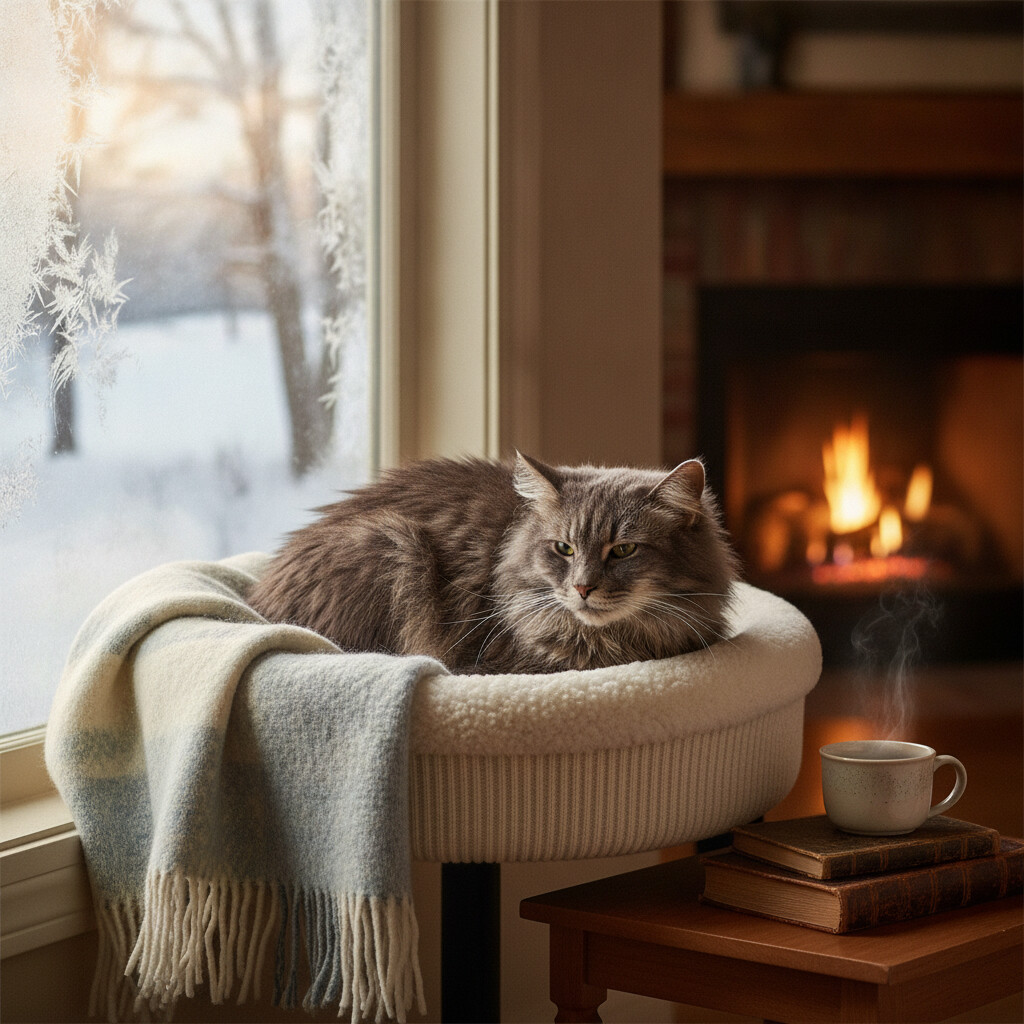
Senior cats feel the cold more than younger cats, and stiff joints often feel worse when they do. The fixes are mostly simple: a raised, draught-free bed, a safe source of gentle warmth, easy access to their favourite spots, and a closer eye on weight and water intake through the colder months.
Here’s why older cats struggle in winter, what helps, and the signs that mean the “cold” is something a vet should look at.
Do senior cats feel the cold more?
Usually, yes. Cats in general are built for warmth: their thermoneutral zone, the temperature range where they don’t need extra energy to stay warm, is generally estimated at roughly 86–100°F (30–38°C). A house at 68°F is already cool by cat standards.
Age makes it harder in a few ways:
- Less insulation. Many older cats lose muscle and body fat. Our article on senior cats losing muscle explains why that happens. Less padding means less protection from cold floors and draughts.
- Less movement. Cats generate heat by moving. An older cat who sleeps more and plays less produces less of it.
- Underlying illness. Conditions common in older cats, including chronic kidney disease and hyperthyroidism, can cause weight loss and poor coat condition, which leave a cat less able to keep warm.
- A thinner or matted coat. Senior cats often groom less thoroughly, and a matted or greasy coat insulates badly. See why senior cats groom less.
Does cold weather make arthritis worse in cats?
Arthritis is extremely common in older cats and widely under-recognised. In a well-known 2002 study in the Journal of the American Veterinary Medical Association, Hardie and colleagues found radiographic signs of degenerative joint disease in about 90% of cats over 12. Most of those cats had never been diagnosed.
Whether cold itself makes feline arthritis worse hasn’t been well studied. What vets do see is that stiff cats tend to move less in winter, and moving less tends to make stiffness worse. Warm, easy-to-reach resting spots and gentle daily activity help break that cycle. Our guide to arthritis in senior cats covers the signs, which are often subtle: hesitating before jumping, using the stairs one at a time, or no longer sleeping in high places.
How to keep an older cat warm indoors
Raise the bed off the floor. Cold air sits low, and tiled or concrete floors pull heat out of a body. A bed on a low platform, a sofa or a thick folded blanket is noticeably warmer. Keep it low enough to get into without a jump.
Give the bed walls. A bed with raised sides, a covered “igloo” bed or a cardboard box lined with a fleece blanket traps heat and cuts draughts. If you like a project, our no-sew sweater bed is a cheap version.
Move beds away from draughts. Away from doors that open to the outside, single-glazed windows and floor vents that blow cold air. The warmest spot is often against an inside wall.
Add gentle, safe heat. Self-warming beds and pads (with a reflective layer that bounces the cat’s own heat back) are the lowest-risk option. If you use an electric heated pad, choose one made for pets with a low, thermostatically controlled surface temperature and a chew-resistant cord. Always leave enough unheated space for your cat to move off it. Older cats who are very thin or have limited mobility can’t always shift away from heat quickly, and burns from heating pads are a known risk in animals who can’t move easily. Never use a human electric blanket or a heating pad made for people. Our guide to heated cat beds goes into the safety features to look for.
Mind the heaters and fires. Senior cats love sitting close to radiators, space heaters and wood stoves, sometimes closer than is safe. Use a guard around open fires and stoves, keep space heaters on a stable surface where they can’t be knocked over, and never leave a heater running in a closed room with a cat who can’t easily get out. The winter hazards in our winter safety guide apply doubly to older cats.
Help them reach their warm spots. If your cat’s favourite winter perch is the windowsill above the radiator or your bed, add a ramp or step so they don’t have to jump. See ramps and steps for senior cats.
Keep the litter box warm and close. A litter box in a cold garage or basement is one an arthritic cat may start avoiding in winter. Move it somewhere warm, on the same floor where your cat spends most of the day.
Help with grooming. Gentle brushing a few times a week keeps an older cat’s coat clean and insulating, and gives you a chance to feel for weight loss.
What about senior cats who go outdoors?
If your older cat goes outside, winter is a good time to shorten trips and make sure they can always get back in. Older cats are slower to warm up after getting cold or wet. Bring them in before dark when temperatures drop, dry them with a towel if they come in wet, and give them a warm bed near the door to come back to. If you have outdoor cats you can’t bring in, our guide to building a winter shelter covers insulation and bedding that stays dry.
Feeding and water in winter
Cats who spend energy staying warm may need a little more food, but older cats who move less may need less. There’s no single rule, so weigh your cat. Weighing them every two to four weeks over winter is the most reliable way to know whether to adjust portions, and unexplained weight loss in a senior cat should always be checked by a vet.
Cold weather also tends to cut water intake, and older cats, especially those with kidney disease, can’t afford that. Room-temperature (not cold) water, more wet food, and several water bowls around the house all help. Our guide to senior cat dehydration has more ideas.
When to see a vet
Feeling the cold is normal for an older cat. Some signs are not, and they need a vet rather than a warmer bed:
- Shivering that doesn’t stop once your cat is warm, or ears, paws or tail that feel very cold to the touch
- Lethargy or weakness that’s new, or your cat being hard to rouse
- Hiding, not eating, or eating much less for more than a day. Older cats who stop eating are at risk of liver problems quickly
- Weight loss, even gradual, or a coat that’s suddenly thin, greasy or matted
- New limping, reluctance to jump or use the stairs, or crying when picked up, which can all point to pain
- Pale, cold gums or breathing that is fast, laboured or open-mouthed. These are emergencies
The AAHA/AAFP Feline Life Stage Guidelines (2021) suggest senior cats may benefit from a check-up every six months, partly because cats hide illness so well. If your cat’s six-monthly check is due, late autumn is a sensible time: it’s a chance to talk about pain relief for arthritis before the coldest months.
How does your older cat cope with winter, and where’s their favourite warm spot?