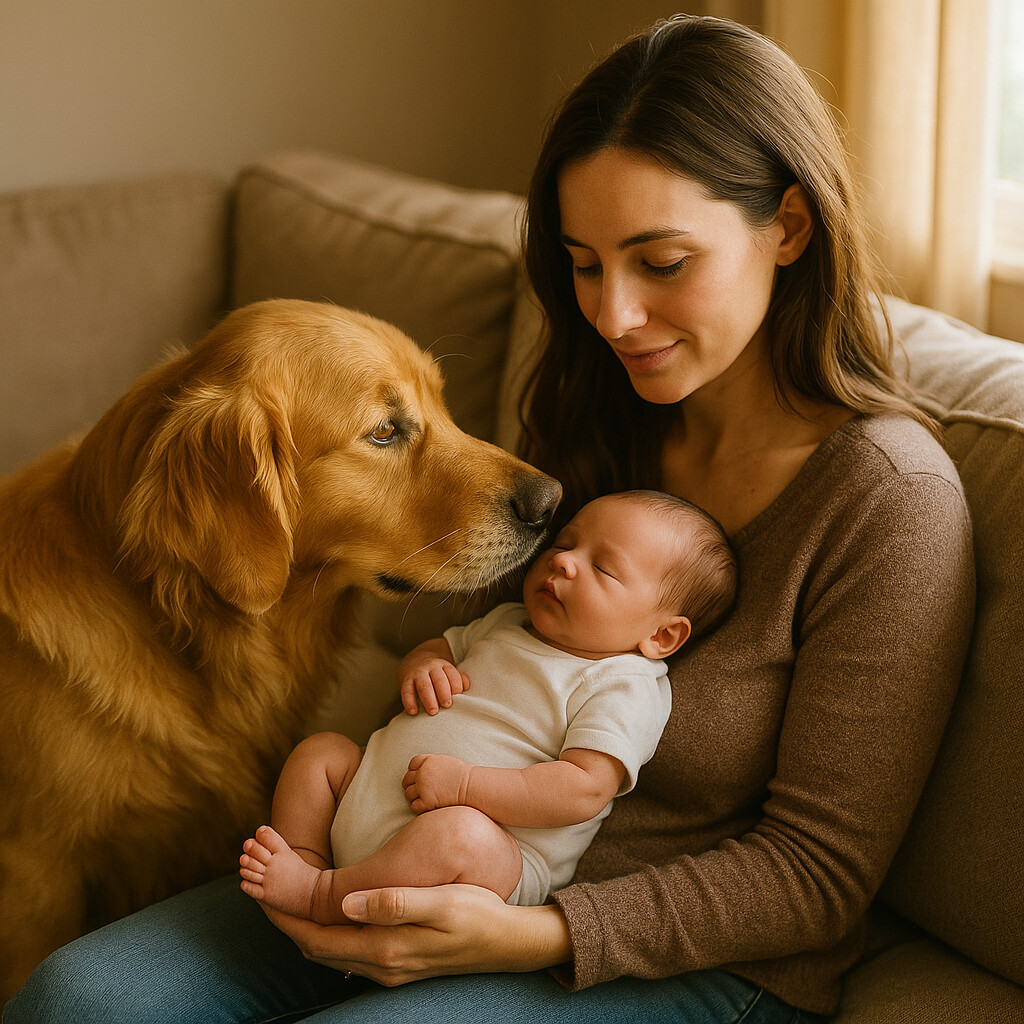
Bringing a baby home is one of the most joyful moments in a family’s life — and one of the most disorienting experiences for the dog who’s been the center of the universe until now. How you handle the first few weeks can set the tone for a relationship that could last a decade or more. Get it right and you’ll have a devoted protector who grows up alongside your child. Rush it or ignore it, and you create anxiety that’s hard to undo.
This isn’t about whether your dog is “good” — it’s about giving both your dog and your baby the structure they need to form a safe, trusting bond.
Start Well Before the Baby Arrives
The biggest mistake most parents make is waiting until they’re home from the hospital to think about this. By then you’re sleep-deprived, emotional, and your dog is already reacting to a completely upended household. Preparation starts during pregnancy.
Train the behaviors you’ll need now. If your dog jumps, pulls on leash, or rushes through doors, get those under control before the baby arrives. A 60 lb Labrador jumping excitedly at a parent carrying a newborn is a genuine safety risk. The AKC and most veterinary behaviorists recommend working on four core commands specifically for baby preparation:
- Settle/place: Go to your mat and stay there calmly
- Leave it: Stop approaching what you’re approaching
- Off: Four paws on the floor
- Wait at doors: Don’t rush through before being released
Change routines gradually. If your dog currently sleeps in the bedroom and you plan to move them out when the baby comes, do that now — not on night one. Same with walk times, feeding times, and attention patterns. Sudden changes during the baby’s arrival compound stress.
Introduce baby smells early. Before coming home from the hospital, have someone bring a worn item — a onesie, a hat — so your dog can smell and investigate it without the overwhelming live stimulus of the actual infant.
The Day You Bring Baby Home
This moment matters enormously, and it’s worth planning specifically.
Greet your dog first — without the baby. Have one parent go inside first (without carrying the baby) to give the dog a calm, warm greeting. This discharges the initial excitement spike before the baby enters the picture. Your dog has missed you; let them have that moment without the added pressure of “also, do not approach the small human.”
Carry the baby in, calm and matter-of-fact. No tense body language, no scolding preemptively, no flood of anxious energy. Dogs read their owners more than anything else. If you’re nervous and guarded, your dog registers the baby as a source of stress. If you’re calm and relaxed, they’re much more likely to be too.
Let your dog sniff from a distance. Don’t force a nose-to-baby introduction. Sit down with the baby and let your dog approach on their own terms. Allow a brief, calm sniff of the baby’s feet or blanket, then calmly redirect attention elsewhere. Keep the first session short — 5 minutes is plenty.
The First Few Weeks: Building a New Normal
Never leave them alone together — not once, not ever in the first years. The ASPCA and the American Veterinary Society of Animal Behavior (AVSAB) are unanimous on this. No dog, regardless of temperament or history, should be unsupervised with an infant or toddler. Accidents happen in seconds.
Create a dog-free safe zone. The baby’s sleep area should be off-limits to the dog. A gate across the nursery door handles this cleanly. This isn’t punishment — it’s giving your dog a clear rule that reduces confusion, and giving you peace of mind.
Give your dog protected positive time. One of the most important things you can do is associate the baby with good things for your dog. Every time the baby appears, the dog gets a high-value treat. Over weeks, your dog learns that the baby’s presence predicts good things. This is classical conditioning, and it works.
Also carve out time — even 10 minutes per day — for your dog to get undivided attention with no baby present. This maintains your bond and reduces jealousy-based attention-seeking.
Watch the warning signs. Learn your dog’s stress signals — not just growling (which most dogs only do as a last resort), but:
- Yawning repeatedly when the baby is near
- Licking lips or nose
- Turning away, trying to leave
- Whale eye (showing the whites of their eyes)
- Stiffening their body
Any of these means your dog is telling you they’ve had enough. Respect it. Move the dog to a quieter space. Never correct a dog for growling — the growl is communication, and suppressing it just removes your warning signal without removing the underlying stress.
Breed and Individual Temperament
Every dog is an individual, but some breed tendencies are worth factoring in:
Generally easier to introduce to babies: Golden Retrievers, Labrador Retrievers, Beagles, Poodles, Cavalier King Charles Spaniels — breeds selected for low reactivity and high social tolerance.
Require more careful management: High-prey-drive breeds (Huskies, terriers, sighthounds), herding breeds that may nip heels, and dogs with protective/territorial instincts. This doesn’t mean they can’t coexist beautifully — it means the introduction needs more structured setup and slower pacing.
Prior history matters most. A dog with any bite history, resource guarding behavior, or significant fear responses should be assessed by a certified applied animal behaviorist (CAAB) or veterinary behaviorist before the baby arrives — not after something goes wrong.
As Your Baby Grows
The dynamics shift as your child becomes mobile. A 6-month-old is stationary and relatively predictable; a 14-month-old toddler who screams, grabs, and runs erratically is a completely different experience for your dog.
Teach your child to respect the dog from the moment they’re old enough to understand. No pulling ears, no face-to-face with the dog, no approaching a dog that’s eating or sleeping. The Family Paws Parent Education program (familypaws.com) has excellent age-staged guidance for teaching toddlers dog body language.
Give your dog escape routes. Make sure your dog always has a place to retreat that the baby/toddler cannot follow — an elevated bed, a gated room, a crate with the door open. A dog that can leave will always be safer than a dog that’s cornered.
Most dogs absolutely love the kids they grow up with. They become protectors, nap companions, confidants. But that relationship is built in the early weeks through structure, patience, and respect — not wishful thinking about your dog being “good with kids.”
The investment you make now pays off for the next 10 to 15 years.
Posted by CatLady6