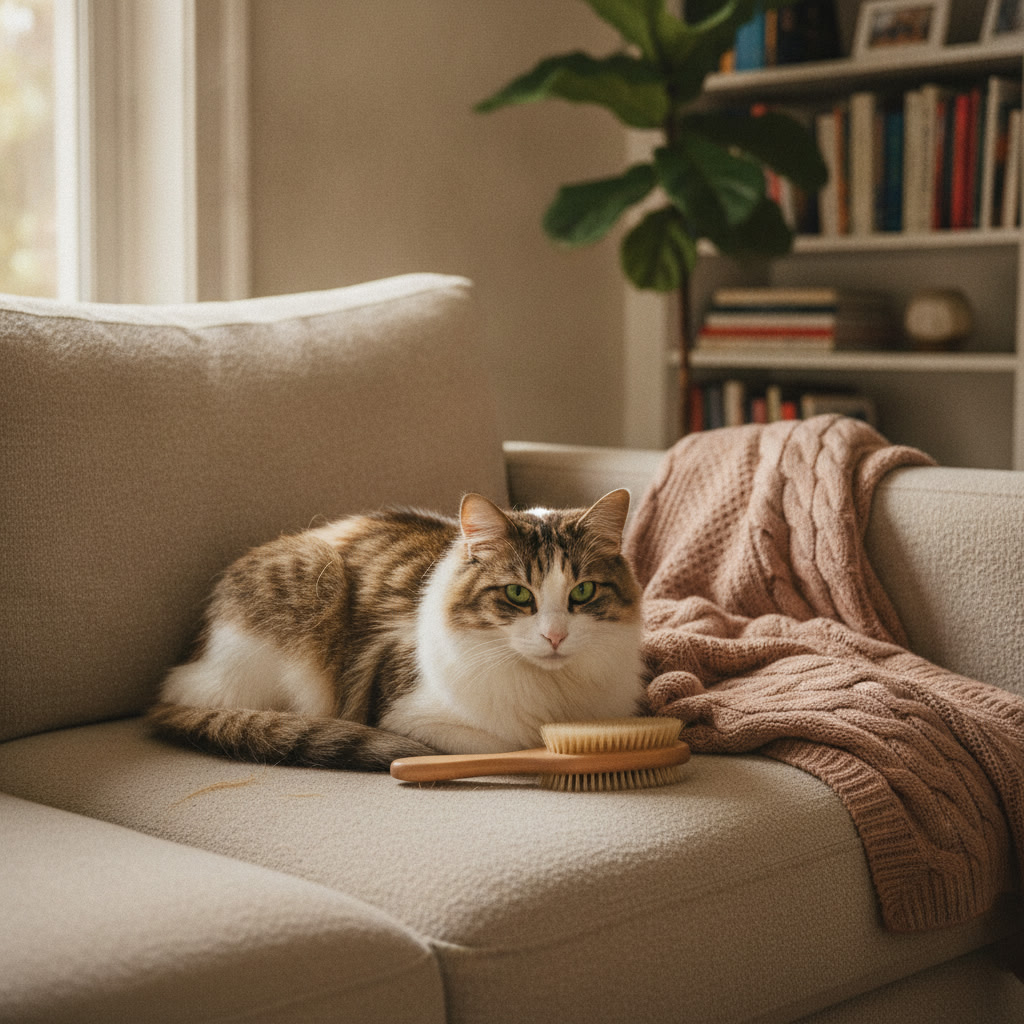
The fastest way to get cat hair off clothes and furniture is friction plus a little dampness: a damp rubber glove or a rubber squeegee pulls hair off upholstery better than most gadgets, and a few minutes in the tumble dryer before washing loosens hair from clothes. The best long-term fix is less loose hair in the first place, which means regular brushing.
Here’s what works on each surface, which tools are worth buying, and when heavy shedding is worth a vet visit.
Why cat hair sticks to everything
Cat hair is fine, light and slightly barbed at the surface, and it picks up a static charge easily. That combination is why it weaves itself into knitted fabrics, clings to fleece and seems to migrate from the cat bed to your black trousers without the cat ever touching them.
Shedding itself is normal. Cats replace their coat continuously, and many shed more in spring and autumn as daylight changes. Indoor cats under artificial light often shed at a fairly steady rate all year. You can’t stop it, but you can control how much of it ends up on your stuff.
It’s also worth knowing that hair carries allergen. The main cat allergen, Fel d 1, is produced mostly in saliva and skin glands and gets spread onto the coat when cats groom. Studies of household allergen have found Fel d 1 on clothing and in homes and public places where no cat lives, which shows how easily hair and dander travel on fabric. If anyone in your house is allergic, getting hair off soft furnishings is about more than looks.
How to get cat hair off clothes
Before washing: put the clothes in the tumble dryer on a no-heat or low-heat setting for about 10 minutes. The tumbling loosens hair, and most of it ends up in the lint filter rather than in your washing machine. Adding a couple of wool dryer balls or a damp microfiber cloth helps grab more.
In the wash: a cup of white vinegar in the rinse cycle helps relax fabric so hair releases more easily. Wash pet bedding and blankets separately from your clothes so the hair doesn’t transfer.
After washing: run the dryer again and clean the lint filter afterwards. Wipe out the washing machine drum with a damp cloth every so often too, because hair builds up around the seal.
On the way out the door: a sticky lint roller is still the quickest fix for a jacket. Reusable rollers with a soft fabric strip and a collection chamber work well on clothes and save buying refills.
How to get cat hair off couches and upholstery
This is where cheap tools win.
- Damp rubber gloves. Put on a pair of household rubber gloves, dampen them slightly, and sweep your hand across the fabric in one direction. The hair rolls up into clumps you can pick off. It’s low-tech and very effective.
- A rubber squeegee or rubber pet-hair brush. Same principle, bigger surface. Drag it in short strokes across cushions and the arms of the sofa.
- A vacuum with an upholstery or motorised pet tool. Use it after the rubber pass to pick up what’s left, and to get into seams.
- A light mist of water (or water with a little fabric softener) on fabric that’s safe to dampen reduces static so hair lets go more easily. Test on a hidden spot first.
Leather, faux leather and tightly woven fabrics only need a wipe with a damp cloth.
How to get cat hair off carpet, rugs and car seats
Carpet hides hair deep in the pile, which is why a vacuum alone often leaves a fuzzy film behind.
- Rake it up first. A rubber broom, a carpet rake or even a window squeegee dragged across the carpet pulls embedded hair to the surface. You’ll be surprised (and slightly horrified) by how much comes up.
- Then vacuum slowly. Multiple slow passes in different directions pick up more than one fast pass. A vacuum with good suction and a beater bar does most of the work on carpet.
- Car seats: a pumice-style pet hair stone or a rubber brush works well on car upholstery and carpet mats. Go gently on delicate fabrics, since these can be abrasive.
If allergies are a concern, a vacuum with a sealed HEPA filter is worth the money, because a vacuum without a good filter can blow fine allergen particles back into the air.
Which cat hair tools are actually worth buying
You don’t need much. A realistic kit:
- A good brush for the cat. This does more than anything else on the list. Hair you brush out doesn’t end up on the sofa.
- A rubber squeegee or rubber pet-hair brush for furniture and carpet.
- A reusable lint roller for clothes, plus a sticky roller for emergencies.
- A vacuum with a pet or upholstery tool, ideally with a HEPA filter if anyone has allergies.
- Washable throws on the cat’s favourite spots. Easier to wash a blanket weekly than to clean a sofa.
An air purifier with a HEPA filter can help with airborne allergen, but it won’t do much about hair on surfaces. Treat it as an allergy tool, not a hair tool.
How to reduce shedding at the source
Brush regularly. Short-haired cats usually do well with a brush once or twice a week, while long-haired cats often need daily brushing to stop loose hair matting. A rubber curry brush or grooming mitt suits many short-haired cats, while a wide-toothed comb and a slicker brush are standard for long coats. Our guide to the best cat grooming tools covers which brush suits which coat, and how often to groom your cat has a routine by coat type. If your cat treats the brush as a declaration of war, grooming a cat that hates being groomed has some practical tactics.
Feed a complete diet. A dull coat that sheds heavily can reflect a diet that isn’t meeting a cat’s needs. Commercial foods labelled complete and balanced for cats generally cover the essential fatty acids that support skin and coat. Talk to your vet before adding fish oil or other supplements, especially if your cat has a health condition.
Choose fabrics with a tight weave. Microfiber, canvas, denim and leather shed hair easily. Velvet, chenille, knitted wool and fleece trap it. If you’re buying a new throw or sofa cover, that’s worth knowing.
Give the cat their own spots. A washable blanket on the windowsill or the end of the bed concentrates hair where you can deal with it. Cats usually choose their spots, but a blanket in a place they already like often gets adopted quickly.
Brushing also cuts down on hair your cat swallows, which can mean fewer hairballs. That’s a nice side benefit.
When shedding is a sign to see the vet
Normal shedding is spread evenly over the body and leaves no bare skin. Book a vet visit if you notice:
- Bald patches or thinning areas, especially if the skin underneath is red, scaly or scabby
- Over-grooming, such as licking one area constantly or chewing at fur
- A sudden, big increase in shedding with no seasonal explanation
- A greasy, dull or unkempt coat in a cat who used to groom well, which can point to pain, dental disease, arthritis or other illness
- Itching, fleas or flea dirt in the coat
Causes range from fleas and allergies to stress, ringworm, hormonal disease and pain. Our guide to why cats lose hair explains the common causes in more detail.
The short version
- Brush your cat regularly. It beats every gadget.
- Tumble clothes for 10 minutes before washing and clean the lint filter.
- Use damp rubber gloves or a squeegee on upholstery, then vacuum.
- Rake carpet with a rubber broom before vacuuming.
- Put washable blankets on the cat’s favourite spots.
- Bald patches, over-grooming or a sudden change in the coat mean a vet visit.
What’s the one trick that actually keeps cat hair under control at your place?