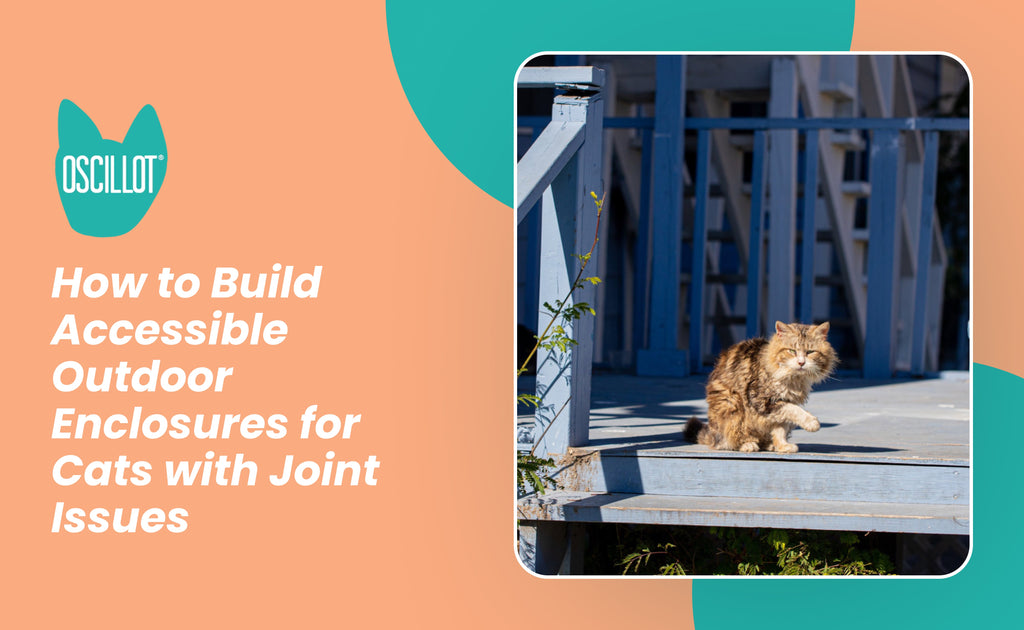
Arthritis and joint problems affect approximately 90% of cats over 12 years old — making mobility a significant concern for the many multi-senior-cat households across America. But joint issues don’t have to mean losing access to the outdoors. With thoughtful design, contained outdoor spaces can provide enormous quality-of-life benefits even for cats with significant mobility limitations.
This guide from Oscillot covers how to build accessible outdoor enclosures specifically for cats with arthritis and joint problems. The key design principles: easy, low-entry access points (ramps preferred over steps), comfortable resting areas with non-slip surfaces, adequate shade and shelter from direct sun and cold, and navigation paths that avoid uneven terrain. The containment perimeter provides the safety boundary — Oscillot kits from 4 to 300 feet accommodate any yard size — while the interior design is optimized for arthritic comfort.
The article explains how the Oscillot system’s passive mechanical design (no steps, shocks, or movement required of the cat to stay safe) is particularly appropriate for cats with mobility challenges who need simple, stress-free containment rather than active training or shock-avoidance learning.
Interior design guidance covers flooring surfaces (smooth but non-slip, avoiding surfaces hard on sore joints), how to provide elevated views without requiring difficult climbing (gentle ramp-accessed platforms), heating and cooling considerations for year-round comfort, and how to introduce arthritic cats to the outdoor space gradually. Veterinary consultation for specific medical cases is always recommended.
Read the full article: How to Build Accessible Outdoor Enclosures for Cats with Joint Issues