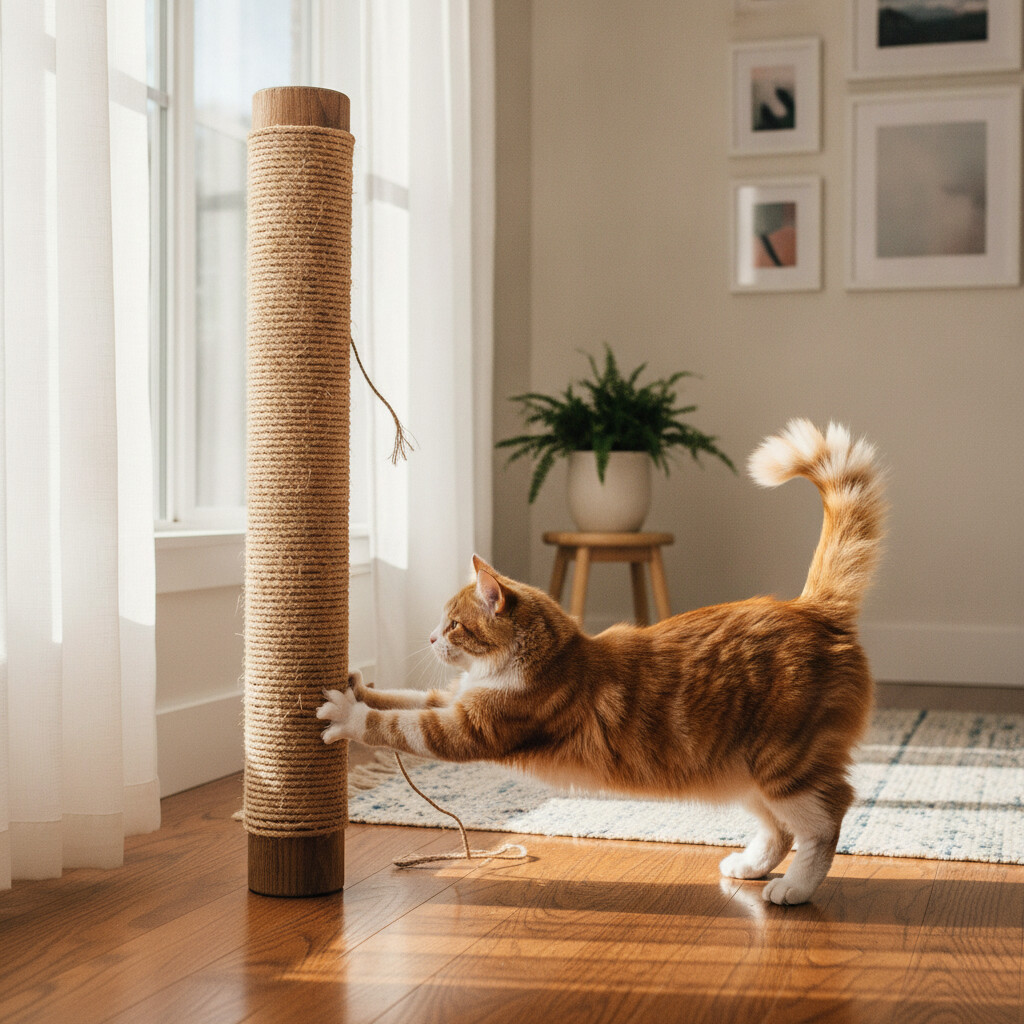
Most store-bought scratching posts fail for one reason: they wobble. A cat that gets a shaky post under its claws once usually won’t go back for a second try. Build one that’s tall enough, heavy enough, and wrapped in the right material, and you’ll solve the problem for under $30 in an afternoon — no woodworking experience required.
Why Cats Scratch (and Why Cheap Posts Get Ignored)
Scratching isn’t misbehavior — it’s maintenance. Cats shed the outer sheath of their claws, mark territory with scent glands in their paws, and stretch muscles they can’t stretch any other way. The American Association of Feline Practitioners and International Society of Feline Medicine’s joint feline environmental needs guidelines identify scratching as a core behavioral need, not an optional outlet, and recommend owners provide sturdy, appropriately sized options rather than trying to suppress the behavior.
That’s also why so many big-box scratching posts get ignored after week one. Most are too short for a full-body stretch, wrapped in flimsy carpet that shreds instead of catching claws, or light enough to tip over on the first real pull. A cat that topples a post while scratching learns fast that it’s not safe to use.
What You’ll Need
- A 4x4 fence post or similar untreated lumber, cut to at least 32 inches (taller for large breeds — cats want to fully extend)
- A base at least 18x18 inches — plywood, a thick round of wood, or a heavy paving stone works
- Sisal rope (roughly 3/8 inch diameter, about 60–75 feet for a post this size) — not sisal carpet, which shreds into loose fibers cats dislike
- Wood screws, a staple gun, wood glue, and a drill
- Optional: carpet remnant or felt for the base cover
Sisal rope beats fabric-wrapped alternatives because of the resistance it offers. Cats scratch to dig their claws in and pull against something firm — rope wound tightly gives that resistance in a way that loose-weave carpet doesn’t, which is part of why carpet-wrapped posts get abandoned faster.
Building It: Step by Step
- Attach the post to the base. Drill a hole through the center of the base and up into the bottom of the post, then drive a long screw through from underneath, backed up with wood glue for stability. This single connection point is the most common failure spot, so don’t skip the glue.
- Start the rope at the bottom. Staple the end of the sisal rope to the base of the post, then wind it upward, keeping each wrap tight against the one before it. Add a staple every 6–8 inches as you go so the rope can’t unravel if a claw catches an edge.
- Keep tension consistent. Loose wraps are where posts start to fray and lose their grip quickly. Pull firmly with each turn — your hands will feel it if the tension is dropping.
- Finish and secure the top. Staple the rope end at the top and tuck or trim it so there’s no loose tail for a claw to snag.
- Weight-test before placement. Push firmly against the post from several angles. If it rocks or tips, add weight to the base (sandbags underneath, a paving stone, or a wider plywood layer) before introducing your cat to it.
Placement Matters More Than the Post Itself
A well-built post in the wrong spot still gets ignored. Cats scratch most right after waking up and near territory boundaries — put the post near a sleeping spot, a doorway, or wherever your cat currently scratches furniture, not tucked away in a spare room. If your cat already has a preferred scratching target (a couch arm, a doorframe), place the new post directly next to it for the first few weeks, then gradually move it to where you actually want it.
Rubbing a little catnip into the rope or scenting it with your cat’s own paw pads (gently, no restraint needed — just guide a paw across the surface) can speed up adoption, but a sturdy, well-placed post usually gets used within days without any extra encouragement.
When Scratching Still Targets Furniture
If your cat ignores the new post entirely, the problem is usually stability, texture, or location before it’s a training issue — see our guide on why cats scratch furniture and how to stop it for a deeper troubleshooting rundown. And if building isn’t for you, our roundup of the best cat scratching posts on the market covers well-reviewed options at every price point.
The Takeaway
A scratching post fails when it wobbles, when the material doesn’t grip back, or when it’s placed somewhere your cat doesn’t already spend time. Fix those three things and almost any cat will use a post over your furniture — the DIY version above solves all three for less than the cost of a mediocre store-bought one, and it’ll outlast most of them too.