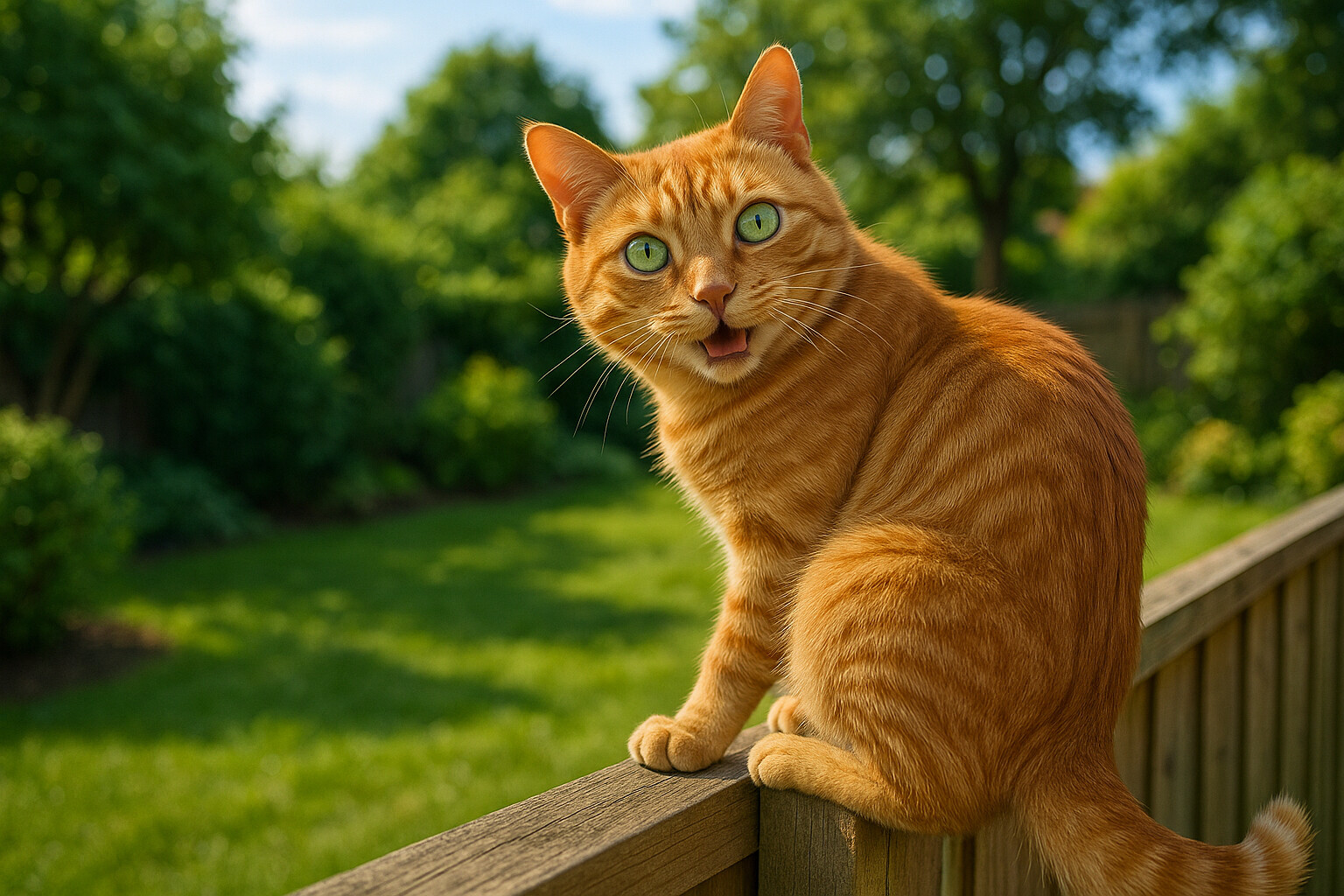
Every cat owner with an outdoor-loving cat knows the feeling: you open the back door for two seconds, and suddenly your cat is three yards away, trotting toward the fence with zero remorse. For the Henderson family in suburban Columbus, Ohio, that cat was Biscuit — a three-year-old orange tabby with what his owners lovingly called “a pathological need for adventure.”
This is the story of how they stopped the madness, and what they learned about escape-artist cats along the way.
Biscuit’s Great Escapes
From the moment Biscuit was old enough to move quickly, he tested every exit. Screen doors. Gaps under the fence. A loose board in the back corner that only he seemed to know about. The Hendersons would repair one escape route and Biscuit would find another within 48 hours.
“He wasn’t aggressive or destructive inside,” said Sarah Henderson, a middle school teacher and mom of two. “He just really, really wanted to be outside. And we wanted him to have that — we just didn’t want him getting hit by a car or getting into it with the neighbors’ dogs.”
The risks are real. The ASPCA estimates that outdoor and free-roaming cats face dangers including vehicle traffic, predators, disease exposure, and the risk of getting lost or stolen. In urban and suburban environments, the average lifespan of a free-roaming cat is significantly shorter than that of a fully indoor or safely contained cat.
What Didn’t Work
The Hendersons tried a lot of things before they found a solution that stuck.
A standard cat collar with a bell — Biscuit figured out how to move without making it jingle. Useless.
A cat harness and leash — This worked great for supervised outings, but it didn’t solve the problem of Biscuit bolting through an open door, and the kids couldn’t always be trusted to keep him leashed.
A motion-activated sprinkler — Biscuit ignored it after two days. He would literally stare it down while getting drenched.
Keeping him strictly indoors — This was the hardest option to stick with. Biscuit became vocal and restless, scratching at doors and yowling at windows. Sarah described it as “like having a toddler on a no-sugar diet — doable, but relentless.”
The Turning Point
After their vet recommended that Biscuit needed more outdoor enrichment for his mental health, Sarah started researching options that could give him outside time safely. That’s when she came across cat containment systems designed to keep cats inside a yard perimeter.
“I honestly didn’t know these existed,” she said. “I thought our only options were ‘full indoor’ or ‘hope for the best.’”
After some research into cat-proof fence systems and what to look for before buying, the Hendersons installed a roller-style fence topper system along their existing wooden privacy fence. The system works by spinning when a cat tries to grip the top — so Biscuit’s climbing attempts result in him sliding back down, confused and annoyed, rather than clearing the fence.
Installation took a Saturday morning and a moderate amount of cursing, according to Sarah’s husband, Dave.
Biscuit Today
Six months later, Biscuit spends three to four hours outside every day. He hunts bugs, lounges in the sun, and occasionally stalks the Henderson family’s vegetable garden. He has not escaped since the system went in.
“He still tries,” Sarah laughed. “He’ll go right up to the fence, put his paws on it, feel it move, and then just… sit there and think. Then he goes back to the garden. I think he’s accepted it.”
More importantly, his indoor behavior improved almost immediately. The incessant door-scratching stopped. His appetite normalized. He’s calmer, more affectionate, and — his vet noted at his last checkup — in better physical condition than he’s been in years, since he’s actually moving around outside regularly rather than pacing indoors.
What This Story Teaches Us About Cat Behavior
Biscuit’s escape drive wasn’t a behavioral problem — it was a need for environmental enrichment that wasn’t being met. Many cats, especially those who spent any time outdoors as kittens, have a strong pull toward the outside world. Suppressing that drive entirely through indoor confinement can lead to stress-related behaviors including excessive vocalization, destructive scratching, and lethargy.
For families in this situation, the sweet spot is often what behaviorists call “controlled outdoor access” — giving cats the sights, smells, and physical stimulation of the outdoors without the associated risks. Whether that’s a catio, a supervised enclosure, or a spring outdoor enrichment setup, the key is matching the solution to your cat’s specific energy level and your yard’s layout.
Biscuit is proof that it’s possible. He’s not a prisoner — he’s just a cat who finally has a yard that’s actually his.
Do you have an escape artist at home? Share your story in the comments — we’d love to hear what finally worked (or didn’t).