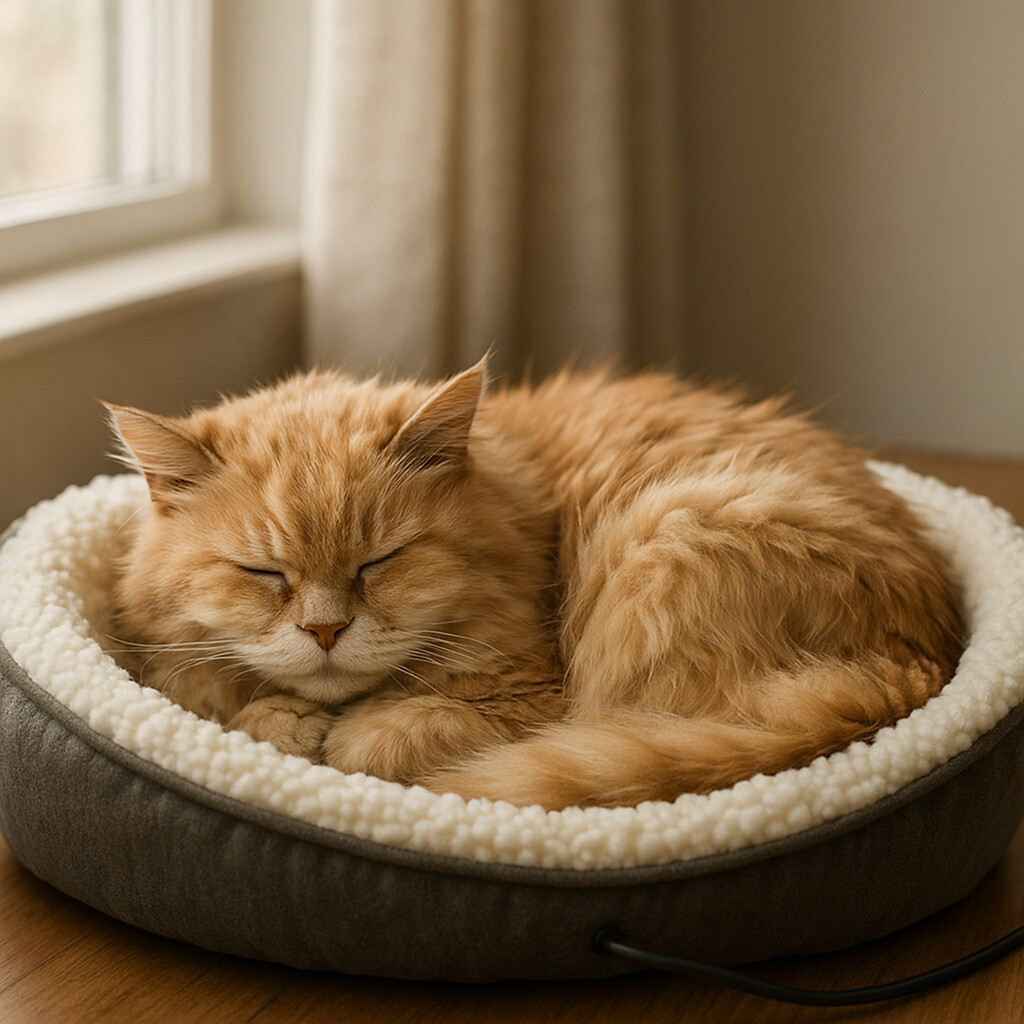
Every cat I’ve ever owned has been a heat-seeker. Sunny spots, radiators, laptop keyboards, the one warm patch of your lap that lasts exactly three minutes before you need to get up. So when heated cat beds started showing up everywhere, I had to ask the obvious question: are they actually safe?
The honest answer: yes, with caveats. Here’s everything you need to know before buying one.
How Heated Cat Beds Actually Work
There are two main types, and they work very differently:
Electric heated beds plug into the wall and use low-wattage heating elements to maintain a set temperature, usually between 95°F and 102°F. Better models include thermostats that detect the pet’s body heat and only warm when needed. They draw anywhere from 4 to 40 watts depending on size and design.
Self-warming beds use no electricity at all. They’re lined with materials (usually Mylar — the same stuff in emergency blankets) that reflect your cat’s own body heat back at them. They don’t get “warm” on their own; they amplify what your cat provides.
For most healthy adult cats, self-warming beds are the safer, simpler choice. Electric beds are particularly useful for senior cats, post-surgery recovery, cats with arthritis, or kittens under 8 weeks who can’t thermoregulate effectively yet.
Are Heated Cat Beds Safe? The Real Risks
The short answer: yes, commercially manufactured electric cat beds are safe when used correctly. Here’s what to watch for:
Overheating
Cats can’t easily regulate their body temperature the way dogs do (they don’t pant as effectively). A bed that gets too hot — above 102°F — can cause burns, especially in cats that are sedated, very old, or have reduced sensation.
What to look for: ASPCA and veterinary guidelines recommend beds with thermostats set to 102°F or below. Look for products with a “pet-safe” thermostat or automatic temperature regulation. Avoid generic, non-pet-specific heating pads or human heating blankets — these can reach 120°F+.
Burns from Prolonged Contact
Even mild heat can cause “low-temperature burns” if a cat sleeps on the same spot for hours without moving. This is a particular risk for:
- Cats under anesthesia or recovering from surgery
- Diabetic cats with nerve damage
- Elderly cats who sleep very deeply
Solution: Always give your cat an exit. Place the heated bed inside a larger regular bed, or next to unheated sleeping areas, so your cat can self-regulate. Never confine a cat to a heated space.
Electrical Safety
Cats are chewers. Power cords near kittens or bored cats are a legitimate hazard.
What to look for: Chew-resistant cords (look for steel-braided or heavy-gauge insulation), low-voltage designs, and UL or ETL safety certifications on the product label. Unplug the bed when you’re not home during the first few weeks until you know your cat ignores the cord.
Water and Wetness
Electric beds should never get wet. If you have a cat that drools heavily, regularly drags water to their sleeping area, or has any incontinence issues, either choose a self-warming bed or look for beds with a fully waterproof heating element encased in washable fabric.
What Temperature Should a Heated Cat Bed Be?
Healthy adult cats have a normal body temperature of 100.4°F–102.5°F. For comfort, a heated bed should be slightly at or below body temperature — around 95°F–101°F. This provides warmth without the risk of overheating.
For senior cats or those with arthritis: A consistent 100°F–102°F is ideal. Warmth helps ease joint stiffness without the dehydration risk of higher temperatures.
For kittens under 4 weeks: 85°F–90°F on the cool side; up to 95°F for very young neonates. Use a dedicated kitten pad, not an adult cat bed, and always provide an unheated area to crawl away from.
Top Things to Look for When Buying
Not all heated beds are created equal. Here’s what separates the good ones:
| Feature | Why It Matters |
|---|---|
| Automatic thermostat | Prevents overheating if cat stays on all day |
| Machine-washable cover | Essential — heated beds get grimy fast |
| UL/ETL certification | Third-party electrical safety testing |
| Removable heating unit | Lets you wash cover without soaking electronics |
| Chew-resistant cord | Critical for kittens and active chewers |
| Orthopedic foam base | Extra value for senior cats with joint issues |
Best Cats for Heated Beds
Some cats benefit more than others:
- Senior cats (10+): Arthritis, reduced circulation, and less efficient thermoregulation make heated beds genuinely therapeutic
- Hairless or short-coated breeds: Sphynx, Devon Rex, Cornish Rex lose body heat quickly
- Cats recovering from illness or surgery: Warmth supports healing (with vet guidance)
- Cold climates or drafty homes: If your home drops below 65°F regularly, heated beds are worth considering for any cat
Healthy, thick-coated adult cats living in a climate-controlled home often don’t need a heated bed — but they’ll happily use one.
What Most Reviews Won’t Tell You
A few things that come up in real-world use that product descriptions skip:
Cats will fight over them. If you have multiple cats, buy one per cat minimum. A single heated bed will become a source of serious competition.
They need regular cleaning. The warmth accelerates the buildup of oils, dander, and hair. Plan to wash the cover every 1–2 weeks. Beds with removable, machine-washable covers are a non-negotiable if you have a cat with skin issues or allergies.
Placement matters. Cats choose warmth AND security. A heated bed placed in the middle of a room will often be ignored. Put it in a corner, against a wall, or in an existing cat-nap spot.
Indoor-outdoor cats may not use them as much. Cats with outdoor access self-regulate temperature by moving between environments. An indoor-only cat — especially one who keeps their own safe yard with a cat containment system — often gets significantly more use out of a heated bed than a cat who roams.
The Bottom Line
Heated cat beds are safe and genuinely beneficial for the right cats — particularly seniors, hairless breeds, post-surgical patients, and cats in cold homes. The key requirements: thermostat control, a temperature ceiling at or below 102°F, proper electrical safety certifications, and always giving your cat an exit option.
Self-warming (non-electric) beds are a no-risk alternative if you’re unsure — they work surprisingly well and remove all the safety variables.
For most cats though, honestly? The warmest spot in the house is still your lap. Heated beds come second.
— CatLady6