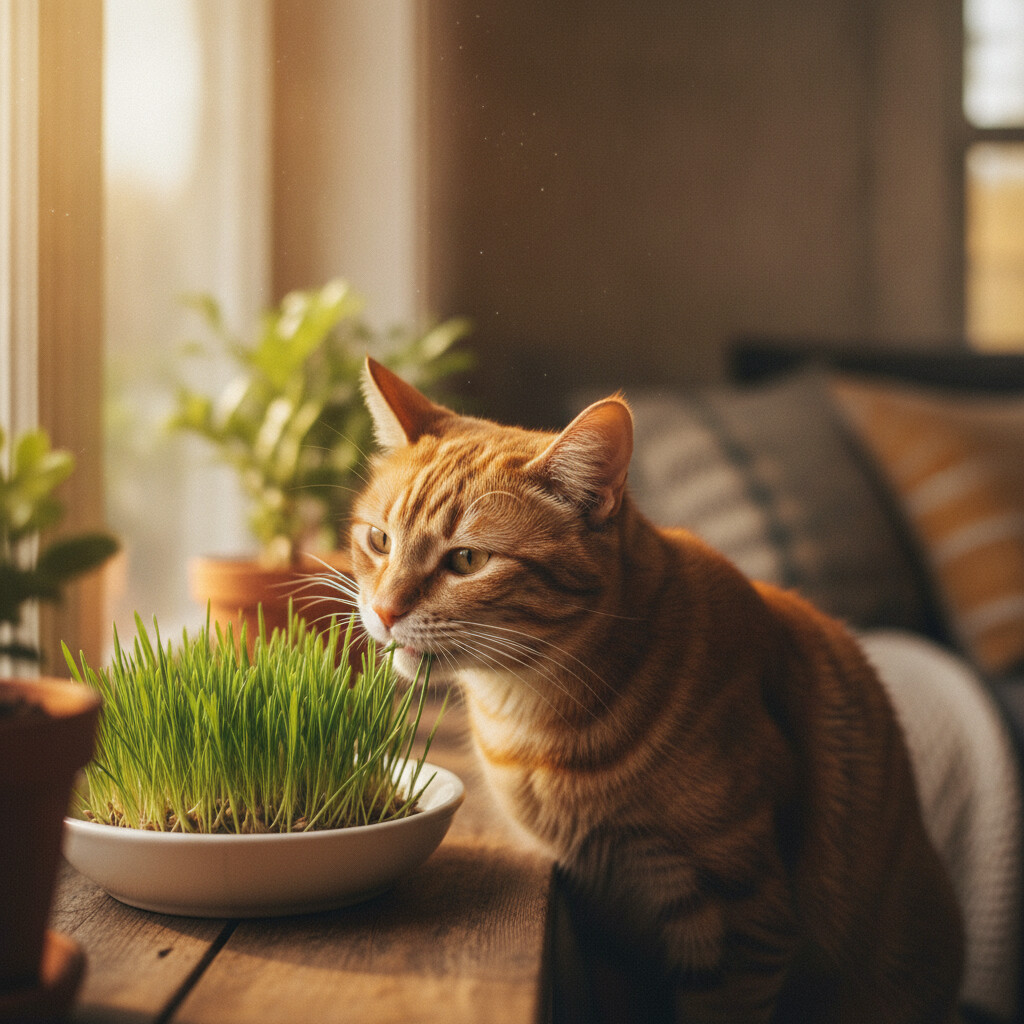
Cat grass is safe, cheap, and easy to grow — a shallow tray of wheat, oat, barley, or rye seed will sprout in about a week and give your cat something to chew, sniff, and forage through. It’s not the same plant as catnip, and it doesn’t get cats “high” — it’s more like a salad bar than a toy. Here’s how to grow it properly and what it actually does for your cat.
What Cat Grass Actually Is
“Cat grass” isn’t one species — it’s usually a mix of wheatgrass, oat grass, barley grass, or rye, sold as seed blends specifically for pets. None of these are related to catnip (Nepeta cataria), which is a member of the mint family and triggers a completely different response tied to a compound called nepetalactone. Cat grass has no psychoactive effect. Cats chew it the way they’d chew on a houseplant — out of curiosity, texture-seeking, or instinct — not because it intoxicates them.
Because it’s grown from food-grade seed under controlled conditions, cat grass you plant yourself is free of the pesticides and fertilizers that make outdoor lawn grass risky to eat.
Why Cats Chew Grass in the First Place
The honest answer is that nobody has a single confirmed explanation, and be wary of any source that claims certainty here. A few theories have decent support:
- Fiber and digestion. Grass adds roughage that may help move hair and other indigestible material through the gut, which is part of why grass-eating is often followed by vomiting up a hairball — this is normal and not a sign something is wrong.
- Folic acid. Grass contains folic acid (vitamin B9), which supports red blood cell production. Some veterinary sources suggest cats may seek it out for this reason, though it’s not proven as a primary driver.
- Instinct from wild ancestors. Wild and feral cats have been observed eating grass and other vegetation regularly, suggesting it’s a normal part of feline foraging behavior rather than a symptom of a problem.
The Cornell Feline Health Center and multiple veterinary behaviorists note that occasional grass-eating and the vomiting that sometimes follows is common and not typically a concern in an otherwise healthy cat.
How to Grow It Indoors
Growing cat grass is closer to sprouting seeds than gardening — it doesn’t need skill, just consistency.
- Pick your seed. Wheatgrass and oat grass are the most common and grow fastest (5–10 days to a chewable height). Barley and rye work too and tend to have a slightly tougher blade.
- Use a shallow, wide container. A low tray or repurposed takeout container with drainage holes works better than a deep pot — cat grass has shallow roots.
- Fill with potting soil or a soilless seed-starting mix, moisten it, then scatter seed thickly across the surface and press down gently. Don’t bury the seed deep.
- Cover loosely with a thin layer of soil or a damp paper towel until you see sprouts (usually 2–4 days), then remove the cover.
- Keep it in indirect light and mist or water lightly whenever the surface starts to dry out. Overwatering causes mold, which is the most common reason a batch fails.
- Let it reach 3–4 inches before offering it to your cat — younger sprouts are more fragile and get uprooted rather than chewed cleanly.
Because grass gets chewed down and eventually goes stringy or moldy at the base, most owners keep two trays going on a rotation — one actively growing while the older one is in use — and replace each tray every 1–2 weeks.
Keeping It Safe
Cat grass itself is low-risk, but a few practical points matter:
- Skip outdoor lawn grass. Grass along sidewalks, in parks, or in most home lawns is frequently treated with herbicides, pesticides, or fertilizer that’s dangerous if ingested. Homegrown cat grass avoids this entirely.
- Watch portion, not access. There’s no need to ration it — cats self-regulate well with grass — but if a cat is gorging on an entire tray in one sitting and vomiting repeatedly afterward, cut back the amount available at once.
- Don’t confuse it with toxic lookalikes. If you also keep ornamental houseplants, double-check them against a vetted toxic plant list — see our guide on common houseplants that are toxic to cats for a room-by-room rundown. Cat grass itself is not on any toxicity list.
- Occasional vomiting is normal; frequent vomiting is not. One episode after eating grass, especially if a hairball comes up, isn’t cause for alarm. Vomiting that happens repeatedly, isn’t tied to grass at all, or comes with lethargy or appetite loss is a different situation and worth a vet visit.
The Takeaway
Cat grass is one of the lowest-effort, lowest-risk enrichment additions you can make for an indoor cat — a tray costs a few dollars, takes under a week to grow, and gives cats a safe outlet to chew and forage. Keep two trays rotating, use fresh soil each time to avoid mold, and treat the occasional resulting hairball as normal biology rather than a problem to solve.
If you’re looking to round out an indoor cat’s environment beyond grass, our guide to indoor cat enrichment covers vertical space, play, and mental stimulation more broadly, and our piece on cat-safe herbs for an indoor garden is a natural next step if the grass tray goes well.