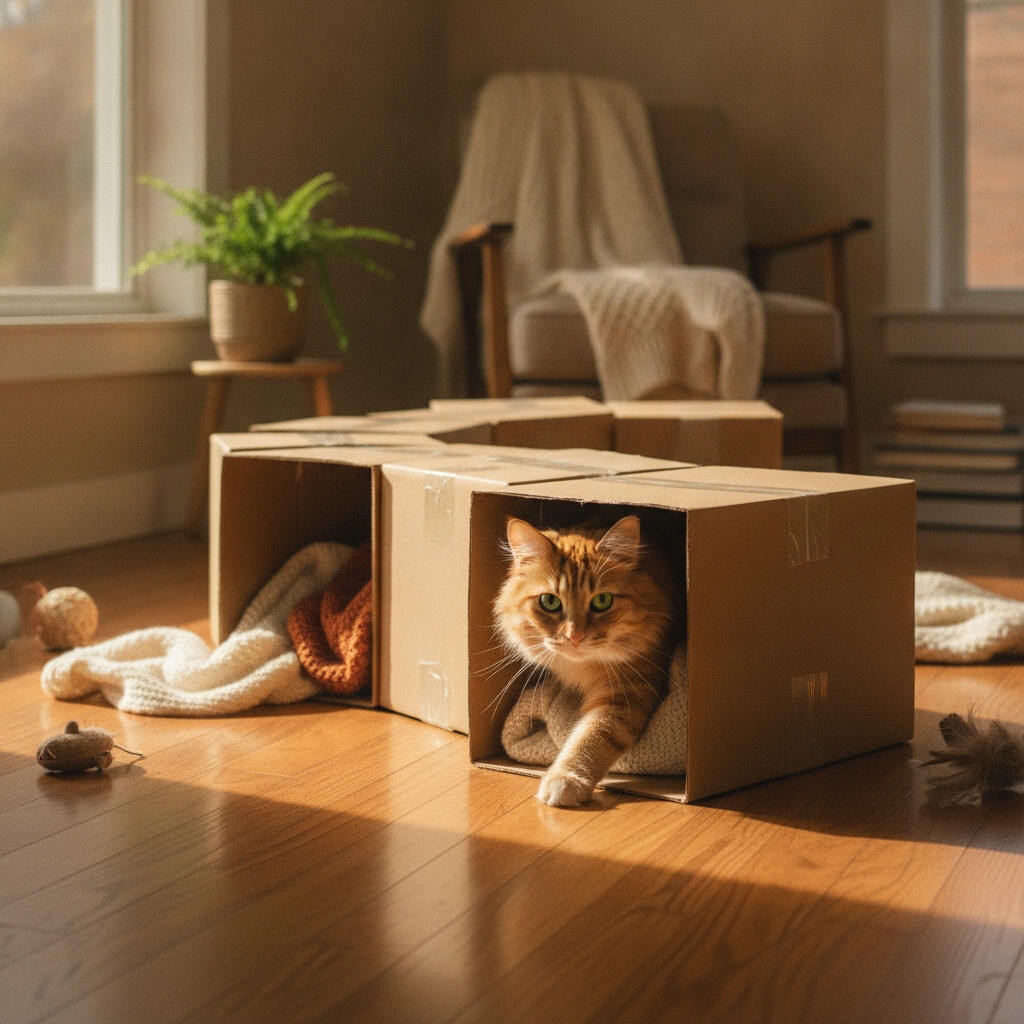
A cardboard box, a fabric tunnel, or a gap behind the couch does something a $200 cat tree can’t: it lets your cat disappear. Hiding is a core feline security behavior, not a sign something’s wrong, and building a few cheap hideaways into your home is one of the highest-value, lowest-cost enrichment projects you can do.
Why Cats Need Places to Hide (It’s Not Just Shyness)
Cats are both predator and prey in the wild, and a hidden, enclosed space lets them rest without the low-grade vigilance that open spaces require. Feline behaviour researchers have found that shelter access measurably reduces stress indicators in cats, including in shelter environments where simply providing a hiding box lowered stress scores within days. This isn’t about a nervous cat needing extra help — even confident, social cats use hideaways daily as a normal part of their routine.
Tunnels add a second benefit on top of hiding: they satisfy the instinct to move through enclosed, unpredictable spaces the way a cat would move through undergrowth or narrow gaps between rocks. That’s part of why cats will ignore an expensive toy and spend ten minutes with a paper bag or a box with two holes cut in it — the shape of the space matters more than the price.
Five DIY Hideaways That Cost Almost Nothing
1. The stacked box tunnel. Cut identical holes in the sides of two or three cardboard boxes, then push the boxes together so the holes line up. Tape them in place. This gives a modular tunnel you can reconfigure or extend as boxes wear out.
2. The under-bed cave. A low box or a soft-sided pop-up hamper pushed under a bed frame creates a dark, enclosed spot cats gravitate toward on their own — you’re just formalizing what they’d find anyway.
3. The paper bag row. Several open paper grocery bags laid on their sides in a line, weighted lightly at the base so they don’t tip, make an instant low-effort tunnel. Remove any handles first — they’re a strangulation risk if a cat gets a paw or head caught.
4. The blanket fort over a chair. Draping a blanket over two chair backs or a coffee table creates a full enclosed den. This is the cheapest option in the list and works especially well for cats who are recovering from a stressful event (a move, a new pet, a vet visit) and need a low-stimulation retreat.
5. The felt or fabric pod. A step up in cost but still inexpensive — cat cave beds (felted wool pods, or simple fabric igloo beds) combine hiding with the warmth cats seek out. Worth the small spend if your DIY cardboard versions keep getting shredded.
Where to Put Them (Placement Matters More Than the Structure)
A hideaway near a busy doorway or next to a loud appliance defeats the purpose — cats want their retreat spot to actually feel safe, which means quiet, slightly elevated if possible, and with a view of the room’s main entrance rather than a wall. In multi-cat households, provide more hideaways than there are cats, and spread them across different rooms rather than clustering them in one spot — this avoids one confident cat effectively guarding the only good hiding spot and freezing out the others. Our guide to multi-cat household setup covers the broader resource-spacing principle this follows.
Rotate, Don’t Just Add
Novelty matters as much as the object itself. A cardboard tunnel that’s been sitting in the same spot for three months stops registering as interesting. Swap positions every couple of weeks, or box up one hideaway and reintroduce it a month later — cats respond to a “new” object even if it’s one they’ve seen before, simply because the context changed. This same rotation principle is worth applying to the rest of your enrichment setup; see our piece on DIY puzzle feeders for another low-cost project that benefits from the same rotation habit.
Safety Notes for DIY Builds
Remove staples, tape edges down so they can’t be chewed loose, and cut any handles or drawstrings off bags and boxes before use. Avoid enclosed spaces with only one exit if you have multiple cats who don’t get along — a hideaway should be an escape option, not a trap. If you’re using real furniture (a coffee table, a chair) as the frame, make sure it’s stable enough that an excited cat bursting out at speed won’t tip it.
The Practical Takeaway
Start with what’s already in your recycling bin. A stacked-box tunnel and a blanket fort cost nothing and take fifteen minutes to build. Add one or two per room rather than concentrating them, move them around every few weeks, and treat this as an ongoing low-effort habit rather than a one-time project — it’s one of the few pieces of enrichment where the cheapest option is also frequently the most effective one.