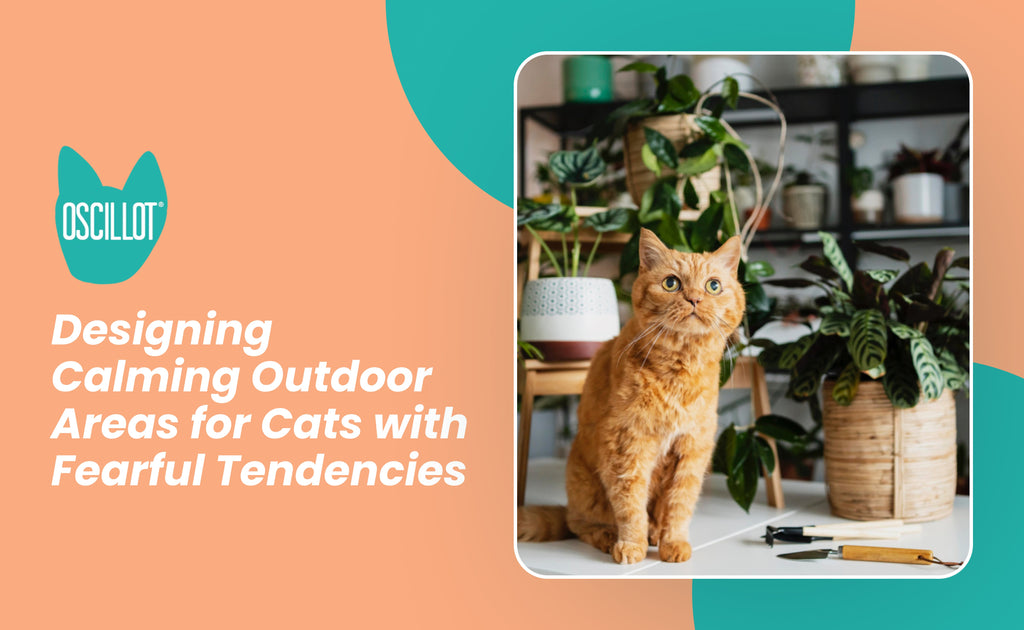
Research shows that cats with fearful tendencies who receive appropriate outdoor stimulation in secure, well-designed spaces show improved mood, reduced stress-related behaviors, and better overall health outcomes compared to cats kept exclusively indoors. The key word is “secure” — fearful cats need the psychological safety of a truly contained environment before they can relax enough to benefit from outdoor time.
This guide from Oscillot covers the design principles for creating calming outdoor spaces specifically for anxious and fearful cats. The containment foundation is non-negotiable: a fearful cat that escapes is in a uniquely dangerous position, as they’re far less likely to find their way home than a confident, territory-familiar cat. Oscillot’s passive mechanical system — which contains without any shocking, threatening sounds, or physical confrontation — is especially appropriate for fearful animals.
Within the contained zone, design choices matter enormously for anxious cats. The guide covers: multiple hiding spots at ground level and elevated positions (cats feel safer with multiple escape route options even when they never need to use them), strategic dense plantings that create visual privacy screens and reduce the cat’s sensory overwhelm from street activity, quiet positioning away from household traffic patterns, and gradual introduction protocols.
The article also addresses multi-cat households (territorial zoning within the contained area to prevent inter-cat stress), seasonal adaptations for year-round outdoor comfort, and specific enrichment features that calm rather than excite high-anxiety cats.
Read the full article: Designing Calming Outdoor Areas for Cats with Fearful Tendencies