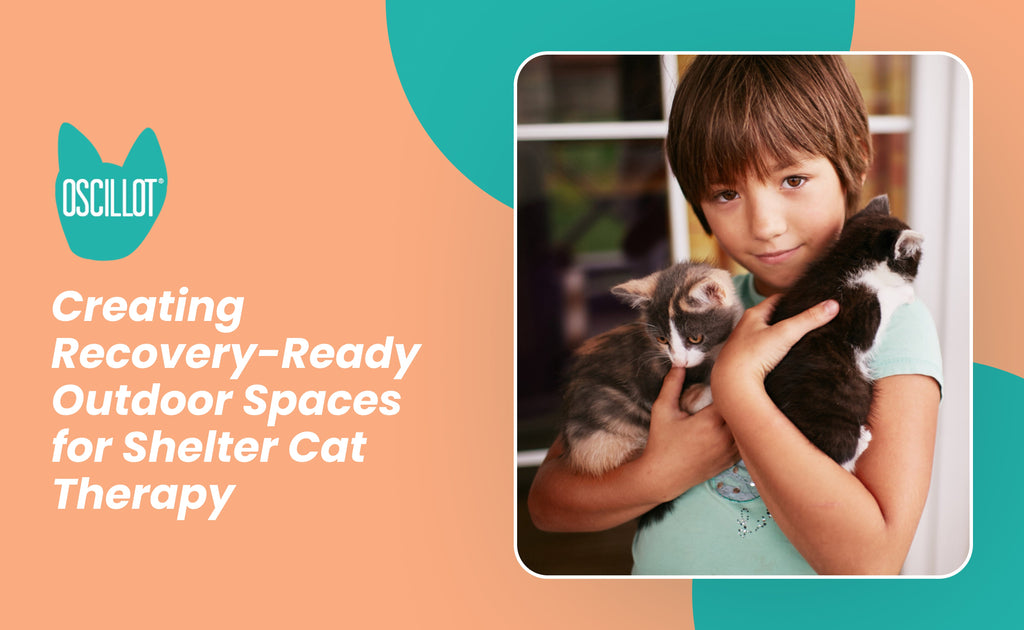
Animal shelters across America house cats who’ve come from traumatic backgrounds — cruelty cases, hoarding situations, abandonment, illness, and surgery recovery. Providing safe outdoor access for these cats during rehabilitation significantly improves their physical and emotional well-being, reduces stress hormones, encourages natural behaviors, and dramatically improves their adoptability. But “outdoor access” only delivers these benefits when the space is genuinely secure.
This guide from Oscillot covers how to create recovery-ready outdoor therapy spaces for shelter cats, with attention to the specific needs of American shelter environments. Key design elements include: a secure perimeter with cat-proof fencing (Oscillot kits from 4 feet up to 300-foot runs accommodate everything from small individual recovery yards to large communal play spaces), weather-appropriate shelters for the diverse U.S. climate, enrichment features that support rehabilitation and socialization, and tree guards for wooded settings.
The article covers practical shelter-specific considerations that differ from residential installations: double-entry gate systems to prevent accidental escapes during staff access, high-capacity sizing based on shelter population, specialized accommodations for senior and special-needs cats, and regional adaptations for shelters in different climate zones.
Behavioral benefits documented in the article include measurable cortisol reduction, improved socialization scores, faster medical recovery timelines, and better engagement with potential adopters. For shelters investing in outdoor therapy infrastructure, Oscillot’s system represents a durable, cost-effective solution with minimal ongoing maintenance.
Read the full article: Creating Recovery-Ready Outdoor Spaces for Shelter Cat Therapy