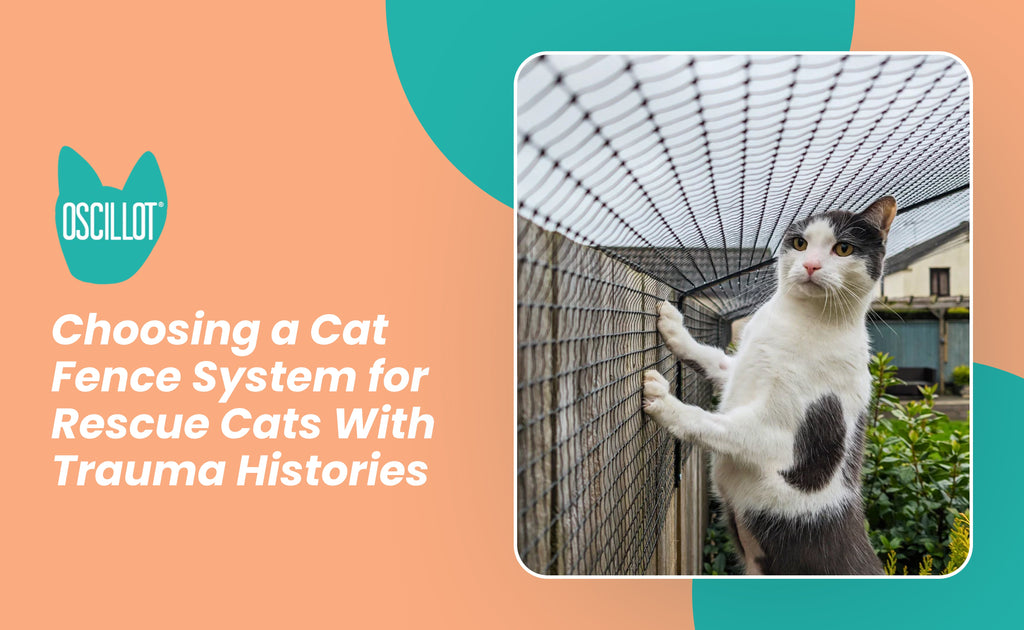
Millions of cats pass through American shelters every year, and many find forever homes carrying invisible scars from their pasts. Stray life, abandonment, abuse, hoarding situations, and shelter stress create behavioral patterns — hypervigilance, exaggerated startle responses, escape bolting, hiding — that require thoughtful, patient management. For adopters committed to providing outdoor access for traumatized rescue cats, choosing the right containment system is especially important.
This compassionate and practical guide from Oscillot covers why outdoor access can actually benefit traumatized cats (it provides sensory enrichment, expands their territory for a greater sense of control, and gives them physical outlets for anxious energy), and what makes a good containment system for cats who may bolt unpredictably in response to triggers.
Key considerations include: no electric shock or punishment-based systems (which re-traumatize fearful cats), quiet and non-threatening visual design, high reliability to prevent escapes from cats who bolt without warning, and compatibility with gradual, supervised introduction to outdoor spaces.
The article explains why passive mechanical systems like Oscillot are particularly appropriate for trauma-history cats — they require no interaction with the cat and present no threat or surprise. It also covers how to introduce outdoor space gradually, signs that a cat is ready for more outdoor time, and how to work with a vet or behaviorist on the transition.
Read the full article: Choosing a Cat Fence System for Rescue Cats With Trauma Histories