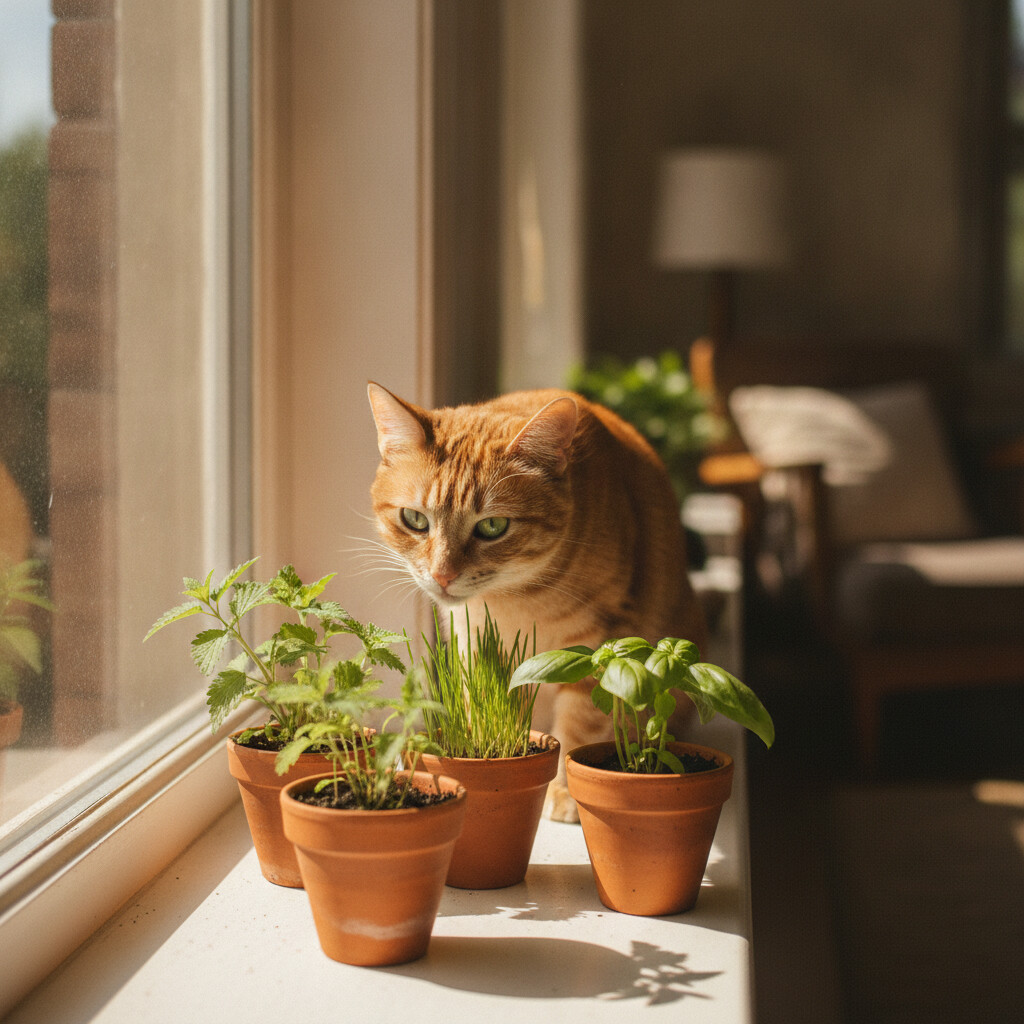
Most houseplants are a gamble when you live with cats. The ASPCA lists hundreds of common plants as toxic — and cats, being cats, will chew on anything green and interesting. But that doesn’t mean your home has to be a plant-free zone. With a little planning, you can grow a small garden your cat can actually interact with safely.
Here’s what to plant, how to set it up, and what to avoid.
Why Cats Chew on Plants
Cats are obligate carnivores, but plant-nibbling is completely normal behaviour. A few reasons they do it: seeking fibre to help with digestion, responding to novel smells and textures, or simply because something moves in the breeze and looks interesting. Outdoor cats graze on grass regularly. Indoor cats miss that outlet.
Giving them sanctioned plants satisfies that urge without the risk of them going after something toxic. It also adds genuine environmental enrichment — something a well-stocked cat shelf can’t always replicate. For more ideas, see 7 Cheap DIY Cat Enrichment Ideas That Actually Work.
The Best Cat-Safe Herbs and Plants to Grow Indoors
Catnip (Nepeta cataria)
The obvious choice. About 50–70% of cats respond to catnip — the reaction is triggered by a compound called nepetalactone, which binds to olfactory receptors and produces a short euphoric state, usually lasting 5–15 minutes. Cats that don’t respond (typically kittens and some adults) may still enjoy lying near it or nibbling on fresh leaves without the dramatic rolling behaviour.
Catnip is easy to grow. It prefers a sunny windowsill, well-draining soil, and consistent watering. Let it get leggy and trim it back often — the fresh growth is most potent. Dried catnip is also safe; fresh is just more compelling.
Cat Grass (Wheatgrass, Oat Grass, Barley Grass)
“Cat grass” isn’t a specific plant — it’s a general term for grasses grown for cats to chew. Wheatgrass and oat grass are the most common, and both are completely safe. They sprout quickly (7–10 days from seed), which makes them ideal for a rotating pot system: plant a new batch every two weeks so there’s always fresh grass on offer.
Cat grass provides fibre and a natural outlet for grazing behaviour. Many cat owners find it reduces interest in other houseplants.
Valerian (Valeriana officinalis)
Less famous than catnip, but valerian produces a similar reaction in some cats — particularly cats who are unresponsive to catnip. The active compound is actinidine. The smell is distinctly earthy (some would say pungent), but cats who like it, really like it. Valerian is a perennial herb that grows well in containers. Keep it trimmed and out of reach unless you’re doing a supervised enrichment session.
Silver Vine (Actinidia polygama)
Silver vine has been studied extensively in Japan, where it’s more commonly used as a cat stimulant than catnip. A 2021 study in iScience found that the nepetalactol compound in silver vine triggered strong responses in cats across a wider range of individuals than catnip — including many cats who don’t respond to catnip at all. It’s available as dried sticks or loose dried plant material; growing it fresh from seed indoors is possible in bright conditions.
Basil, Cilantro, and Rosemary
These culinary herbs are non-toxic to cats in small amounts. Cats rarely show strong interest in them the way they do with catnip or silver vine, but they’re completely safe to have accessible. If your cat nibbles a basil leaf while you’re cooking, that’s fine. Just don’t leave out large quantities — excessive amounts of any herb can cause mild GI upset.
Spider Plants (Chlorophytum comosum)
Spider plants are listed as non-toxic by the ASPCA, and occasional nibbling isn’t a problem. That said, they have mild properties that can attract cats. If your cat is eating them obsessively in large quantities, redirect to cat grass instead.
How to Set Up a Cat Garden That Survives Your Cat
Use heavy containers. Lightweight plastic pots will be knocked off in seconds. Terracotta is better; heavy ceramic is best. Put something underneath to protect surfaces.
Drainage matters. Cats love to dig in soil. Use pots with drainage holes and put a layer of coarse gravel at the bottom. A topdressing of stones or bark chips can discourage digging while still looking tidy.
Keep the interesting stuff at cat height. If the point is enrichment, your cat needs to reach it. A low shelf or the floor is fine for cat grass and catnip. Put the things you want left alone higher up.
Plant multiples for rotation. Catnip and cat grass get worn down quickly. Keep two or three pots going in rotation — while one is being enjoyed, the others recover.
Separate the “yes” plants from the “no” plants clearly. If you still have other houseplants, create physical separation. Cats learn where the permitted garden is; they just need help not confusing it with an off-limits shelf.
Plants That Look Safe But Aren’t
This is where it gets critical. Many plants that seem harmless are actually toxic to cats. Lilies are the most dangerous — true lilies of the genus Lilium (Easter lilies, tiger lilies, daylilies) cause acute kidney failure; even pollen contact is dangerous. Aloe vera, despite its gentle reputation, is toxic to cats and causes GI upset. Pothos, daffodils, sago palm, and many common succulents are also on the list.
Before you bring anything into the house, check the ASPCA’s full toxic plant database. Our complete guide to toxic houseplants and safe alternatives covers the most common offenders in detail with what to watch for if exposure occurs.
A Simple Starter Setup
If you’re building a cat garden from scratch, here’s the minimum viable version:
- One pot of cat grass (oat or wheat) — for daily grazing
- One pot of catnip — for periodic enrichment sessions
- One pot of silver vine or valerian — for cats who don’t respond to catnip
Total cost: under $20 in seeds and basic pots. Ongoing maintenance: a few minutes of watering each week and occasional trimming.
If your cat is indoors-only, this kind of enrichment garden pairs well with window access, vertical climbing space, and puzzle feeders to create a genuinely stimulating environment. See Indoor Cat Enrichment: How to Keep an Indoor Cat Stimulated for the full picture.
The Practical Takeaway
An indoor cat garden isn’t a luxury — it’s one of the simplest ways to improve your cat’s daily environment. Cat grass satisfies the natural urge to graze. Catnip provides periodic stimulation. Silver vine covers cats that catnip doesn’t reach. All of it is safe, cheap, and can be set up on a single afternoon.
Start with cat grass and catnip. See what your cat responds to. Build from there.