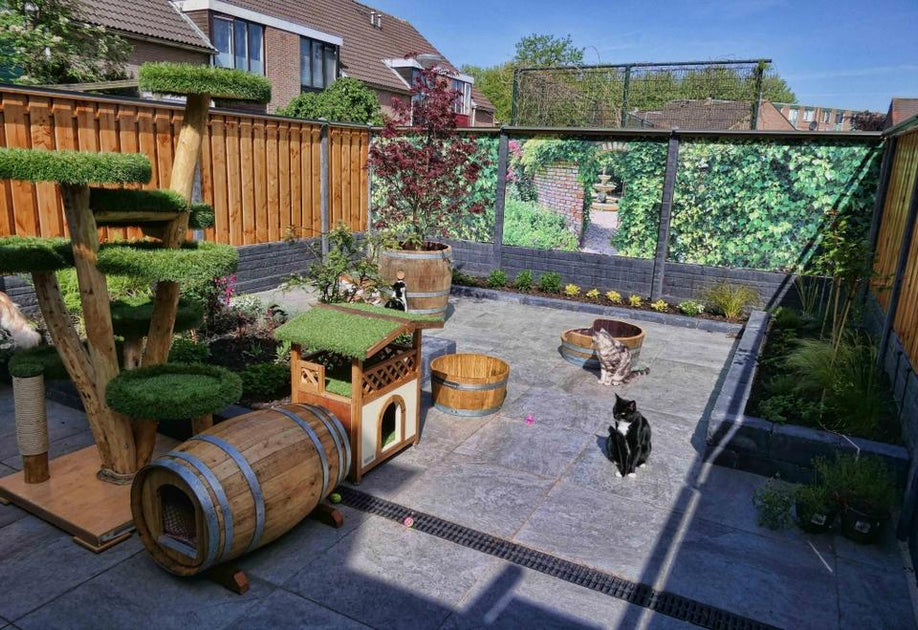
Should you build your own cat-proof fence solution or buy a commercial system? It’s a question many cat owners wrestle with — and the honest answer depends on your skills, budget, and what level of reliability you need. This balanced comparison from Oscillot walks through both options.
DIY cat-proof fencing has real appeal: lower upfront costs, full customization control, and the satisfaction of building something yourself. Common DIY approaches include adding netting or mesh to existing fence tops, building inward-angled extensions, or attaching basic roller bars. The drawbacks are also real: DIY systems require significant time, physical effort, and construction experience to build correctly, and the risk of failure — a gap, a weak joint, an undersized component — can mean an escaped cat.
Commercial cat-proof fence systems like Oscillot address the DIY risk with engineered solutions: purpose-designed components that work together as a tested system, step-by-step installation guidance that makes DIY installation achievable even for non-construction people, and warranty protection if something fails. The spinning-paddle approach stops cats through physics rather than relying on construction quality alone.
The article covers the full cost comparison (DIY materials vs. commercial kit pricing), time investment analysis (DIY fence-building is a weekend-plus project; Oscillot installation typically takes a few hours), and the key practical question: how much is your cat’s safety worth? A DIY system that fails costs the same as one that doesn’t — plus potentially a vet bill and the heartbreak of a lost or injured cat.
Read the full article: Cat-Proof Fence Options: DIY vs. Commercial