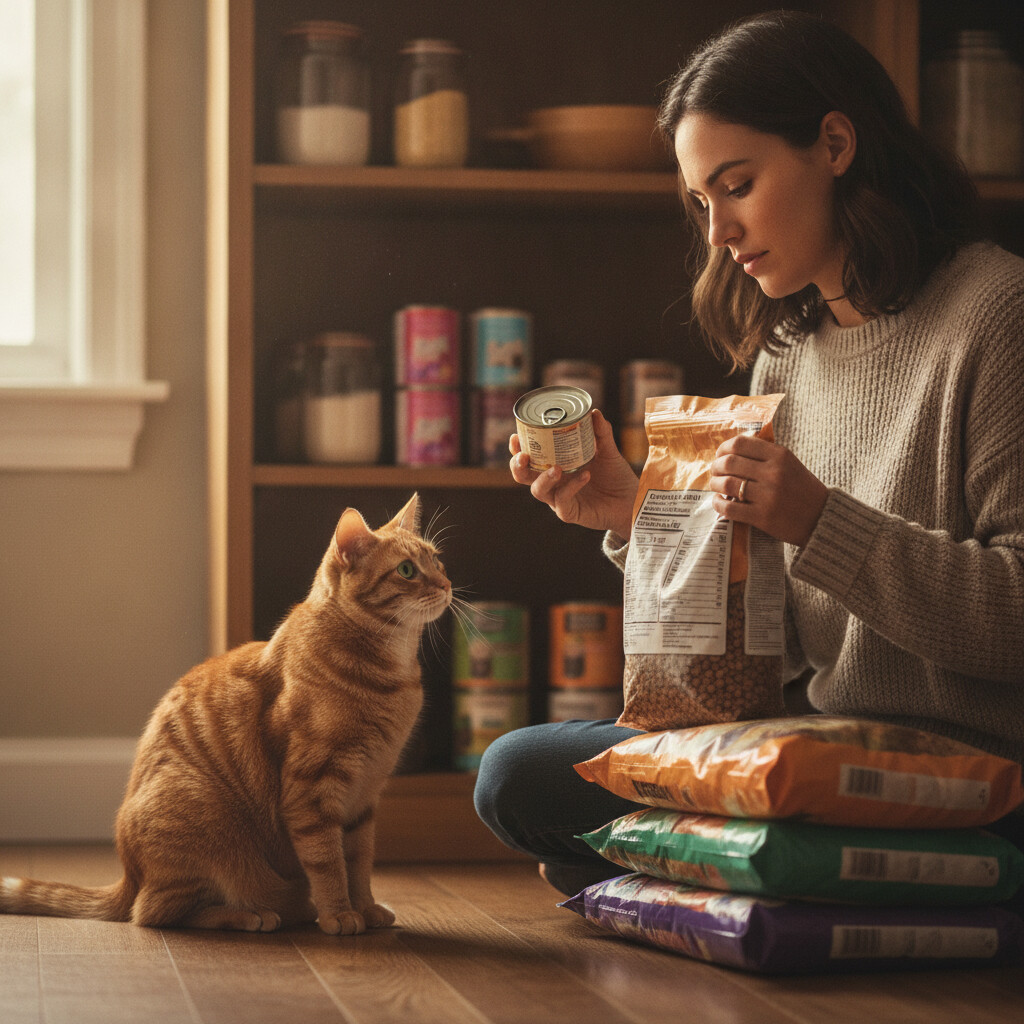
If you’ve just seen a headline about a cat food recall and you’re scrambling to check your pantry, here’s the short version: stop feeding the product immediately, check the lot number and best-by date against the recall notice, and don’t panic if your cat seems fine — most recalled food doesn’t cause visible symptoms in every cat that ate it, but you should still watch closely for the next week or two.
Recalls happen more often than most owners realize, and knowing how to react quickly — rather than after you’ve already Googled “is my cat food recalled” three times — makes a real difference.
How Cat Food Recalls Actually Happen
Pet food recalls fall into a few recurring categories, and understanding which one you’re dealing with tells you how worried to be.
Contamination recalls are the most common and usually involve Salmonella or Listeria found during routine testing — often before any pet has gotten sick. These are typically voluntary recalls issued by the manufacturer after their own quality control or an FDA inspection flags the problem.
Nutrient-deficiency or excess recalls happen when a formulation error means a food has too much or too little of something critical — vitamin D toxicity has been behind several major recalls over the past decade, and it’s serious because a small formulation mistake at the factory level gets multiplied across every bag from that batch.
Foreign material recalls cover things like metal fragments or plastic contamination from manufacturing equipment.
The U.S. Food and Drug Administration’s Center for Veterinary Medicine (FDA CVM) is the body that tracks and publishes pet food recalls in the U.S., working alongside the manufacturer, who is legally required to notify the FDA once a safety issue is identified under the FDA Food Safety Modernization Act.
How to Check If Your Cat’s Food Has Been Recalled
Do this before anything else:
- Go straight to the source. The FDA maintains a running list of pet food recalls and safety alerts on fda.gov — it’s the most reliable place to check because it isn’t filtered through a retailer’s PR department.
- Find your exact lot number and best-by date. Recalls are almost always specific to certain lot numbers or production dates, not the entire product line. A recall on one batch doesn’t necessarily mean every bag of that food is affected.
- Check the manufacturer’s own recall page. Most major brands post recall details with photos of the affected packaging, which makes it much faster to confirm than reading a generic press release.
- Sign up for recall alerts through the FDA or a third-party service if you feed a specific brand consistently — you’ll get notified faster than waiting to stumble across the news.
What to Do If Your Cat’s Food Is Recalled
If you confirm the lot number matches:
- Stop feeding it immediately. Don’t finish the bag “to not waste it” — that instinct is understandable, but not worth the risk.
- Don’t throw it away yet. Keep it in its original packaging with the lot number visible. Most manufacturers offer a refund or replacement, and some recalls involve public health tracking where the product itself matters as evidence.
- Watch your cat for symptoms over the following one to two weeks. What you’re watching for depends on the recall type — vomiting, diarrhea, lethargy, or loss of appetite for contamination recalls; excessive thirst, vomiting, or lethargy for vitamin D toxicity, which can also cause kidney injury if severe.
- Call your vet if your cat shows any symptoms, and mention the recall specifically — it changes what your vet will want to test for.
- Report it. You can file a report directly with the FDA’s Safety Reporting Portal even if your cat hasn’t gotten sick. This data is part of how future problems get caught faster.
Why Cats Don’t Always Get Sick from Recalled Food
This trips people up: a food can be recalled and your cat can eat some of it and show zero symptoms. That’s normal, not a sign the recall was overblown.
Contamination isn’t always evenly distributed through a batch — a bag might have bacteria concentrated in one section, or your cat’s individual dose and gut resilience might mean they never get a symptomatic load. For nutrient-related recalls like vitamin D excess, effects are often dose- and duration-dependent, so a cat who ate the food for three days is at much lower risk than one who ate it as their sole diet for three weeks.
None of that means it’s safe to keep feeding it once you know. It just means “my cat seems fine” isn’t proof the food was safe — it’s proof you got lucky, or your cat’s exposure was limited.
How to Reduce Your Risk Going Forward
You can’t fully recall-proof your cat’s diet, but a few habits lower your risk meaningfully:
- Keep the original bag or can until it’s finished, rather than transferring food to a separate container. If a recall happens, you need the lot number, and that’s printed on the packaging, not the food itself.
- Buy smaller bags more often rather than one giant bag that takes months to get through — it limits how much recalled product you’d have on hand at once, and freshness improves too.
- Diversify slightly if your cat tolerates it. Rotating between two or three trusted formulas (not daily, but over months) means a single recall doesn’t leave you scrambling for an entirely new diet overnight. If you’re unsure how to actually read what’s in the bag before you buy it, our guide on how to read a cat food label breaks down what the ingredient list and guaranteed analysis actually tell you.
- Choose brands with transparent manufacturing practices — companies that publish their own sourcing and testing protocols tend to catch problems earlier and communicate recalls faster. Our breakdown of what vets actually recommend digs into which brands do this well.
When to See a Vet
Call your vet promptly if your cat has eaten recalled food and shows any of the following: repeated vomiting or diarrhea, noticeable lethargy or weakness, increased thirst or urination, loss of appetite lasting more than a day, or any sudden behavioral change. For vitamin D toxicity specifically, don’t wait for multiple symptoms to appear — excessive thirst and vomiting together warrant a same-day call. Bring the packaging with you; the lot number helps your vet know exactly what they’re ruling in or out.
The Bottom Line
A recall isn’t cause for panic, but it is cause for immediate action: check the lot number, stop feeding it if it matches, watch your cat closely, and loop in your vet if anything seems off. The system exists because pet food manufacturing, like all food manufacturing, occasionally goes wrong — the FDA’s recall process is there to catch it before it becomes a widespread problem, and knowing how to respond quickly is the part that’s actually in your control.