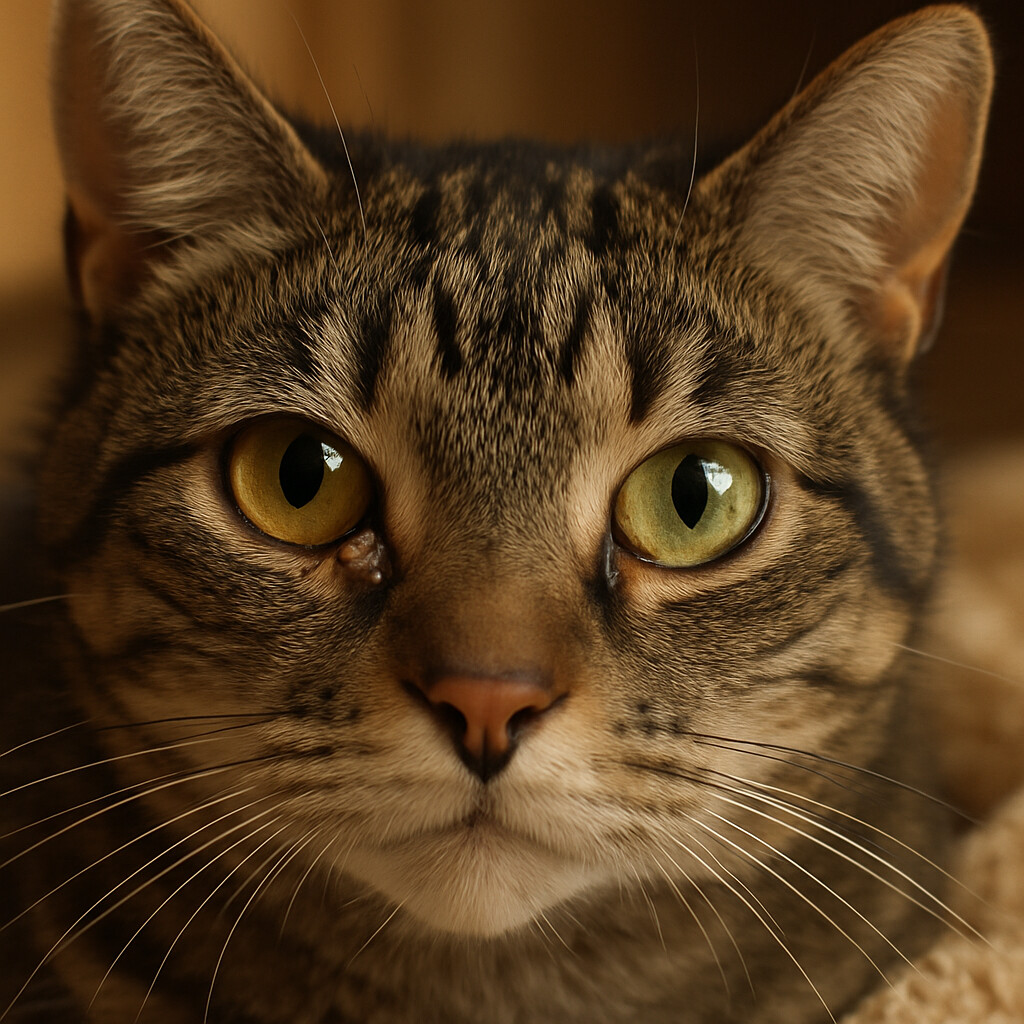
Your cat’s eyes are some of the most expressive features on their face — and one of the best early-warning systems for health issues. But knowing the difference between normal eye gunk and a sign of something serious is something most cat owners have to learn the hard way (usually at 2am with a vet on hold).
Here’s the complete breakdown: what discharge is totally fine, what warrants a vet call, and what you need to do right now.
What Normal Cat Eye Discharge Looks Like
A small amount of crusty brown or reddish-brown discharge in the inner corner of your cat’s eye — especially after sleep — is completely normal. It’s the same process that causes “sleep” in human eyes: dried mucus, dead cells, and debris that accumulates while your cat’s blink reflex slows during rest.
Normal discharge characteristics:
- Small quantity (a grain or two)
- Brown, tan, or dark reddish-brown
- Appears in the inner corner only
- Easily wiped away with a damp cloth
- No surrounding redness or squinting
If your cat wakes up with a bit of crusty buildup in the corners of their eyes and is otherwise acting totally normally — eating well, playing, not pawing at their face — you don’t need to worry.
When Eye Discharge Signals a Problem
The quantity, color, consistency, and accompanying symptoms are your key signals. Here’s what each type usually means:
Yellow or Green Discharge
This is the most significant warning sign. Yellow or green eye discharge almost always indicates a bacterial or viral infection, or a secondary infection on top of another condition. Common culprits include:
- Feline herpesvirus (FHV-1): Extremely common — up to 80–90% of cats carry this virus according to the Cornell Feline Health Center. Stress or illness can trigger flare-ups with yellow-green eye discharge, squinting, and nasal congestion
- Bacterial conjunctivitis: Often secondary to a respiratory infection; usually affects both eyes
- Chlamydophila felis: A bacterial infection that typically starts in one eye before spreading to the other
Don’t wait on yellow or green discharge. A vet visit within 24–48 hours is the right call.
Clear Watery Discharge (Excessive)
Occasional watery eyes aren’t alarming, but a persistent, heavy flow of clear tears can indicate:
- Allergies (environmental — pollen, dust mites, mold)
- Foreign body in the eye (a piece of grass, litter dust, fur)
- Blocked nasolacrimal duct — the drainage tube connecting the eye to the nasal cavity. Common in flat-faced breeds like Persians and British Shorthairs
- Early-stage viral infection before it turns purulent
If only one eye is running heavily, rule out a foreign body first — gently examine the eye (ideally with good lighting) for debris before calling the vet.
White or Gray Cloudy Discharge
This warrants immediate attention. Cloudy, white, or gray discharge — especially if accompanied by a visible film over the eye — can signal:
- Corneal ulcer (a scratch or erosion on the eye’s surface — painful, and can progress to permanent damage)
- Anterior uveitis (inflammation inside the eye itself, often linked to FIV, FeLV, or toxoplasmosis)
- Keratoconjunctivitis sicca (dry eye) — insufficient tear production leading to thick, mucusy discharge
Corneal ulcers in particular require same-day veterinary care. Signs include intense squinting, pawing at the face, and photosensitivity.
Breed Considerations: Flat-Faced Cats Need More Attention
If you have a Persian, Exotic Shorthair, Himalayan, or Scottish Fold, normal discharge volumes will be higher than in other breeds — and more likely to cause staining. Their flattened facial structure means tears don’t drain properly. This isn’t a medical emergency by itself, but:
- Clean the inner corners daily with a warm, damp cotton pad
- Keep fur trimmed away from the eyes
- Watch for secondary skin infections in the tear tracks (brown/rust staining combined with skin redness or odor)
- Ask your vet about periodic flushing of the nasolacrimal ducts if blockages are recurring
How to Clean Cat Eye Discharge Properly
For normal daily maintenance:
- Dampen a cotton ball or soft cloth with warm water (no soap, no chemicals)
- Gently wipe from the inner corner outward — one wipe per cotton ball, then switch to a fresh one for the other eye (this prevents cross-contamination if there’s an infection you haven’t spotted yet)
- Never poke into the eye area or try to remove debris that’s under the eyelid
- Hold your cat securely — a gentle scruff or towel-wrap helps for resistant cats
Avoid saline drops, eye wipes marketed for dogs, and any product containing preservatives unless your vet has specifically recommended them. Human eye drops — including Visine — are not appropriate for cats.
Red Flags: When to Go to the Vet Today
Get your cat seen the same day if you notice any of these:
- Yellow, green, or thick white discharge
- The eye is visibly swollen or closed
- Your cat won’t stop squinting or pawing at the eye
- The white part of the eye (sclera) is red
- A visible film or haziness over the pupil
- Discharge from one eye only (especially if sudden)
- Discharge combined with sneezing, nasal discharge, or lethargy
Don’t wait on eye issues — infections can escalate quickly, and corneal damage can become permanent within days.
At-Home Monitoring Between Vet Visits
Get in the habit of doing a quick eye check every few days. When you’re petting your cat, just take two seconds to look at the corners of their eyes. Early intervention on eye issues saves both money and your cat’s vision.
Take a photo if you’re unsure — discharge that looks alarming at 11pm often looks clearer in photos than in your worried memory. It also gives your vet useful reference material.
If your cat lives outdoors or has access to a yard, eye injuries from debris are more common. Keeping outdoor time supervised and secure is one of the best ways to reduce the risk of eye trauma — and it keeps them safe from other hazards too. For cat owners who want their cats to enjoy outdoor space without the risks, Oscillot’s cat containment system keeps them safely inside the fence line.
— CatLady6