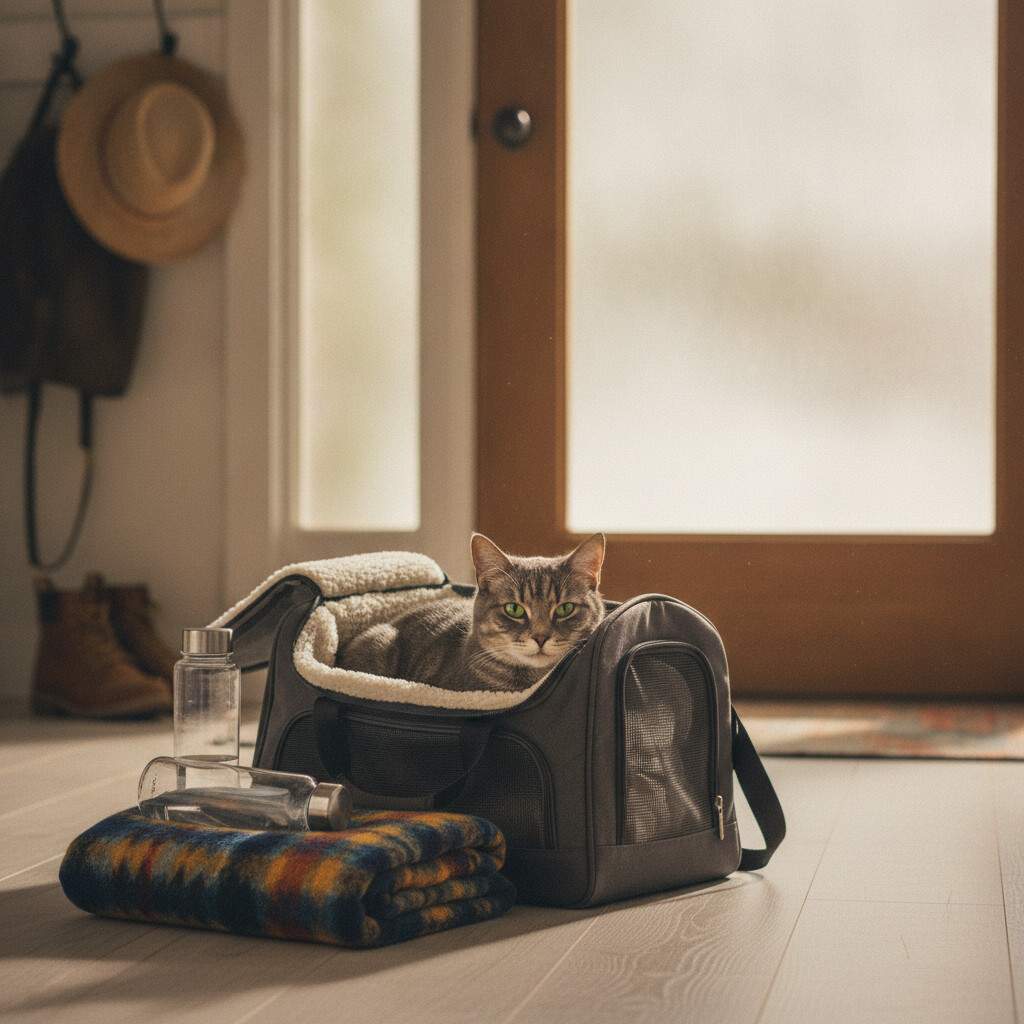
A cat emergency kit needs five things at minimum: a carrier your cat can be stuffed into quickly, a 2-week supply of food and any medications, a printed copy of vaccination records, a recent photo, and a way to identify your cat if you get separated (microchip plus a collar with an ID tag). Everything else is a bonus. If a hurricane, wildfire, or evacuation order gave you 20 minutes to leave, could you actually grab all five right now?
Most cat owners can’t, and it’s not because they don’t care — it’s because nobody tells you to think about this until the emergency is already happening. Here’s what FEMA, the ASPCA, and disaster-response veterinarians actually recommend, stripped down to what matters.
Why Cats Are Harder to Evacuate With Than Dogs
Dogs generally walk on a leash and go where you point them. Cats, when frightened, do the opposite of that — they bolt, hide, and actively resist being moved, which is exactly the wrong instinct during a fire or flood evacuation. FEMA’s disaster preparedness guidance and the ASPCA both flag cats specifically as harder to evacuate quickly for this reason, which is why “get the carrier ready in advance” matters more for cat owners than it does for most dog owners.
This is also why a carrier that lives in a closet, assembled only in emergencies, is a bad plan. A cat who’s never seen the carrier before will hide from it under a bed or behind furniture at the exact moment you have the least time to coax them out. Keeping the carrier accessible and occasionally used (even just left open with a blanket in it) means your cat isn’t meeting a strange plastic box for the first time during a crisis.
What Goes in the Kit
Documentation (in a waterproof bag or sleeve):
- Vaccination records — many emergency shelters and boarding facilities require proof of rabies vaccination before accepting an animal
- A recent, clear photo of your cat, ideally with you in it, in case you need to prove ownership or make “lost cat” flyers
- Your vet’s contact information and, if your cat has a chronic condition, a brief written summary of it
Physical supplies:
- A carrier, kept somewhere accessible, not buried in a garage
- At least a 2-week supply of your cat’s regular food — sudden diet changes during an already stressful event can cause GI upset on top of everything else
- Bottled water (tap water may not be safe or available post-disaster)
- Any medications, with a few days’ buffer beyond what you think you’ll need
- A collapsible litter box and a small bag of litter
- A harness and leash, even for indoor-only cats — useful for bathroom breaks at a shelter or hotel without risking an escape
Identification:
- Microchip, registered and with current contact information — collars fall off, microchips don’t
- A collar with a legible ID tag as a backup, since not every shelter or rescuer has a chip scanner on hand immediately
Where to Keep It
Store the kit somewhere you’d actually grab on the way out — near the door you’d evacuate from, not in a basement or attic that takes time to access. If you have multiple cats, use one shared bag for documents and supplies, but make sure there’s a carrier per cat; cats sharing a single carrier under stress is a recipe for injuries to both of them.
The Plan Beyond the Kit
A kit without a plan for getting your cat into it is only half the job. A few practical habits close that gap:
- Practice a fast carrier-loading routine when there’s no emergency. Even a few calm repetitions a month means the motion is familiar rather than alarming when it counts.
- Know your evacuation-friendly options in advance. Not all emergency shelters accept pets. Search for pet-friendly hotels along likely evacuation routes, or identify a friend or family member outside the risk zone, before you need the information.
- If your cat has any outdoor access, know their typical hiding spots (under the deck, in the bushes by the fence line) — during sudden events like wildfire smoke rollovers or flash flood warnings, that knowledge saves the minutes you don’t have to spare searching.
- Update the kit twice a year. Food expires, medications change, and photos go stale. Tie the check to something you already do, like changing smoke detector batteries.
When to Actually Use It
Evacuate with your cat, don’t leave them behind “to come back for later” — re-entry after a hurricane, wildfire, or flood is often delayed for days, and animals left behind during past disasters have had significantly worse outcomes than those evacuated with their owners, per ASPCA disaster-response data from major U.S. hurricane responses. If local authorities issue a mandatory evacuation order, that’s your signal to use the kit, not to wait and see.
The Practical Takeaway
Build the kit before you need it, not during. Five minutes now — printing vaccination records, registering a microchip, stocking a two-week supply of food — is the difference between a stressful but manageable evacuation and a genuinely dangerous scramble. If your cat currently has any outdoor access as part of their normal routine, it’s worth reading how to keep your cat safe outdoors as a companion piece, since knowing where they roam directly affects how fast you can find them when it matters most. And if a fast, calm carrier routine is something your cat still fights you on, our guide to choosing the right carrier covers what actually makes loading easier under pressure.