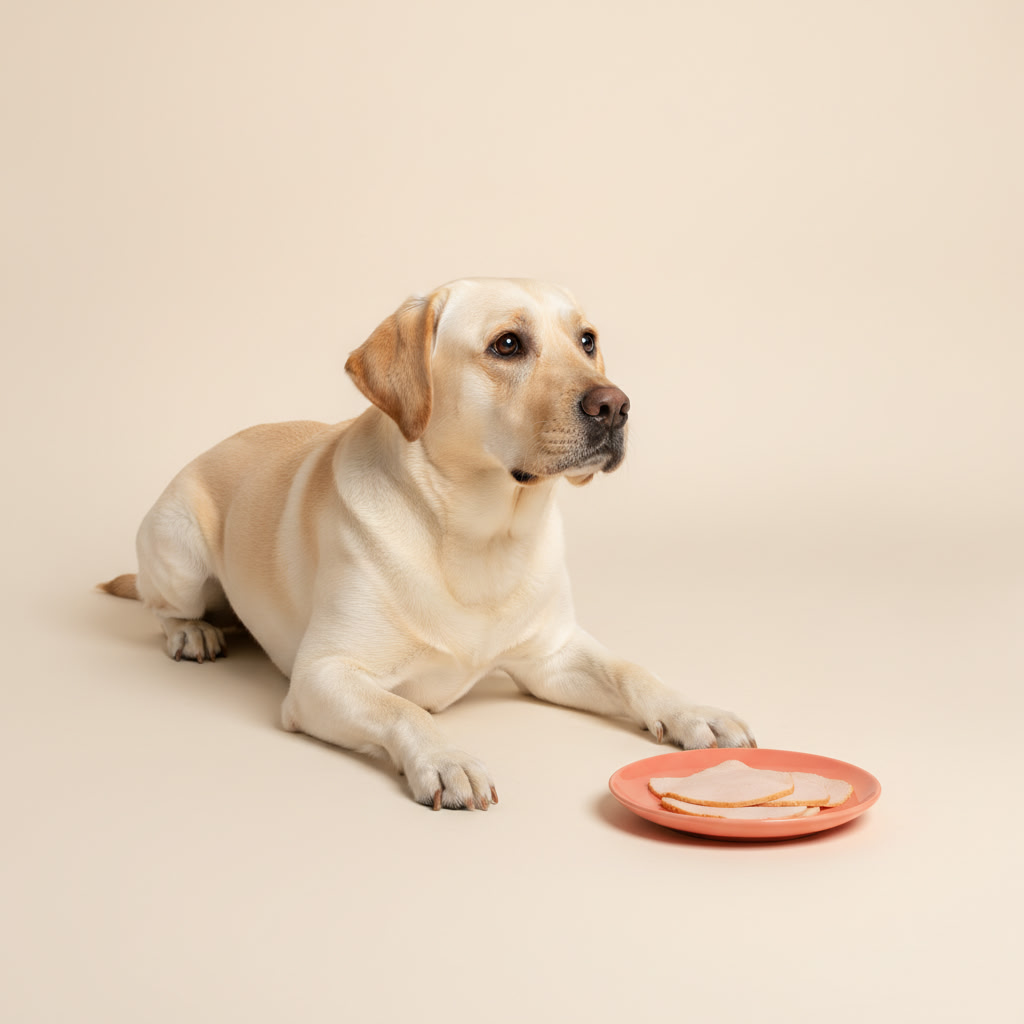
Yes, dogs can eat turkey, as long as it’s plain, cooked, boneless, skinless meat in a small amount. The problem at Thanksgiving is almost never the turkey itself. It’s the skin, the fat, the bones, and everything the turkey was cooked with. Here’s how to share safely, what to keep off the plate entirely, and what to do if your dog helps themselves.
Is Turkey Safe for Dogs?
Plain cooked turkey breast is a lean protein, and turkey is a common ingredient in commercial dog foods. The American Kennel Club and the ASPCA both say a small amount of plain, well-cooked, boneless turkey is generally fine for most healthy dogs.
What makes holiday turkey risky is the way it’s usually prepared:
- Skin and fat. Roast turkey skin is soaked in fat and often butter. A sudden fatty meal is one of the classic triggers of pancreatitis in dogs, a painful inflammation of the pancreas that can need hospital care. Our article on pancreatitis in dogs and the holiday risk covers the signs.
- Seasoning. Onion and garlic, in any form (fresh, powdered, in butter rubs or gravy), belong to the Allium family, which can damage a dog’s red blood cells. The Merck Veterinary Manual lists them among the common household toxins for dogs, and garlic is estimated to be several times more potent than onion.
- Bones. Cooked bones are brittle and splinter. More on that below.
- Raw or undercooked meat. Raw poultry can carry Salmonella, which can make dogs sick and can spread to the people who handle their bowls and poop.
So the turkey that’s safe for your dog is the bit you’d carve off for a toddler: white meat, no skin, no gravy, no seasoning.
How Much Turkey Can a Dog Have?
Less than most people think. The usual vet guideline is that treats and extras should make up no more than about 10% of a dog’s daily calories, with the rest coming from their complete, balanced food.
As a rough guide, that works out to around an ounce of plain turkey breast for a 20-pound dog, a couple of ounces for a larger dog, and a few small bites for a toy breed. If your dog is on a weight-loss plan, has had pancreatitis before, or has a sensitive stomach, check with your vet first, or skip it. (Not sure where your dog sits? Our guide on how to tell if your dog is overweight will help.)
A few practical tips:
- Mix it into their normal meal rather than feeding from the table. It keeps the portion honest and doesn’t teach begging.
- Cut it into small pieces. Dogs gulp, and bite-sized pieces are easier on everyone.
- Pick one treat. If they’re getting turkey, they don’t also need a pile of other leftovers.
Can Dogs Eat Turkey Bones?
No. This is the most important rule of the day.
Cooked poultry bones splinter into sharp shards that can cut the mouth, get stuck in the throat, or cause blockages or tears in the stomach and intestines. The US Food and Drug Administration has warned owners against giving dogs bones and bone treats, after receiving reports of around 90 dogs becoming ill, including 15 deaths, with problems ranging from choking and vomiting to intestinal blockages.
The other hazards from the turkey itself are easy to forget:
- The carcass in the kitchen bin. A determined dog will find it. Take the trash straight outside, or put it somewhere your dog can’t reach.
- Trussing string, skewers and pop-up timers. Swallowed string can cause a serious type of intestinal blockage.
- Foil, plastic wrap and oven bags that smell like meat.
Other Thanksgiving Foods to Keep Away From Dogs
The ASPCA’s Animal Poison Control Center sees a rise in calls around the holidays. The usual culprits on a Thanksgiving table:
- Stuffing and gravy, because of the onion, garlic and fat
- Grapes, raisins and currants, which can cause kidney failure in some dogs. Watch fruit salads, stuffing recipes and baked goods.
- Xylitol, a sweetener used in some sugar-free desserts, baked goods and peanut butters. It can cause a dangerous drop in blood sugar and liver damage in dogs.
- Raw yeast dough, which can expand in the stomach and produce alcohol as it ferments
- Chocolate, especially dark and baking chocolate
- Corn on the cob, as the cob is a common cause of intestinal blockage
- Fatty leftovers in general: ham, buttered vegetables, creamy casseroles
For the full list, our guide to foods toxic to dogs covers what’s dangerous and why.
Some plain sides are fine in small amounts: plain cooked green beans, plain cooked carrots, plain cooked sweet potato, and a spoonful of plain canned pumpkin (not pie filling). “Plain” is the key word every time.
A Safer Thanksgiving Plan for Your Dog
Most holiday food incidents happen when people are busy, not when they’re feeding the dog. A few things that help:
- Tell your guests the rule before dinner starts: no feeding the dog. The well-meaning uncle with a drumstick is a Thanksgiving tradition for all the wrong reasons.
- Give your dog their own spot during the meal, such as a crate or a quiet room with a long-lasting chew made for dogs.
- Clear plates promptly and keep the counter edge clear. Dogs that never counter-surf will try it for a turkey.
- Plan the leftovers so the plain turkey you set aside for your dog is the only extra they get this week.
When to See a Vet
Call your vet or an emergency clinic straight away if your dog has eaten:
- Cooked bones, a turkey carcass, string or a pop-up timer, even if they seem fine. Don’t try to make them vomit unless a vet tells you to: sharp bones can cause more damage coming back up.
- Anything containing onion, garlic, grapes, raisins, xylitol or chocolate
- Raw dough
Also call if, after a holiday meal, your dog shows any of these:
- Repeated vomiting, or retching without bringing anything up (unproductive retching with a swollen belly can be bloat, which is an emergency)
- A hunched back, a tense or painful belly, or a “praying” position with the front end down
- Diarrhea, especially with blood, or straining without passing stool
- Lethargy, weakness, pale gums or not wanting to eat
If you’re not sure whether something your dog ate is toxic, the ASPCA Animal Poison Control Center (888-426-4435) and the Pet Poison Helpline (855-764-7661) are staffed around the clock. Both charge a consultation fee. Our guide to why your dog is vomiting also covers when to wait and when to go in.
Does your dog get a little plain turkey on Thanksgiving, or is your kitchen a strictly dog-free zone during dinner?