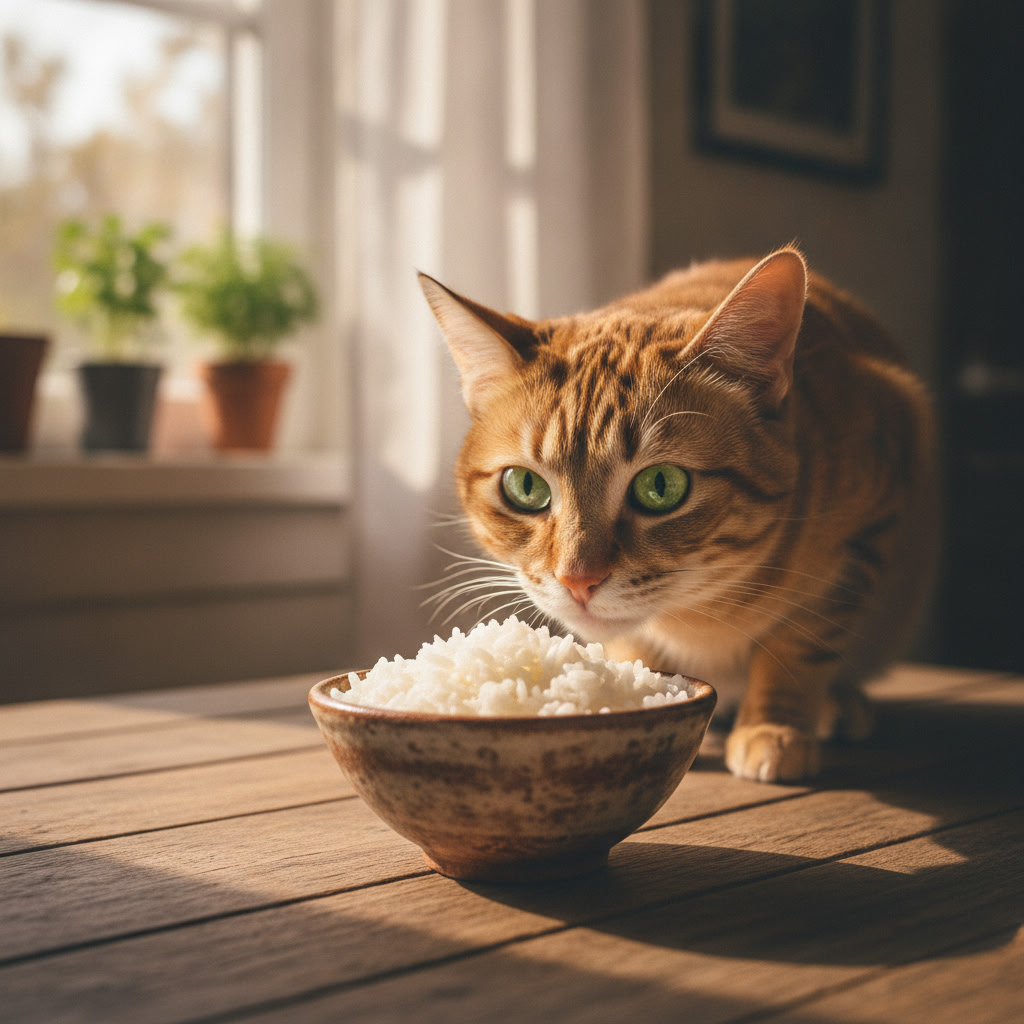
Yes, cats can eat plain cooked rice in small amounts. It isn’t toxic, and a spoonful won’t hurt a healthy cat. But cats don’t need it, it adds very little to their diet, and the rice that turns up on holiday plates (fried, buttered, or cooked with onion and garlic) is a different story.
Here’s what rice actually does in a cat’s body, how much is too much, and when vets do sometimes suggest it.
Is rice safe for cats?
Plain, cooked white or brown rice is safe for most cats. Rice isn’t on the ASPCA Animal Poison Control Center’s list of plants and foods toxic to cats, and it’s already an ingredient in plenty of commercial cat foods, often listed as “brewers rice.”
The catch is that “safe” and “useful” aren’t the same thing. Cats are obligate carnivores. The National Research Council’s Nutrient Requirements of Dogs and Cats (2006) sets no minimum dietary carbohydrate requirement for cats, because they get the glucose they need by making it from protein. Rice is almost all starch, with little protein and none of the nutrients cats specifically need from animal tissue, like taurine. (Our article on why cats need so much protein covers the biology.)
So rice is a filler, not a food group, for a cat. A little is fine. A lot crowds out what they actually need.
Can cats digest rice?
Better than you might expect, if it’s cooked. Cats have no amylase (the starch-digesting enzyme) in their saliva and relatively low levels in their pancreas compared with dogs and people. Even so, studies of feline digestion going back to work by Morris and colleagues in the Journal of Nutrition in the 1970s found cats digest cooked starch well, while raw starch is much harder for them to break down.
That’s the practical point: cooked yes, uncooked no. Raw or undercooked rice is hard to digest and more likely to cause an upset stomach. (The old idea that dry rice swells and bursts a bird’s stomach is a myth, but there’s still no reason to let a cat eat it raw.)
If you want the longer version of the carbohydrate debate, Do Cats Need Carbs? The Truth Behind the Zero-Carb Myth goes through what the research does and doesn’t show.
How much rice can a cat eat?
Think in teaspoons, not bowls.
Cooked white rice has roughly 130 calories per 100 grams, according to USDA food data, which works out to around 15 to 20 calories in a level tablespoon. A typical 10-pound indoor adult cat needs somewhere around 200 to 250 calories a day, depending on age, activity and whether they’re neutered. One tablespoon of rice could be close to a tenth of their daily intake.
Vets commonly use the 10% rule: treats and extras should make up no more than about 10% of a cat’s daily calories, with the rest coming from a complete and balanced cat food. Rice counts toward that 10%.
A reasonable rule of thumb for a healthy adult cat:
- An occasional teaspoon or two of plain cooked rice is fine.
- Not every day, unless your vet has suggested it for a specific reason.
- Never as a replacement for their regular food.
Our guide to healthy cat treats has more on fitting extras into a cat’s daily budget.
White rice vs. brown rice: which is better for cats?
Neither is meaningfully better. Brown rice has more fiber and a little more of some minerals, but in the amounts a cat should eat, the difference is tiny.
White rice is a bit easier to digest, which is why it’s the usual choice when vets suggest a bland meal. Brown rice has more fiber, which some cats tolerate fine and others don’t.
One small note: the US Food and Drug Administration has tested rice for inorganic arsenic and found brown rice tends to carry more than white, because arsenic concentrates in the outer bran layer. For a teaspoon now and then, that isn’t a realistic concern. It’s another reason not to make rice a daily staple.
The rice dishes to keep away from cats
The rice itself is rarely the problem. What’s cooked with it often is. This matters most around Thanksgiving and the holidays, when there’s rice stuffing, pilaf and leftovers everywhere.
Onion and garlic. Rice pilaf, fried rice, stuffing and many seasoned rice mixes contain onion or garlic, fresh or powdered. All members of the onion family (Allium) are toxic to cats. They damage red blood cells and can cause anemia, and cats are more sensitive than dogs. The ASPCA lists onion, garlic, leeks and chives as toxic to cats. Powdered forms are concentrated, so a small amount of seasoning can matter.
Butter, oil and fat. Rich, fatty leftovers can trigger vomiting or diarrhea. Fat is a better-established trigger of pancreatitis in dogs than in cats, but there’s no benefit in testing it.
Salt and soy sauce. Fried rice and takeout rice can be very salty. Cats are small, and a salty dish adds up quickly.
Rice with bones or skin. Chicken and rice is fine. Chicken bones and fatty skin in the mix are not. Our article on cats and chicken explains why cooked bones are a risk.
Rice pudding. Sugar, dairy and sometimes raisins or nutmeg. Skip it entirely.
If you’re planning the cat’s share of the holiday table, Can Cats Eat Turkey? What’s Safe at Thanksgiving covers the main event.
Does rice help a cat with diarrhea or an upset stomach?
Sometimes, and only for a short time. A bland meal of plain boiled chicken and plain white rice is a common short-term suggestion for mild stomach upsets, and some vets do recommend it for cats for a day or two. But it’s not a complete diet, and many vets now prefer a prescription gastrointestinal food, because it’s nutritionally balanced and designed for exactly this.
Two important cautions:
- Fiber, not rice, is what’s been studied for cat diarrhea. A 2011 study by Freiche and colleagues in the Journal of Feline Medicine and Surgery found a psyllium-enriched diet helped cats with chronic large-bowel diarrhea. Plain rice isn’t a substitute for a vet’s advice on chronic diarrhea.
- Cats can’t safely skip meals. If a cat refuses food, even the bland stuff, that’s a problem in itself. Cats that stop eating can develop hepatic lipidosis, a serious liver condition, within days.
Is rice OK for cats with diabetes or other conditions?
Check with your vet first. For diabetic cats, the usual recommendation is a low-carbohydrate, high-protein diet. A study by Bennett and colleagues in the Journal of Feline Medicine and Surgery (2006) found more diabetic cats on a low-carb, high-protein diet went into remission than cats on a higher-fiber diet. Adding starchy extras like rice works against that.
The same applies to cats on any prescription diet, including kidney, urinary or weight-loss foods. Those diets are carefully balanced, and extras can undo the work.
A note on “grain-free”: rice isn’t a common allergen for cats. A 2016 review by Mueller, Olivry and Prélaud in BMC Veterinary Research found the foods most often linked to food allergies in cats were beef, fish and chicken, not grains. If you’re weighing up grain-free food, our article on whether grain-free cat food is better goes through the evidence.
When to see a vet
Call your vet if your cat:
- Ate rice that was cooked with onion, garlic, chives or leeks, especially a large amount or a dish made with garlic or onion powder
- Has vomiting or diarrhea that lasts more than a day, or keeps coming back
- Hasn’t eaten for 24 hours, even if they’re accepting a little rice or bland food
- Seems lethargic, weak, or has pale gums (a possible sign of anemia after onion or garlic exposure, which can appear a few days later)
- Is diabetic or on a prescription diet and has eaten something outside their plan
If you think your cat has eaten something toxic, call your vet or the ASPCA Animal Poison Control Center at (888) 426-4435 (a consultation fee may apply).
The bottom line
Plain cooked rice is a harmless extra for most cats, in teaspoon amounts, now and then. It’s not nutritious for them, it’s not a fix for an ongoing stomach problem, and seasoned rice dishes can be risky. If your cat wants to help with the holiday leftovers, a little plain turkey is a better bet than the pilaf.
Does your cat show any interest in rice, or do they only care about what’s on top of it?