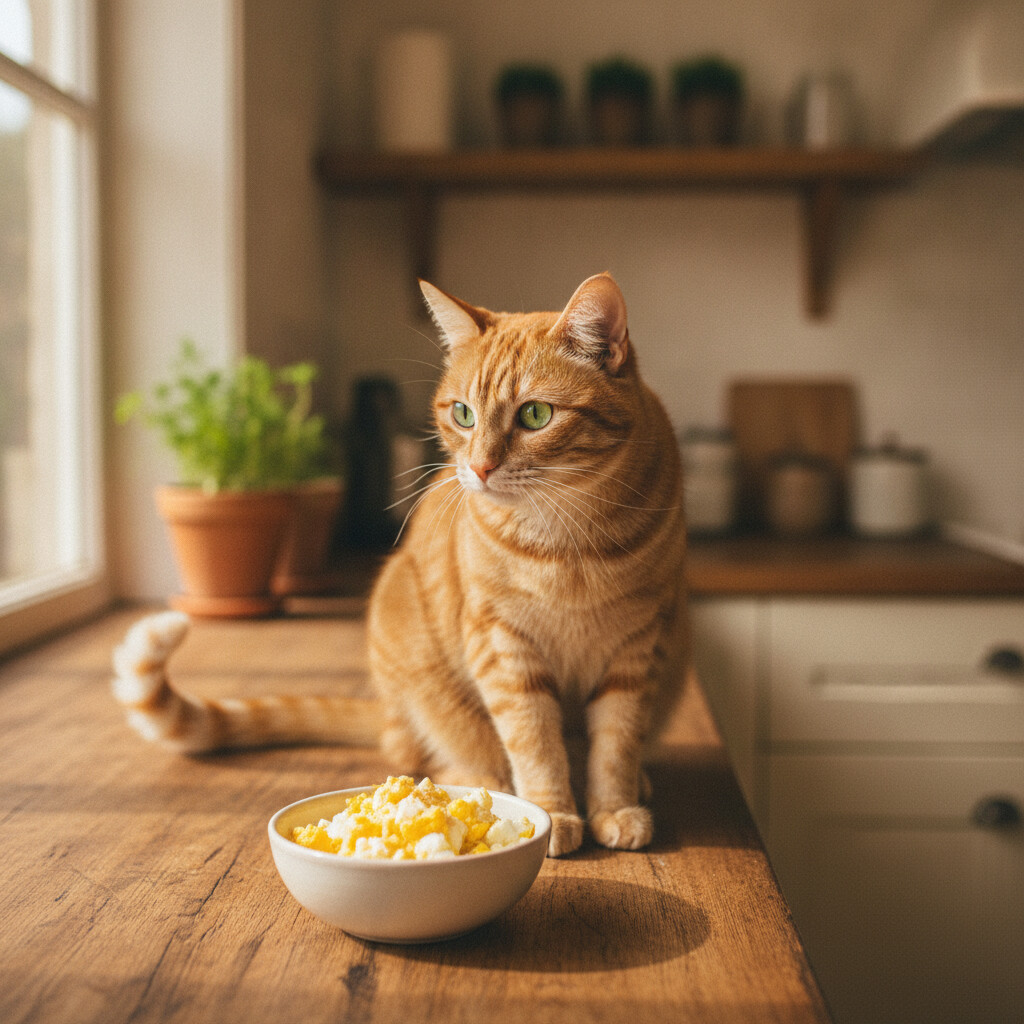
Yes, cats can eat eggs, as long as they’re fully cooked and served plain. A small amount now and then is safe for most healthy cats. Raw eggs, seasoned eggs, and eggs as a meal replacement are where trouble starts.
Are eggs good for cats?
Cooked eggs are a high-quality protein source, and cats are obligate carnivores that need animal protein. Eggs also provide fat, B vitamins, and small amounts of minerals. That said, cats don’t need eggs. A complete and balanced commercial cat food (one that meets AAFCO or FEDIAF nutritional standards) already covers everything your cat requires, and treats of any kind should stay under about 10% of daily calories, per the WSAVA’s general guidance.
So think of egg as a treat, not a nutritional fix.
Cooked vs. raw: why cooking matters
Raw egg whites contain avidin, a protein that binds biotin (vitamin B7). In theory, a lot of raw white over a long time could contribute to biotin deficiency. In practice, an occasional bite is unlikely to cause this, but there’s no benefit to taking the risk.
Salmonella is the larger concern. Raw eggs can carry it, and the FDA warns about the risk of foodborne illness for both pets and people from raw animal-source foods. Cats can get sick, and can also shed bacteria in ways that affect the humans in the house. If you’re weighing raw feeding more broadly, our article on raw feeding for cats covers what vets say.
Cooking eggs thoroughly removes both problems. Boiled, poached, or scrambled without oil, butter, salt, or milk all work.
How to serve eggs to a cat
- Cook the egg fully: hard-boiled or scrambled dry in a nonstick pan.
- Skip salt, pepper, onion, garlic, cheese, and butter. Onion and garlic are toxic to cats, and the rest add fat and sodium.
- Let it cool.
- Chop into pea-sized pieces.
- Offer a small amount, roughly a teaspoon or two for an average adult cat, once or twice a week at most.
Start with a tiny piece and watch for an upset stomach over the next day. Our guide to human foods that are safe for cats lists other options and the ones to avoid.
How many eggs is too many?
One whole large egg is roughly 70 calories. For a 10-pound cat that needs around 200 to 250 calories a day, that’s about a third of daily intake in a single item, far over the treat limit. A teaspoon or two is fine; a whole egg regularly is not.
Extra calories add up fast, especially for indoor cats. If weight is already a concern, see our guide to safe weight loss diets for cats.
What about eggshells?
Eggshell is sometimes suggested as a calcium source. It’s not necessary for cats eating complete food and can upset the digestive tract or, if the pieces are sharp, irritate the throat. Balanced diets already provide calcium in the right ratio with phosphorus. I’d skip it.
Cats who shouldn’t eat eggs
Check with your vet first if your cat:
- Has a known food allergy (eggs are less common culprits than beef, fish, or dairy in the cat literature, but they can trigger reactions)
- Has kidney disease, where phosphorus and protein often need to be restricted
- Has pancreatitis or another condition that requires a low-fat diet
- Is on a prescription or therapeutic diet
When to see a vet
Stop feeding eggs and call your vet if you see:
- Repeated vomiting or diarrhoea after eating egg
- Itchy skin, facial swelling, or hives, which can signal an allergic reaction
- Loss of appetite that lasts more than a day
- Lethargy or a swollen belly
If your cat ate raw egg and seems unwell in the following days, mention it to your vet; Salmonella infection in cats is uncommon but real.
The bottom line
Fully cooked, plain egg in tiny amounts is a safe, protein-rich treat for most healthy cats. Keep it occasional, keep it plain, and let their regular balanced food do the real work.