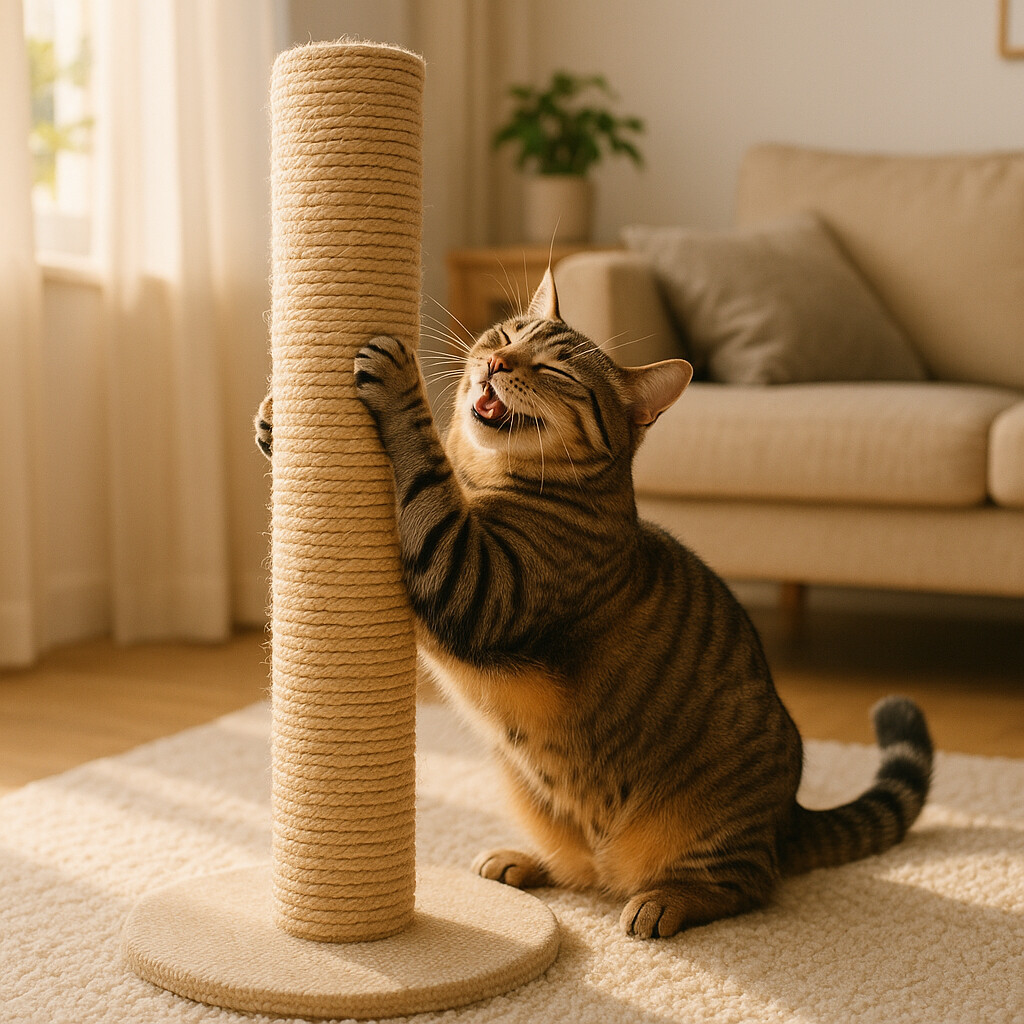
If you’ve ever come home to shredded couch corners or gouged door frames, here’s the thing: your cat isn’t being spiteful. Scratching is one of the most deeply hardwired behaviors in cats — it stretches their shoulder and paw muscles, sheds dead nail sheaths, and deposits scent markers from glands between their toes. The problem isn’t scratching itself; it’s that your cat doesn’t have a scratcher worth using.
I’ve tested and researched dozens of scratching posts over the years — here’s what actually works, what’s a waste of money, and exactly how to get a stubborn cat to switch from your furniture to the post.
What Makes a Scratching Post Actually Good?
Most scratching posts sold at big-box pet stores fail for the same reasons:
- Too short. Cats need to fully stretch when scratching. A post under 30 inches tall is essentially useless for an adult cat — they’ll default to your couch armrest instead because it gives them the full stretch they need.
- Too wobbly. If a post tips or rocks when your cat leans into it, they’ll abandon it after one try. Cats won’t scratch anything that feels unstable. The base should be at least as wide as the post is tall.
- Wrong material. Carpet-covered posts are a marketing gimmick. Carpet doesn’t give cats the satisfying shredding resistance they crave. Sisal rope or sisal fabric are what you want — they let cats dig in and pull downward with real resistance.
The ideal specs: 32+ inches tall, heavy wide base (ideally weighted or wall-mountable), wrapped in sisal rope or sisal fabric. That’s it. Everything else is secondary.
The Best Scratching Posts Worth Your Money in 2026
Here’s my honest breakdown of what’s actually worth buying:
SmartCat Ultimate Scratching Post (~$45)
The gold standard for a reason. 32 inches tall, sisal-wrapped, fibrous base that doesn’t tip. It’s not fancy, but it works. The biggest complaint is that some cats outgrow it — if you have a Maine Coon or large breed, go bigger.
PetFusion Ultimate Cat Scratcher Lounge (~$40)
A curved corrugated cardboard lounge that cats love to scratch AND nap on. Great as a secondary scratcher. Cardboard isn’t as durable as sisal (you’ll replace it every 6-12 months), but many cats genuinely prefer the texture. The reversible design doubles its lifespan.
On2Pets Vertical Wall Scratcher (~$55)
Mounts directly to the wall — zero wobble, ever. Perfect for small apartments or if your cat is a vertical scratcher who loves door frames. Available in multiple heights.
DIY Option: 4×4 Cedar Post + Sisal Rope (~$25)
Buy a 36-inch untreated 4×4 post from Home Depot, a roll of ¼-inch sisal rope from Amazon (~$12), and hot-glue the rope tightly from bottom to top. Screw it to a 16×16-inch plywood base. This is honestly one of the best scratchers you can make — it’s taller, sturdier, and cheaper than 90% of store-bought options.
Horizontal vs. Vertical: Know Your Cat’s Style
Watch where your cat scratches now. This tells you everything:
| Scratching Style | Where They Scratch | What to Buy |
|---|---|---|
| Vertical stretcher | Couch arms, door frames, walls | Tall upright post (32"+) or wall-mounted scratcher |
| Horizontal scratcher | Carpet, rugs, flat surfaces | Flat cardboard scratcher or angled ramp |
| Both | A little of everything | One tall post + one flat scratcher |
About 60% of cats prefer vertical scratching, but plenty are horizontal scratchers — and buying a tall post for a horizontal scratcher is a guaranteed waste of money.
How to Actually Get Your Cat to Use the Post
This is where most people fail. Buying a great post means nothing if your cat ignores it. Here’s the method that works:
Step 1: Location, location, location. Put the post RIGHT NEXT to wherever they currently scratch. Not in a spare bedroom. Not in the basement. If they’re destroying the left armrest of your couch, the post goes 12 inches from that armrest. Cats scratch in social areas — they want to mark territory where the action is.
Step 2: Make it irresistible. Rub dried catnip into the sisal (fresh catnip or catnip spray works too). Dangle a wand toy around the post so they reach up and accidentally dig their claws in. That first positive scratching experience on the new post is critical.
Step 3: Gently redirect. When you catch them heading for the furniture, pick them up calmly (no yelling — that just makes them anxious) and place them near the post. Praise and treat when they use it. Most cats get it within 3-7 days.
Step 4: Make the old spot less appealing. Cover the furniture spot temporarily with double-sided tape (Sticky Paws brand) or aluminum foil. Cats hate both textures. Once they’ve been using the post consistently for 2-3 weeks, you can remove the deterrent.
Step 5: Don’t move the post too soon. After your cat is reliably using the post, you can gradually shift it a few inches per day toward a better location. Moving it abruptly across the room resets the whole process.
How Many Scratching Posts Do You Need?
The ASPCA recommends at least one scratching surface per cat, plus one extra — same rule as litter boxes. For multi-cat households, spread them across different rooms. Cats scratch to mark territory, and each cat needs their own territory markers.
In a multi-cat home, you may also want to check out our guide on how to stop cats from fighting — territorial scratching is often part of a bigger picture.
When to Replace a Scratching Post
A well-used sisal post lasts 1-3 years depending on how aggressively your cat scratches. Signs it’s time to replace:
- Rope is fraying off in chunks (not just surface shredding — that’s normal and cats love it)
- The base is wobbling
- Your cat has stopped using it (they may have worn it smooth)
Corrugated cardboard scratchers need replacing every 4-12 months. Budget accordingly — a $40 cardboard scratcher that lasts 6 months costs more per year than an $80 sisal post that lasts 3 years.
The Bigger Picture: Why Happy Scratchers = Happy Cats
Scratching isn’t just about saving furniture. A cat who scratches regularly is stretching muscles, maintaining healthy claws, and expressing natural behavior that reduces stress. Indoor cats especially need these outlets — if you’re looking for more ways to keep indoor cats enriched, outdoor enrichment is another great piece of the puzzle.
Got questions about scratching or need help picking the right post? Drop a reply — happy to help.
— CatLady6 