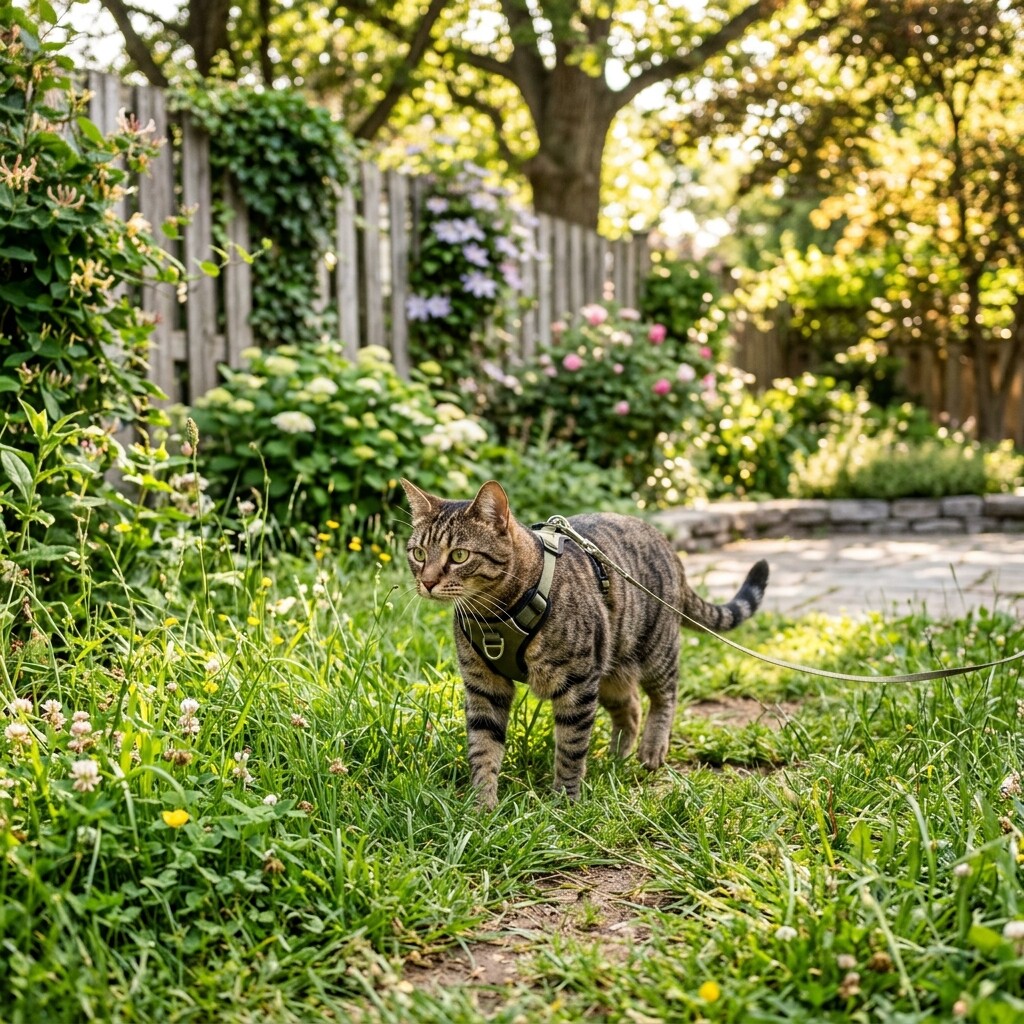
For years, the image of a cat on a leash was considered a bit of an anomaly. Cats were either strictly indoor creatures or free-roaming outdoor adventurers. But as we learn more about the risks of free-roaming (traffic, predators, diseases) and the deep need cats have for environmental enrichment, harness training has exploded in popularity.
Taking your cat for a walk on a harness is a fantastic way to let them safely experience the sights, sounds, and smells of the great outdoors. However, you can’t just clip a dog leash to a standard cat collar and head outside. Cats have a completely different anatomy than dogs; their necks are delicate, and they are liquid escape artists capable of slipping out of almost anything if they panic.
If you’re looking to give your indoor cat a taste of the outdoors, choosing the right harness and taking the training slow is absolutely critical. Here is a complete guide to picking the best cat harness in 2026 and how to train your feline friend to actually enjoy wearing it.
Why You Need a Harness specifically designed for Cats
Never use a collar to walk a cat. A cat’s throat is incredibly fragile, and if they bolt or pull against a collar, it can cause severe damage to their trachea. Furthermore, dog harnesses are not suitable for cats. Dogs have broader chests and less flexible shoulders. A cat can reverse out of a dog harness in under three seconds flat.
A proper cat harness distributes pressure across the chest and back rather than the neck, and it is designed to prevent the “backward wiggle” escape maneuver.
Types of Cat Harnesses
When shopping, you’ll generally encounter three main styles. The right choice depends on your cat’s body shape and personality.
1. H-Style Harnesses
These look like the letter “H” when laid flat. They consist of a loop around the neck, a loop around the chest (behind the front legs), and a connecting strap along the back.
- Pros: Very difficult to escape from if fitted correctly. They are lightweight and put the least amount of material on the cat, which is great for cats who hate the feeling of wearing clothes.
- Cons: You usually have to slip them over the cat’s head or buckle them in multiple places, which some cats strongly dislike.
- Best for: Slender cats, escape artists, and warm climates.
2. Figure-8 Harnesses
These consist of two loops that cross over the cat’s back, tightening slightly when the cat pulls.
- Pros: Very secure and usually quite easy to put on.
- Cons: If the cat pulls constantly, it can create a squeezing sensation that might cause panic.
- Best for: Calm cats who are already somewhat used to being handled.
3. Vest (or Holster) Harnesses
These look like tiny vests or jackets. They often wrap around the chest and back and secure with Velcro or sturdy clips.
- Pros: They distribute pressure incredibly well and are very comfortable. The thick fabric can also have a calming, swaddle-like effect on anxious cats.
- Cons: They are bulkier. Some cats will immediately do the “flop” (falling over like their legs suddenly stopped working) because the vest feels heavy. They can also be too warm for hot summer days.
- Best for: Nervous cats, heavy pullers, and colder weather.
How to Get the Right Fit
A harness is only safe if it fits properly. You should be able to slip exactly two fingers (snugly) between the harness and your cat’s body. Any looser, and they can escape. Any tighter, and it will chafe and restrict their breathing. Always measure your cat’s girth (just behind the front legs) and neck before buying, as sizes vary wildly between brands.
The Training Process: Slow and Steady
The biggest mistake owners make is buying a harness, strapping it on the cat, and carrying them outside. This will almost guarantee a terrified, thrashing cat who will never want to see the harness again. You must go at the cat’s pace.
Step 1: Introduction (Days 1-3)
Leave the harness near their food bowl or favorite sleeping spot. Let them smell it. Put treats on it. The goal is to build a positive association so the harness becomes a predictor of good things.
Step 2: The Drape (Days 4-6)
While your cat is eating or receiving affection, gently drape the harness over their back without buckling it. Reward them heavily with high-value treats (like freeze-dried chicken or Churu). Do this for just a few minutes at a time.
Step 3: Buckling Up (Days 7-10)
Fasten the harness. Your cat will likely freeze, walk low to the ground, or flop over completely. This is normal! They aren’t paralyzed; they just feel the pressure and think they are stuck. Do not force them to walk. Distract them with their absolute favorite toy (a wand toy works best) or a jackpot of treats. Leave it on for 2-5 minutes, then take it off.
Step 4: Adding the Leash Inside (Days 11-14)
Once they are walking normally in the house with the harness, attach the leash. Let them drag it around for a minute under strict supervision so it doesn’t snag. Then, pick up the leash and gently follow them around the house. Do not pull them; let them lead you.
Step 5: The Great Outdoors
When you finally go outside, carry them to a quiet, enclosed spot (like a backyard patio). Put them down and let them dictate the pace. Most cats don’t “walk” like dogs do; they sniff, observe, chew on grass, and explore. Keep the first session very short—five minutes is plenty.
If you find that your cat simply hates the harness but still craves outdoor time, you might want to consider setting up a secure backyard instead. Our guide on how to transition your indoor cat to outdoor life safely has some excellent alternatives, including utilizing cat-proof fencing solutions that allow free but safe roaming in your own yard.
Patience is the key. With the right harness and a lot of treats, you and your cat can enjoy safe, enriching outdoor adventures together!
— CatLady6