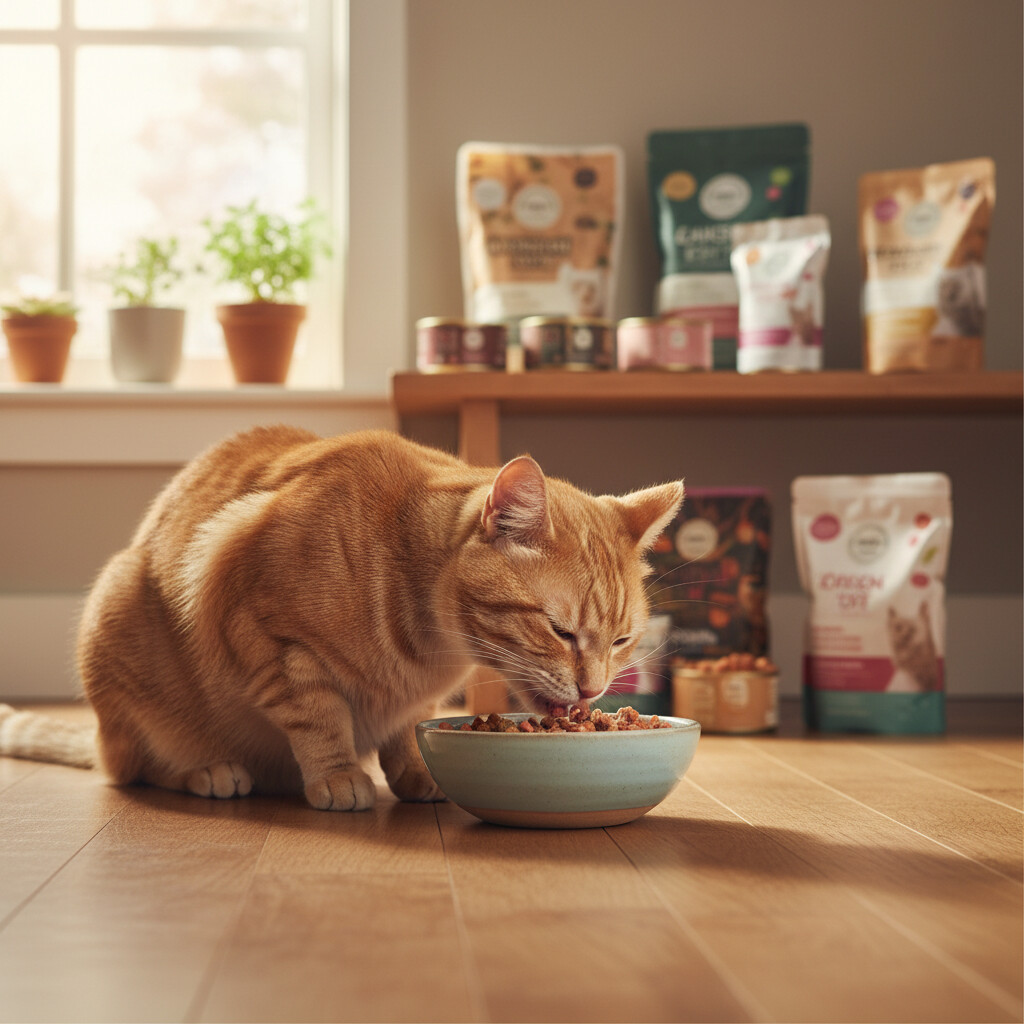
Veterinarians don’t give you a ranked brand list — they give you criteria for evaluating brands. But when pressed, most vets and veterinary nutritionists point to the same short list. Here’s what they look for and why.
Why Vets Don’t Just Name a “Best Brand”
There’s no independent body continuously testing every cat food for quality. What vets have instead is a set of markers that reliably distinguish brands investing seriously in nutrition science from those that don’t.
The World Small Animal Veterinary Association (WSAVA) Nutrition Committee publishes guidelines that ask five key questions about any pet food manufacturer:
- Do they employ at least one full-time board-certified veterinary nutritionist or PhD animal nutritionist?
- Do they conduct actual feeding trials on the diet — not just nutrient analysis in a lab?
- Do they make their quality control processes available?
- Do they have a dedicated manufacturing facility (vs. contracting production out)?
- Do they fund and publish peer-reviewed nutritional research?
A brand that answers yes to all five is operating at a fundamentally different level from one that can’t. This is the filter vets use — not marketing claims or ingredient lists.
The Brands Most Vets Point To
Based on WSAVA criteria and the preferences of veterinary nutrition faculty at US and Australian veterinary schools, a short list consistently emerges:
Royal Canin is the most frequently recommended brand by veterinary nutritionists. Their research infrastructure is extensive, they employ in-house nutritionists, and their breed-specific and life-stage-specific formulations are backed by actual feeding studies. It’s not the cheapest option, but the nutrition science behind it is among the most rigorous in the industry.
Hill’s Science Diet / Prescription Diet is the other vet-recommended staple. Hill’s employs more veterinary nutritionists than any other pet food company and has published more independent research than most. Their Prescription Diet line requires a vet prescription because the nutrient profiles are therapeutic — not just premium food, but clinically targeted formulations.
Purina Pro Plan consistently earns respect from veterinary nutritionists. Purina’s research programs are extensive, they conduct AAFCO feeding trials (not just formulation analysis), and they’re notably transparent about their processes. Pro Plan is formulated to tighter nutritional specifications than many premium-priced boutique alternatives.
Iams and Eukanuba (both owned by Mars) have solid research histories and good quality control. Less fashionable than they used to be, but nutritionally sound and consistently available.
What About Premium Boutique Brands?
Here’s where it gets uncomfortable: many boutique or “natural” brands with higher price points and appealing packaging don’t meet WSAVA criteria. They may outsource manufacturing, lack full-time nutritionists on staff, or rely entirely on nutrient analysis without conducting feeding trials.
The FDA investigation into grain-free diets and dilated cardiomyopathy (DCM) in dogs (2018–2019, still ongoing) illustrated the gap between extensively tested foods and those that haven’t been. For cats specifically, the DCM link hasn’t been shown to apply the same way — cats have different cardiac and metabolic requirements — but the principle holds: a premium price and clean label don’t equal a carefully tested product.
The critical nutritional concern for cats is taurine. Cats cannot synthesise taurine from precursor amino acids the way many mammals can — dietary taurine is essential for cardiac function and vision. Reputable brands have been formulating with this in mind for decades. Look for taurine listed in the guaranteed analysis or as a standalone ingredient.
For a deeper dive into why cat nutritional needs are so different from dogs and humans, the forum’s article on cat obesity and managing your cat’s weight has useful context on caloric density and life-stage feeding.
Understanding the AAFCO Statement
Any cat food sold in the US as “complete and balanced” must carry an AAFCO nutritional adequacy statement. Look closely at what it says:
- “Formulated to meet AAFCO nutrient profiles” means the recipe was calculated to contain the right nutrients in theory. No cats were involved.
- “Substantiated by feeding tests conducted according to AAFCO protocols” means actual cats ate this food and were monitored. This is meaningfully stronger.
The feeding trial statement is the gold standard. It’s one of the clearest ways to distinguish between brands that test and brands that calculate.
Wet vs. Dry: Does the Brand Choice Change?
Briefly: yes, hydration matters enough that it’s worth addressing alongside brand. Cats who eat dry food exclusively are often chronically under-hydrated — their kidneys do more work, and cats with any history of urinary tract issues generally do better on higher-moisture diets. The forum’s wet vs. dry cat food comparison covers this in full.
The good news: Royal Canin, Hill’s, and Purina Pro Plan all offer strong wet food lines alongside their dry formulations. If you’re sticking to vet-recommended brands, both formats are covered.
When to Ask Your Vet Instead of the Internet
If your cat has any of the following, the answer to “what should I feed them” is not a forum article — it’s your vet:
- Chronic kidney disease (CKD cats need restricted phosphorus)
- Urinary tract disease or a history of crystals or blockages
- Diabetes
- Obesity requiring controlled weight loss
- Suspected food allergy or intolerance
For healthy cats with no medical history, any food from a brand meeting WSAVA criteria and labelled for your cat’s life stage is a reasonable starting point. Your vet’s specific knowledge of your individual cat always trumps a general recommendation.
The Bottom Line
Vet-recommended cat food brands in 2026: Royal Canin, Hill’s Science Diet, and Purina Pro Plan — and Iams or Eukanuba if you need a more accessible price point. Not because of marketing, but because they have the most robust nutrition science and quality control behind them. Look for an AAFCO feeding trial statement, verify the brand employs actual veterinary nutritionists, and feed a life-stage-appropriate formula. Everything else is largely packaging.