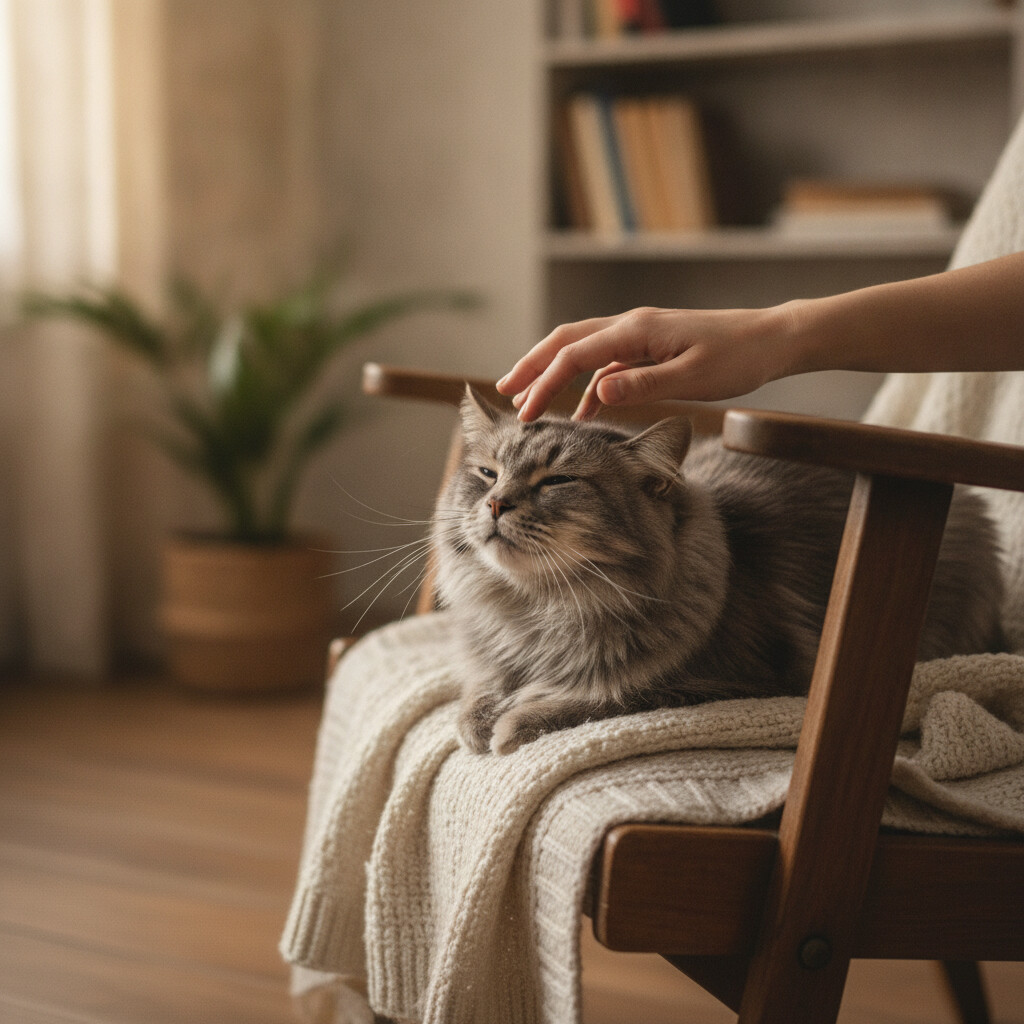
Adopting a senior cat means you know what you’re getting: an adult personality, usually a calmer pace, and often a cat who already knows what a litter box is for. The trade-off is that health costs tend to arrive sooner, and you’ll have fewer years together. If you go in prepared for both, an older cat can be one of the easiest, most rewarding adoptions there is. Here’s what to ask, what to budget for, and how to help them settle.
What counts as a “senior” cat?
The AAHA/AAFP Feline Life Stage Guidelines (2021) call cats over 10 years old “seniors,” with 7 to 10 as “mature adults.” Shelters often use a lower cutoff, sometimes 7 or even 8, so a cat listed as “senior” may still have many good years ahead. Indoor cats commonly live into their mid to late teens, and some go well past 20.
Our guide to when a cat is considered senior breaks down the life stages in more detail.
Why adopt an older cat?
A few honest advantages:
- What you see is what you get. A kitten’s adult personality is a guess. A 12-year-old cat’s personality is a known quantity. If you want a lap cat, a quiet cat or a cat who’s fine with being alone during work hours, you can actually choose one.
- Lower energy. Senior cats still play (and need to), but you’re less likely to get 3am curtain climbing.
- Fewer surprises around the house. Most older cats are already litter trained, past the chewing phase and used to living with people.
- They often wait longer. Shelters consistently report that older cats stay longer than kittens and younger adults before being adopted. Many shelters reduce or waive adoption fees for seniors, and November is promoted as Adopt a Senior Pet Month by groups including the ASPCA, so this is a good time of year to look.
None of that makes an older cat the right choice for everyone. It’s a good fit if you want a settled companion and you’re ready for the vet side of things.
What health issues should you expect in a senior cat?
Not every older cat is unwell, but some conditions become much more common with age:
- Chronic kidney disease (CKD): one of the most common diagnoses in older cats. The International Renal Interest Society (IRIS) staging system is what your vet will use to describe how advanced it is.
- Hyperthyroidism: the AAFP’s 2016 guidelines on feline hyperthyroidism (Carney and colleagues, Journal of Feline Medicine and Surgery) estimate it affects roughly 10% of cats over 10.
- Arthritis: very common and often missed. A study in JAVMA (Hardie and colleagues, 2002) found X-ray signs of degenerative joint disease in about 90% of cats over 12. Most cats hide it, so look for stiffness, reluctance to jump and litter box changes.
- Dental disease: including tooth resorption, which can be painful even when the cat is still eating.
- High blood pressure: often linked to kidney disease or hyperthyroidism, and a cause of sudden blindness if untreated.
Many of these are very manageable once they’re diagnosed. A hyperthyroid cat on treatment or a cat with early-stage CKD can live comfortably for years.
Questions to ask the shelter or rescue before you adopt
Ask for everything they know. Good shelters will be upfront.
- Why was the cat surrendered? “Owner went into care” or “owner passed away” is very common with older cats and tells you nothing bad about the cat.
- What medical history is there? Ask for vet records, vaccination history and any diagnoses.
- Has the cat had blood work and a urine test? If yes, ask for copies. If not, ask whether the shelter can do it before adoption.
- What do the teeth look like? Dental work under anesthetic can be one of the bigger early costs.
- Is the cat on any medication or a special diet? Ask how they take pills, too.
- How do they do with other cats, dogs and children? Older cats can be set in their ways.
- Can you meet them in a quiet space? Shelters are stressful, and a senior cat hiding at the back of a cage may be a completely different cat at home.
Budgeting for a senior cat
Plan for higher vet costs than you would for a young adult cat. The AAHA/AAFP guidelines recommend wellness exams every six months for senior cats, and those usually include blood work, urine testing and a blood pressure check. Our article on what a senior cat wellness exam should include covers each part, and Senior Cat Blood Work Results: What the Numbers Mean helps you read the results.
On insurance: most pet insurance policies exclude pre-existing conditions, and some have age limits for new enrollments or higher premiums for older cats. Read the fine print before you count on it. Our guide to whether pet insurance is worth it for cats walks through how to decide. Some owners prefer to set aside a dedicated vet fund instead.
How to help a senior cat settle into a new home
Older cats can take a little longer to adjust, especially after losing a long-term home.
- Start with one quiet room. Food, water, a litter box, a warm bed and somewhere to hide. Let them explore the rest of the house when they’re ready, which may take days or a couple of weeks. Why Your New Cat Won’t Come Out of Hiding covers what’s normal.
- Make the litter box easy. A low entry matters for stiff joints. See our guide to the best litter boxes for senior cats with mobility issues.
- Give them warmth and easy access. Heated or padded beds, and steps or ramps up to favourite spots, help a lot. Ramps and Steps for Senior Cats has practical options.
- Keep the food the same at first. Ask what they were eating and transition slowly if you need to change it. Sudden diet changes can upset digestion, and a stressed senior cat that stops eating needs attention quickly.
- Introduce other pets slowly. If you already have a younger cat, the same gradual process applies as with any new cat. Introducing a New Kitten to a Senior Cat covers the reverse situation, but most of the advice carries over.
When to see a vet
Book a vet visit within the first week or two after adoption, even if the cat seems healthy. It gives you a baseline and catches anything the shelter may have missed.
See a vet promptly if your new senior cat:
- Hasn’t eaten for 24 hours (this is more urgent in older cats because of the risk of liver problems)
- Is drinking or peeing much more than expected
- Is losing weight, vomiting regularly or has diarrhea
- Strains in the litter box, or produces little or no urine (this is an emergency)
- Has trouble breathing, collapses or seems suddenly blind or disoriented
Some quiet days and hiding are normal in the first week. Not eating isn’t.
The bottom line
Adopting a senior cat is less of a gamble than people assume. You get a known personality and usually a calmer companion. Go in with realistic expectations about vet care, ask the shelter for every record they have, and set up a warm, easy-access space at home. The years may be fewer, but they’re often very good ones.
Have you adopted an older cat, and what surprised you most about the first few weeks?