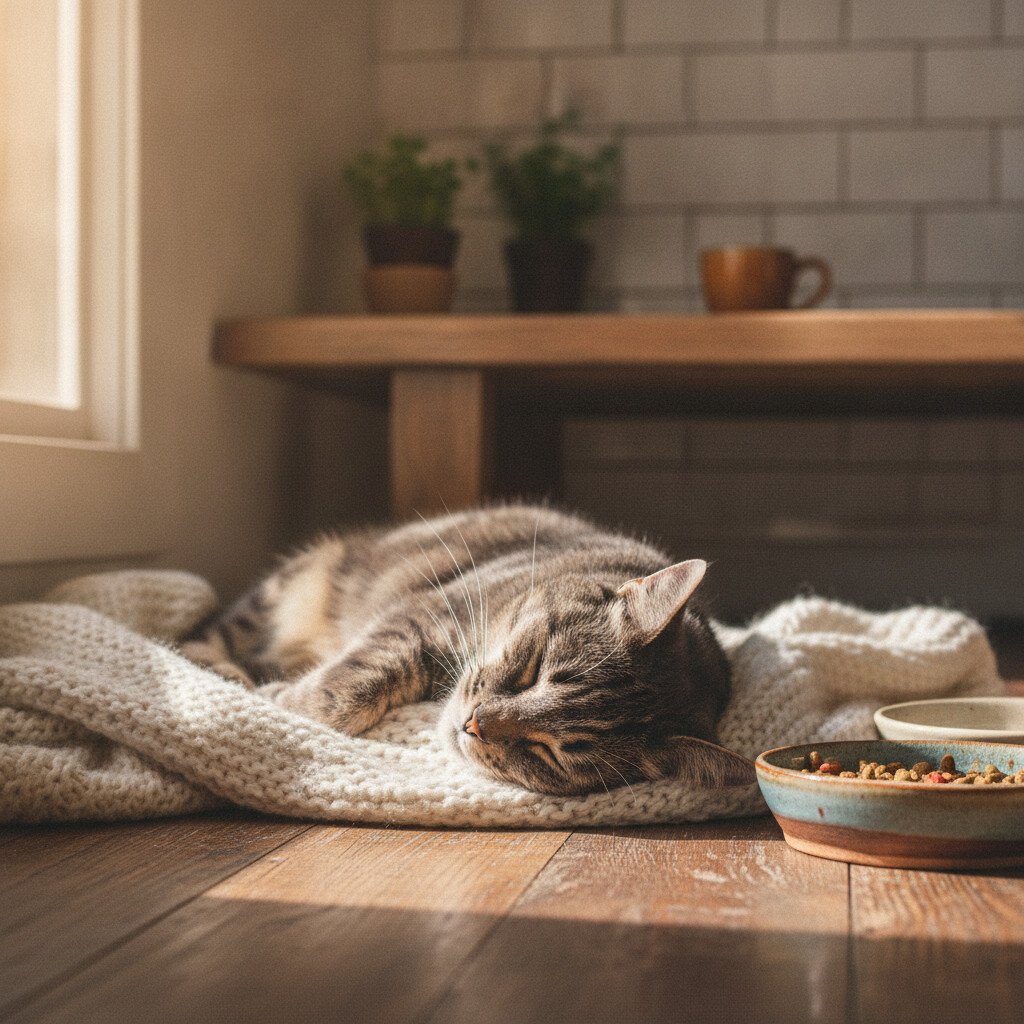
An older cat who vomits regularly is telling you something, and “they’ve always been a puker” stops being a safe explanation once a cat passes about ten. In senior cats, repeated vomiting is most often linked to chronic intestinal disease, kidney disease or an overactive thyroid, and all three are treatable or manageable when they’re caught early.
The short answer: a single hairball or a one-off after eating too fast is usually nothing. Vomiting more than about once or twice a month, vomiting that’s getting more frequent, or vomiting alongside weight loss, thirst or a pickier appetite is worth a vet visit. In a senior cat, it’s worth one sooner rather than later.
Is it normal for older cats to vomit?
Not really, even though it’s common. Feline medicine specialists have pushed back for years on the idea that regular vomiting is just “what cats do”. The International Society of Feline Medicine (ISFM) and the American Association of Feline Practitioners (AAFP) both stress that cats hide illness well, and chronic vomiting is one of the few signs that does show.
Age shifts the odds. A young cat that vomits now and then is more likely to have eaten too fast, swallowed fur or nibbled a plant. In a cat over ten, the same symptom is more likely to have a medical cause, because the conditions behind it become much more common with age.
It also helps to check that it’s actually vomiting. Vomiting is active: heaving from the belly, then partly digested food or fluid. Regurgitation is passive: undigested food comes up with little effort, often right after eating, sometimes still tube-shaped. A cat that crouches with the neck stretched out and hacks without producing anything may be coughing, which points somewhere else entirely. A short phone video helps your vet tell these apart.
Common causes of vomiting in senior cats
Chronic intestinal disease (IBD and small cell lymphoma)
This is the big one. Chronic enteropathy is the umbrella term for long-running inflammation or disease of the gut, and in older cats it mainly means inflammatory bowel disease or low-grade (small cell) intestinal lymphoma.
The two look almost identical from the outside: intermittent vomiting, gradual weight loss, sometimes diarrhoea, sometimes a fussy appetite. A frequently cited study (Norsworthy and colleagues, Journal of the American Veterinary Medical Association, 2013) took intestinal biopsies from 100 cats with chronic gut signs and normal routine blood work. Almost all had abnormal intestines, split roughly evenly between inflammatory disease and lymphoma.
That sounds frightening, but small cell lymphoma is not the same disease as the aggressive lymphoma people often think of. Many cats on treatment, usually an oral steroid plus an oral chemotherapy drug, live comfortably for years. Telling it apart from IBD needs biopsies, and your vet will talk through whether that’s worth doing for your cat.
Chronic kidney disease
Kidney disease is one of the most common diagnoses in older cats. As the kidneys lose function, waste products build up in the blood and can make a cat feel nauseous. That often shows as vomiting, lip-licking, drooling or walking up to the bowl and then walking away.
The International Renal Interest Society (IRIS) guidelines treat nausea control as a core part of managing kidney disease, because a cat who feels sick stops eating, and that makes everything harder. Other clues are drinking and peeing more, weight loss and a dull coat.
Hyperthyroidism
Hyperthyroidism is the most common hormone disorder in older cats, and vomiting is one of its typical signs. The classic picture is a cat who’s ravenous but losing weight, restless or vocal, and sometimes vomiting because they’re wolfing food down. Too much thyroid hormone also speeds up the gut. It’s diagnosed with a simple blood test, and the 2016 AAFP guidelines on feline hyperthyroidism describe several effective treatments.
Constipation
Older cats are prone to constipation, partly because of mild dehydration and partly because arthritis makes squatting uncomfortable. A backed-up colon can trigger vomiting, so check the litter box: small, hard, dry stools or long straining sessions are a clue.
Other causes worth knowing
- Hairballs. These can increase if an arthritic cat grooms awkwardly, or if gut motility slows. Frequent hairballs in an older cat are still worth mentioning to your vet.
- Diet changes or food sensitivity. A new food, rich treats or eating too fast. Our guide to cats who eat too fast covers simple fixes.
- Medications. Some drugs commonly given to older cats, including certain pain relievers and antibiotics, can upset the stomach. Never stop a prescribed drug on your own; call your vet.
- Liver, pancreas and other conditions. Pancreatitis, liver disease, dental pain, diabetes and cancers elsewhere in the body can all cause vomiting.
- Something they swallowed. Older cats are less likely than kittens to eat string or hair ties, but it still happens.
What the vet will check
Expect a physical exam, a weight check (compared against previous visits if you have them), and usually blood and urine tests. Together these screen for kidney disease, thyroid disease, diabetes and liver problems. If those come back normal and the vomiting continues, the next steps are often an abdominal ultrasound and, sometimes, intestinal biopsies.
Bring the details. Your vet will find these genuinely useful:
- how often your cat vomits, and how long it’s been going on
- what comes up (food, clear fluid, yellow bile, hair) and how soon after eating
- any change in appetite, thirst, weight, litter box habits or energy
- a list of every medication, supplement and food, including treats
A simple log on your phone for two weeks turns “she throws up sometimes” into data. It’s also worth asking whether routine senior wellness exams should happen every six months, as the AAHA/AAFP Feline Life Stage Guidelines suggest for older cats. Gradual weight loss is often the first sign, long before the vomiting gets frequent.
What you can do at home
Home care supports a vet plan. It doesn’t replace one.
- Keep a vomit log. Date, time, what came up, and what they’d eaten.
- Feed smaller, more frequent meals. This helps cats who vomit soon after eating.
- Slow fast eaters down with a flat plate, a puzzle feeder or a food-dispensing toy.
- Brush regularly if hairballs are part of the picture, especially for long-haired or arthritic cats.
- Make diet changes gradually, over a week or more, and ideally after talking to your vet. Many older cats with gut disease do well on a hydrolysed or novel-protein diet, but which one suits your cat is a decision to make with your vet.
- Don’t withhold food for long. Older advice to “rest the stomach” for a day can backfire in cats. A cat who stops eating, especially an overweight one, risks hepatic lipidosis, a serious liver condition.
- Never give human anti-nausea or stomach medicines without veterinary advice. Several are toxic to cats or need cat-specific doses. Vets have safe, effective anti-nausea drugs for cats, so if nausea is the problem, ask about them.
When to see a vet
Call your vet the same day, or go to an emergency vet, if your senior cat:
- vomits several times in a few hours, or can’t keep water down
- has blood in the vomit (red, or dark like coffee grounds)
- hasn’t eaten for 24 hours or more (see why senior cats stop eating)
- is lethargic, hiding, weak or seems painful when you touch the belly
- strains in the litter box without producing urine, which can be a blockage and is an emergency
- may have swallowed something toxic or a foreign object (string, ribbon, a hair tie)
- is a diabetic cat who’s vomiting, especially if they’re on insulin
Book an appointment within a week or two if:
- vomiting is happening more than about once or twice a month
- it’s slowly getting more frequent
- it comes with weight loss, increased thirst, a changing appetite or a dull coat
- your cat has a known condition, such as kidney disease, and the vomiting is new or worse
The takeaway
If your older cat vomits regularly, don’t assume it’s hairballs. Start a log, weigh them if you can, and book a check-up. The conditions behind chronic vomiting in senior cats are common, they’re usually diagnosable with routine tests, and most can be managed well enough that your cat feels noticeably better. Many owners only realise how rough their cat had been feeling once the vomiting stops.
How often does your senior cat vomit, and did anything you tried make a difference?