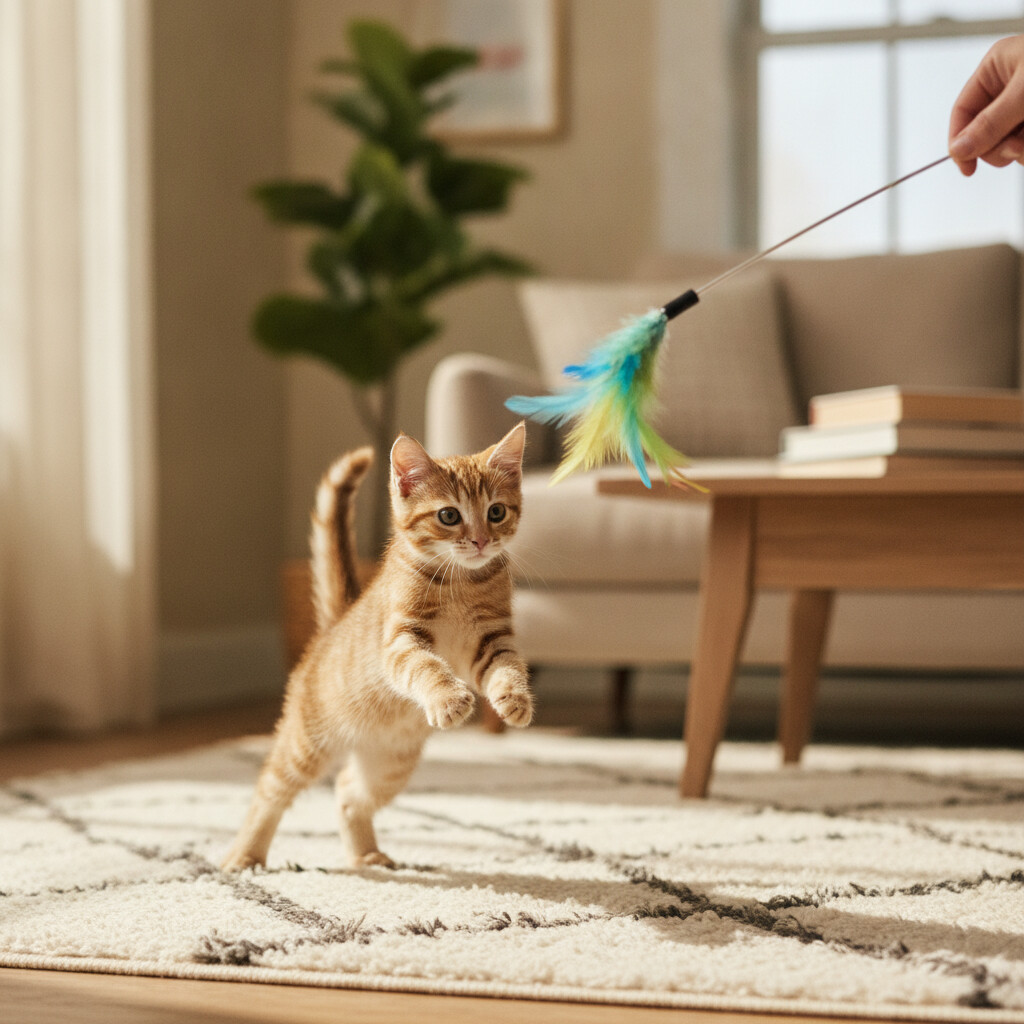
Kitten biting is normal development, not aggression, and in most kittens it fades with consistent redirection between roughly 4 and 6 months of age. The fix isn’t punishing the bite. It’s giving that energy somewhere else to go, fast.
Here’s what’s actually happening, how to tell normal play from a problem, and what works.
Why do kittens bite and scratch so much?
Kittens learn to hunt through play. Stalking, pouncing, grabbing and biting are rehearsals for catching prey, and a young kitten doesn’t yet distinguish between a toy mouse and your ankle. Behaviourists generally agree that play-biting is also how kittens learn bite control, which they normally pick up from their mother and littermates.
A kitten separated from the litter early, or raised alone, often hasn’t had that feedback. A littermate squeals when bitten too hard and the game stops. You can teach the same lesson, but it takes a few weeks of consistency.
Teething adds to it. Kittens lose their baby teeth and get adult teeth in at roughly 3 to 6 months (see our week-by-week kitten guide for the full timeline), and chewing eases the discomfort.
Normal play versus a real problem
Play-biting looks like this:
- Loose, relaxed body, ears forward
- Bites that sting but rarely break skin
- Pouncing on moving things: hands, feet, hair
- A pause or flop after a burst of activity
It’s worth a closer look if you see hissing, flattened ears, a dilated stare, biting that comes with no play trigger, or a kitten who is suddenly aggressive when touched in one spot. Sudden changes can mean pain or illness, so a vet check is the right first step. Our guide on what’s normal and what’s too rough in cat play covers the warning signs in more detail.
What actually works
1. Stop using your hands as toys. This is the single biggest fix. If hands and feet are wrestled with, the kitten learns they’re prey. Use wand toys and kicker toys so there’s always a few inches between skin and claws.
2. Redirect, don’t reprimand. The moment teeth touch skin, go still, say nothing dramatic, and offer a toy. If it keeps going, end the game calmly: stand up, walk away, and ignore the kitten for a minute or two. Shouting, flicking the nose or spraying water tends to make kittens more excited, or more fearful of you. Neither helps. The AAFP and ISFM both advise against physical punishment for cats.
3. Schedule play. Two to three short sessions a day (10 to 15 minutes each) where the kitten can chase, catch and “kill” something works better than random bursts. End each one with a small meal or treat to complete the hunting cycle. This is also the best defence against 3 a.m. ankle ambushes.
4. Time it for the bursts. Many kittens go wild in the evening. Play hard right before bedtime and you’ll often get a calmer night.
5. Give them the right things to scratch and chew. Scratching is a normal need, not misbehaviour. Put a sturdy vertical scratching post (tall enough for a full stretch, and stable) right beside where the kitten sleeps and near the furniture they’re targeting. Sprinkle a little catnip or silvervine on it, or reward use with a treat. Safe chew toys help during teething.
6. Think about a playmate. A second kitten of similar age can absorb a lot of that energy, though it’s not a guaranteed fix and it isn’t right for every household. We’ve covered the trade-offs in adopting two kittens instead of one.
What about claws?
Trim the tips every couple of weeks once the kitten is comfortable being handled. Start by handling paws gently while the kitten is relaxed, then clip just the sharp tip, well away from the pink quick. Soft nail caps are an option if you want a backup, though most cats don’t need them. Declawing is not a behaviour fix: it’s amputation of the last bone of each toe, and the AVMA says it should be a last resort, and the AAFP opposes it as an elective procedure.
Common mistakes
- Letting it slide “because they’re cute.” A 9-week-old nibble becomes a 5-month-old bite. Redirect from day one.
- Rough play with hands “to tire them out.” It tends to teach exactly the wrong lesson.
- Expecting overnight results. Most households need 3 to 6 weeks of consistency before the biting drops noticeably.
- Punishing after the fact. Kittens don’t connect a scolding two minutes later with the bite.
When to see a vet
Book an appointment if:
- Biting or scratching is a sudden change in a previously gentle kitten
- Your kitten yowls or flinches when touched in a specific spot
- Aggression is intense, with hissing, growling or attacks that seem unprovoked
- There are signs of illness alongside it, such as poor appetite, lethargy, or limping
- A bite breaks the skin and the area becomes red, swollen or painful (cat bites can get infected quickly, so see your own doctor too)
Your vet can rule out pain and, if needed, refer you to a certified animal behaviourist.
The practical takeaway
Take hands out of the game, schedule real play, redirect every bite, and be boringly consistent. Most kittens grow out of it. The ones who don’t usually just need a little more structure and a few more toys than you thought you’d need.
Sources: AAFP/ISFM Feline Environmental Needs Guidelines (2013); AAFP/ISFM Feline Behavior Guidelines (2015); Cornell Feline Health Center; AVMA policy on declawing of domestic cats.