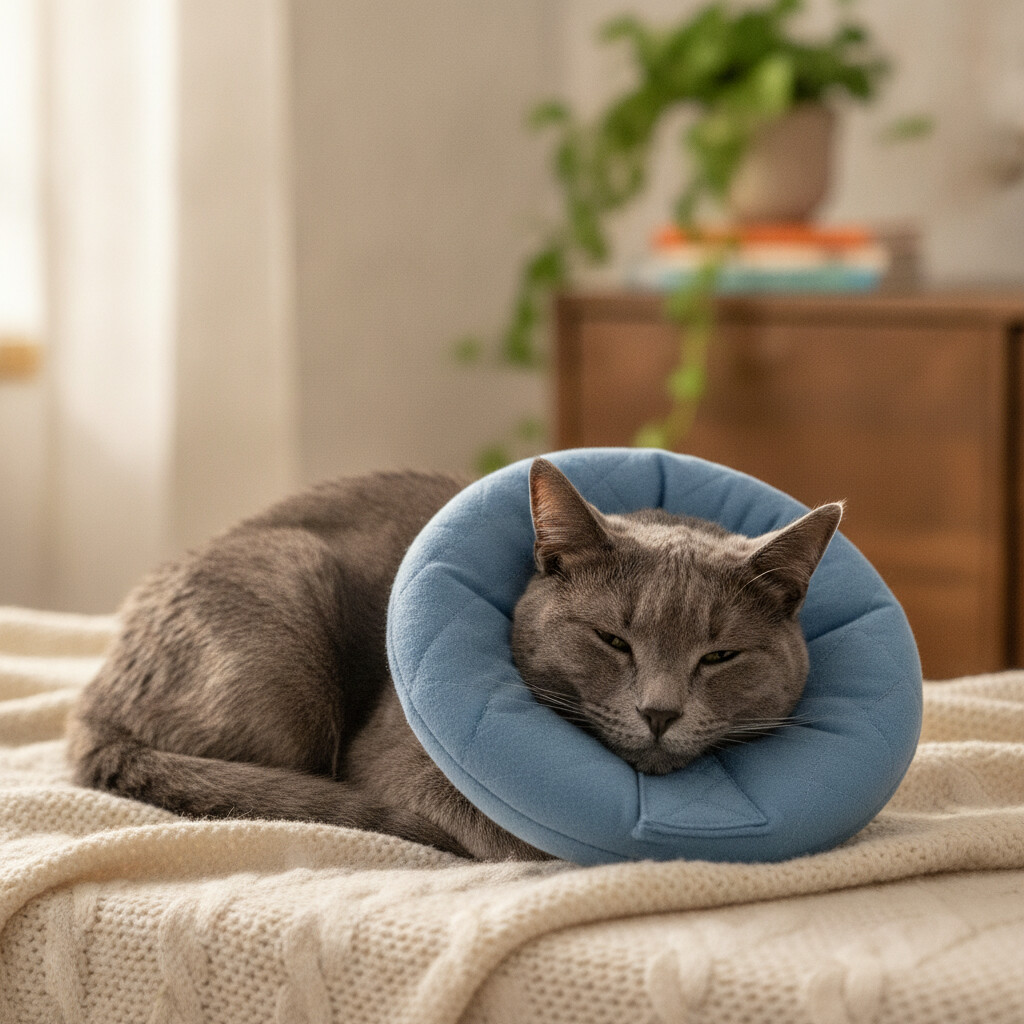
The best alternative to a plastic cone depends on where the wound is. For an abdominal incision, like a spay, a snug recovery suit often works well. For wounds on the head, neck or front legs, a soft fabric cone is usually the most comfortable choice that still does the job. Inflatable “donut” collars suit some cats, but many flexible cats can still reach their back end and tail with one on. Whatever you choose, check it with your vet first, because the point of any cone is to stop licking and chewing completely, not mostly.
Why Your Vet Sent Your Cat Home in a Cone
Cats are relentless groomers, and a healing wound is exactly the kind of thing they want to clean. Their tongues are covered in backward-facing barbs (papillae), which are great for grooming fur and terrible for stitches. Licking can bring bacteria into the incision, irritate the skin and pull sutures loose. In the worst case, the wound can open up again, which can mean another anesthetic and another round of stitches.
That’s why post-surgery advice from vets, including the American College of Veterinary Surgeons, routinely says to keep a protective collar on until the incision has healed. For a routine spay or neuter, most vets say that’s about 10 to 14 days, but follow the time your vet gives you, because healing varies.
The classic hard plastic cone (also called an Elizabethan collar or e-collar) is cheap and very effective. It’s also miserable for a lot of cats. They bump into door frames, struggle to reach their food and water, can’t groom themselves, and some simply freeze and refuse to move. So the question is reasonable: is there something kinder that still works?
Cat Cone Alternatives Compared
Here’s how the main options stack up. Fit and your cat’s personality matter as much as the product itself.
| Option | Best for | Main drawback |
|---|---|---|
| Soft fabric cone | Head, face, neck and front-leg wounds; cats who panic in plastic | Floppy, so a determined cat can sometimes fold it and get past |
| Clear flexible plastic cone | Any wound when you need guaranteed protection | Noisy, bulky, hardest to eat and drink with |
| Inflatable donut collar | Upper-body wounds in less flexible cats | Many cats can still reach the belly, hind legs and tail |
| Recovery suit / bodysuit | Abdominal incisions (spays), belly and flank wounds | Doesn’t cover legs or tail; needs a correct fit; can get soiled |
| Foam neck collar | Calm cats with chest or upper-body wounds | Limited reach protection, like the donut |
Soft fabric cones
These are cones made from padded fabric or foam, usually held closed with hook-and-loop fastening. They’re quieter and lighter than plastic and fold when your cat lies down, which is why many cats rest better in them. The trade-off is that the same softness lets some cats bend the edge and reach a wound anyway. Watch your cat for the first few hours to see if they can.
Inflatable donut collars
A donut collar sits around the neck like a travel pillow. It stops the head from turning far, rather than blocking it with a barrier. Cats can see, eat and move around more easily. The catch is that cats are very flexible, and many can still curl round to reach their belly, back legs and tail. For a spay incision on the belly, that’s often a deal-breaker. A donut can work for wounds on the upper body, or for a less bendy cat, but only once you’ve confirmed your cat can’t reach the area.
Recovery suits
A recovery suit is a stretchy bodysuit that covers the torso, with openings for the legs and usually for toileting. For a spay or another belly or flank incision, a well-fitted suit can protect the wound while leaving your cat’s head completely free, which means normal eating, drinking and sleeping.
Things to know before you buy one:
- Fit matters. Measure your cat and follow the size chart. Too loose and they’ll slip out of it or lick underneath. Too tight and it can rub the incision.
- Check toileting. Make sure your cat can use the litter box without soiling the suit. If it gets dirty, swap it for a clean one so the wound stays clean.
- It won’t cover everything. Neuter incisions (on the scrotum), tail wounds and leg wounds usually aren’t protected by a suit. Ask your vet whether a suit is right for your cat’s specific surgery.
- Some cats freeze. It’s common for a cat to walk oddly or lie flat for the first hour in a suit. Most adjust, but if yours stays distressed, talk to your vet about a different option.
What doesn’t work on its own
Bitter-tasting sprays deter some cats from licking, but they’re not reliable enough to replace physical protection. Never spray them on or near an open incision unless your vet says so. Bandages alone are usually no match for a determined cat either.
How to Make Any Cone Easier on Your Cat
Whatever your cat ends up wearing, a few changes at home help a lot:
- Get the size right. A protective cone should extend a little past the tip of your cat’s nose. You should be able to fit about two fingers under the collar at the neck, snug enough that they can’t back out of it.
- Use wide, shallow dishes. Deep bowls are hard to reach with a cone on. A flat plate or a shallow, wide dish works better. Raising the dish slightly can help too. (We covered the details in Best Cat Food Bowls: Does Shape, Height, or Material Matter?.)
- Make the litter box easy. A covered box or a box with a high entry can be impossible in a cone. Take the lid off, or use a low-sided tray for the recovery period.
- Clear the path. Move things your cat might knock into, and block access to high spots. Jumping can strain an incision, and judging distances in a cone is harder.
- Don’t take it off for long. It’s tempting to remove the cone for a break. If you do, only do it while you’re watching closely and can stop any licking straight away, and only if your vet is fine with it. A few seconds of licking can undo a lot of healing.
- Keep them indoors. A cat in a cone or suit can’t groom, can’t move freely and may get caught on things. Indoors in a quiet room is safest until they’re healed.
If your cat seems unusually flat or sore during recovery, it’s worth knowing the signs of pain vets watch for. Cats hide discomfort well, and pain relief can be adjusted.
When to Call Your Vet During Recovery
Check the incision at least once or twice a day. Call your vet if you notice:
- Redness, swelling or heat that is getting worse rather than better
- Discharge, especially if it’s yellow, green or smelly
- A gap in the wound, missing stitches, or anything poking out of the incision (that last one is an emergency)
- Your cat has managed to lick or chew at the incision
- Not eating for more than 24 hours, vomiting, or lethargy
- Your cat can’t eat, drink or use the litter box in their cone or suit
And if you’re still deciding about surgery in the first place, our guide Should You Spay or Neuter Your Cat? covers what the evidence says.
How did your cat cope with their cone, and did you find anything that made it easier?